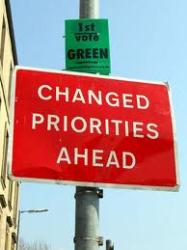
The Bold And The Beautiful

It’s difficult to reconcile being in a room full of articulate, passionate and fully engaged Torontonians for about 6 hours or so and the state this city finds itself in currently. I mean, if we’re facing such seemingly intractable and menacing issues, why aren’t some of these people in charge? After all, they can’t be that busy. Here they were, taking an afternoon to talk to the likes of us.
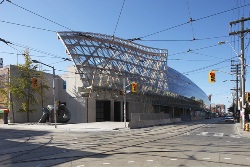
So it was yesterday as I sat in attendance in the Baillie Court auditorium at the AGO for a symposium, Imagine Toronto, that kicked off the launch of The Toronto Project followed by a Walrus sponsored debate, Be It Resolved That Toronto Will Never Be Beautiful. The room was packed with bright stars both on and off the stage, exchanging ideas, expressing hope (guarded), concern (sincere), outrage (very, very palpable). David Crombie moderated the afternoon session that featured 10 takes on the essence of Toronto, past, present and future. There was author-professor-philosopher Mark Kingwell. From the Maytree Foundation, Ratna Omidvar. Author-editor-stroller, Shawn Micallef. CivicAction‘s Naki Osutei. Rahul Bhardwaj talked about Toronto’s worrisome Vital Signs but remained surprisingly upbeat. Architect Wayne Kuwabara. Visual artist Shary Boyle tore up the place, beseeching the audience to imagine a Toronto that embraced itself and its artists proudly rather than half-heartedly. Writer-activist Dave Meslin called for more community, grassroots engagement in our political process.

That was all before the evening’s entertainment had begun.

One crossover between the day’s two meeting of minds was journalist John Lorinc. His cover article for the November issue of The Walrus magazine, Where Toronto Went Wrong, has been the talk of the town since it came out and was the cornerstone of both gatherings. No, folks. Things didn’t suddenly go south when Rob Ford became mayor. Even the enforced amalgamation foisted upon us by the Harris government and the subsequent downloading and bailing of responsibilities by Queen’s Park cannot be pointed to as the only culprit although it certainly served as a key role in how things are playing out here presently. Weaving a historical overview, Lorinc writes about how for every positive step the city leaders and their provincial overlords took, such as the creation of a two-tier system of regional governance with the formation of Metropolitan Toronto in 1954, there were two steps back like, well, the undoing of Metropolitan Toronto in 1998. (Amalgamation didn’t have to include the elimination of the metro level of government.)

My take on the whys and hows Toronto ‘lost its groove’ can be distilled in two points Mr. Lorinc makes in his article.  “Unfortunately, Toronto’s history is filled with examples of high-minded plans for open spaces that were crushed by its deep-seated disinclination to invest in the public realm.” Four paragraphs later he writes, “Such not-so-benign neglect, borne of a culture of stinginess, has been a long-standing element of Toronto’s DNA.”

Our leaders have suffered from a severe aversion to boldness, masked in an embrace of parsimoniousness calling itself fiscal prudence. Not only have we allowed them to conduct their business in such a fashion, we’ve encouraged it, demanding low taxes before civic amenities. ‘Need-to-haves’ over ‘nice-to-haves’ to use Mayor Ford’s words.

A ‘stinginess’ with money infecting a ‘stinginess’ of spirit. No to a Yonge Street subway in 1912 because of its price tag, repeated some 80 years later when Mike Harris buried the hole already dug for an Eglinton Avenue subway. The costs too rich for our blood that would haunt and saddle future generations with a significantly higher amount of money needed to think big on matters of transit. A history of here and now closed-mindedness and fistedness.

Remember a few months back when Councillor David Shiner killed plans for the Fort York bridge because he thought it ‘too fancy’? A miserliness of thinking handed down from his mother, Esther Shiner, Spadiner Shiner, who led the charge to extend the Spadina Expressway from where it had been stopped in its tracks at Lawrence Avenue down to Eglinton Avenue. The so-called Davis Ditch which, among other proposals was one from Buckminster Fuller that feature a mixed use development atop the Spadina subway extension. Instead, we got Allen Road. Anyone who’s ever tried to negotiate that intersection on foot, bike or even a car knows the price we paid for that.

We have inherited a short-sightedness in terms of money that never seems capable of taking in the bigger picture. A deficit of boldness that always means passing the buck, both literally and figuratively. Sometimes, oftentimes, a penny saved is not a penny earned. It’s just responsibility deferred.

To be bold means more than strictly adhering to the bottom line. Down the road, money you think you’ve saved just accrues, collecting interest that will have to be paid by someone else. Not doing something because it seems unaffordable now may seem noble and conscientious and shows Respect For The Taxpayer but in many cases, when it comes to building a sustainable, liveable, just city, is nothing more than a refusal to govern. It isn’t even caretaking. It’s obstructionism. Politicians priding themselves in that would do us all a favour and step out of the way. As I witnessed yesterday, there’s plenty of people ready to offer up solutions and ideas to get Toronto back on the right track.

hopefully submitted by Cityslikr

Letting Them Off The Hook

I’ve got no particular axe to grind with the Globe and Mail’s columnist Marcus Gee. His columns seldom either infuriate or excite me. He’s not the worst journalist covering the City Hall, not by any stretch of the imagination. At least, not until Sue-Ann Levy stops her doodled rants on the pages of the Toronto Sun. And takes Joe Warmington with her when she goes. Mr. Gee is much more palatable writing about this city than he was international affairs all those many years ago.

But he still doesn’t get it. Or, if he does, he adamantly refuses to accept the facts as they are. His stubbornness in viewing municipalities as mere after thoughts on the governance scale, last on the bus, last to exit, does us no favours. In fact, he may help entrench the view of cities as wayward children, naïve to the ways in which the world works.

“Whatever party had won [the provincial election] on Thursday night,” Gee wrote last Friday, “and whatever governing arrangement emerges now, the prospects of wringing a wealth of benefits for Toronto out of the provincial government are dim. With a projected $15-billion budget deficit, and the threat of a global economic crisis, Queen’s Park is in no position to help another level of government with its money problems in any substantial way.”

The Toronto-Queen’s Park relationship shouldn’t be about leverage and looking to cash in on enforced, political largesse. Any problems the provincial government has with its books must include obligations it has to the municipalities it oversees. Ditto the federal government. The rising deficits cities face, both from a fiscal and infrastructure stand point, originate with the debt the two upper levels of government owe them.

Even that phrasing – upper or senior levels of government – denotes a degree of priority which is long past a best before date. Municipalities in this country are groaning under the weight of negligence inflicted upon them by Ottawa and the provincial legislatures. They’ve washed their hands of responsibility and left cities to make the impossible decisions of what to cut and how deep. We are living in an era of absentee landlords, deadbeat dads if you will.

We are told by Mr. Gee that as premier Dalton McGuinty has done alright by us. He’s re-upped some of the downloads imposed by his predecessor, Mike Harris. He’s made strides on the transit portfolio, albeit in half measures. What more do we want? “Even under NDP pressure,” Gee opines, “he [McGuinty] seems unlikely to reverse himself completely and disinter Transit City. A provincial commitment to 50-50 sharing of transit costs seems just as far-fetched, given the great cost and the awful state of the provincial accounts.”

Why, Mr. Gee, should we not expect the premier to live up to his promise, now almost a decade old, to resume the provincial share of the TTC annual operating budget that was in place until the previous government at Queen’s Park reneged on the deal? How is it any different than a citizen of Toronto deciding he could no longer afford to pay the full amount of the property tax bill and cutting the city a cheque for 50% of the amount? Walking away from your responsibility is still walking away from your responsibility regardless of the state of your finances.

Besides, allowing municipalities to sink in a sea of red ink and to collapse under the weight of neglected infrastructure and a second-rate transit system does no one’s bottom line any good. That shit’s got to be paid by someone sometime or everyone suffers irreparably. This isn’t about doing something out of the goodness of your heart or because it’s politically expedient. It’s about good governance. Withholding on your responsibilities is anything but.

Marcus Gee enables such deplorable behaviour from our senior levels of government. He gives them an escape clause. We’d really love to help you out but we’re a little bit strapped at the moment. Maybe after that whole economic meltdown plays itself out, we can talk about what it is you need to get yourself back up on your feet again. Until then, you’re on your own. There’s really nothing we can do.

That’s a cop out, plain and simple. We’re paying the price for someone else’s shirking of duty. And Marcus Gee blithely let’s them off the hook scot-free.

dutifully submitted by Cityslikr

It Takes Two To Tango Badly.

Just a further thought on Wednesday’s meeting of minds between Mayor Rob Ford and Premier Dalton McGuinty.

While it is so very, very easy to jump all over the mayor for his scattershot approach so far in his dealings with the province — we don’t need any money, we have a spending problem, the new Sheppard subway will be privately funded (and for more on the absurdity, nay, incompetence of it all, take a look at this at Ford For Toronto) — let’s not let the premier off this hook on this. A good chunk of our woes currently are due to his push me pull me attitude toward the province’s financial obligations to our public transit.
Since 2003, he’s been promising to resume funding of 50% of the TTC’s operating costs as had been the case pre-Mike Harris. Eight years later, we’re still waiting for that to happen.

Early in 2010, the McGuinty government reneged on about $4 billion for Transit City, citing the economic meltdown that had put stress on the coffers at Queen’s Park. This destabilized a plan to put much needed transit to areas in the city severely under-served. It also paved the way for an all out attack on Transit City by a number of the leading contenders for the mayor’s office during last year’s municipal election campaign. None better than the eventual winner who immediately declared Transit City dead upon being elected.

In the face of the new mayor’s swagger, Premier McGuinty further helped undermine transit in this city by agreeing to reallocate funding for other LRT lines to bury more of the Eglinton Street plan and make possible Mayor Ford’s dream/nightmare pronouncement of a Sheppard subway extension entirely funded by the private sector. Impossible, most knowledgeable transit minds suggested and even worse, serving far fewer people and communities than the plan the mayor was singlehandedly trying to murder. With this week’s awkward ask for some $650 million in seed money to get the project rolling (and, quite possibly, to keep the feds on board), Mayor Ford proved his critics right.

Further assisting in aggravating the system, the premier quickly pushed through the essential service bill that the mayor and council wanted passed which, if history is anything to go by, ensures higher labour costs down the road for the TTC, meaning a higher operating budget. But hey. What’s the premier care? It’s not Queen’s Park money that’ll be going toward it.

Now, I understand that it’s a campaign year here in Ontario and Premier McGuinty is seeking a third term. He has to perform a delicate dance to try and avoid enraging Ford Nation while at the same time not pissing off the rest of Ontario who erroneously see any money given to Toronto as their money being flushed down the drain. Still, it seems odd that if the premier is going to try and frame at least some of his election run on an environmental platform that he’s doing his darndest to undercut public transit in this city.

Of course, principled stands are frequently set aside for political expediency by our premier. That’s not unique to him, of course. And maybe if he is able to beat back the tide of Ford Nation come October (or if the mayor and/or Tim Hudak succeed in doing that for him), an entirely different dynamic between the two men will emerge. Premier McGuinty will be the one holding the upper hand in their relationship and can stop cowering in fear of Mayor Ford.

That’s the thing though. As premier of Ontario, McGuinty already has the upper hand. He is our undisputed overlord and can do anything he so desires with the city, any city in the province. If he’d stood up from the outset to the mayor’s poorly thought out plan, Transportation City, and pointed out the folly both strategically and financially to such drastic reworking of something that had support at all 3 levels of government, even if he’d just made the case that the mayor had to take his plan to the new council before these changes could be considered, and the election hadn’t given the mayor carte blanche to push his wacky scheme foward, he might’ve been able to score points with all sides. He wasn’t saying no to Ford Nation. He was just saying that democracy isn’t only about winning elections. It’s about process. And he’d also show to those living outside the 416 area code that he wasn’t giving in to a pushy Toronto.

By immediately rolling over and granting the mayor his ludicrous wishes, Premier McGuinty showed himself more interested in his own political future than Toronto’s. How exactly did he hope to win our support that way? It should be a question we ask every Liberal candidate who comes knocking at our doors after Labour Day.

jazzily submitted by Cityslikr