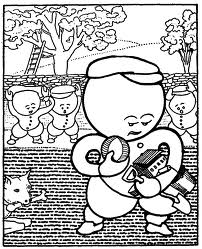
Our Rose-Coloured Glasses

Having taken the last few days off and away from the local scene, I’ve returned with a new thing in mind. Instead of reacting to every seemingly insane utterance and idea that emerges from the mayor, his kin or administration’s various mouthpieces with immediate shock, dismay and/or heart-stopping rage, I’m going to look for the silver lining. My assumption is not going to reactively be: what the fuck is he/they thinking/doing!? No. I’ll take a deep breath, set down the rock in my hand and careful weight the pros and cons of the matter at hand. Serenity Now.

For instance, yesterday’s news about a recommendation to shut down 21 of the 23 citizen advisory committees. My old self would’ve immediately sprang up in outrage and pointed out that this was just another example of Mayor Ford reneging on a campaign promise of more openness and transparency, showing absolute no respect for the taxpayer whatsoever. How could eliminating citizen access to city staff be in any way, shape or form transparent or open?

That would be the old me. The new me however spots a subtle sign of genius in it. A boldly counter-intuitive move not to simply increase citizen/taxpayer/customer/stakeholder input but to foist responsibility entirely onto their laps. You want to talk cycling strategy? Go ahead. Talk amongst yourselves. City Hall’s no longer in the listening business.

The previous administration was accused of only pretending to listen to its citizens. It would go through the motions of openness and transparency before proceeding with whatever it was intending on doing in the first place. Mayor Ford and his team are proposing to do away with that middle step altogether. They’re going to drop the pretense. Save everyone the time and aggravation.

So citizens can get together, draw up plans and strategies, all without the bother of talking to City Hall first. Instead, and I’m a little fuzzy on how this next step will work, they assemble some sort of package, let’s call it a business plan as that’s more in line with the current administrations thinking on things, and… call the mayor? “Hey, Your Honour. A few of us taxpayers met up, hashed out some details and we’ve got this thing we’d like to talk over with you. You said we could call anytime, day or night.”

Or maybe, and here’s where the genius in the mayor’s scheme may lie, citizens/taxpayers/customers/stakeholders wouldn’t have to talk to anyone at City Hall at all in the future. If you look at the plan of eliminating citizen advisory committees from a different angle, it’s all about complete freedom. Not only is the Ford administration offering to do away with government consultation, perhaps it’s thinking of eliminating government entirely. Just do it. Don’t talk about it. Don’t advise. Just. Do. It. Democracy unfettered by oppressive government intervention.

This isn’t neo-conservatism, folks. Hell, it’s even moved beyond Ayn Randian Libertarianism. We’re talking Anarchy, with a capital A.

This line of thinking would certainly be in synch with brother Doug’s musings on waterfront development. “You don’t subsidize the most valuable property in Canada to the tune of $10-million an acre,” Councillor Ford said. “You let the private sector buy it and let them develop it. We can control it. We can say we want a round building here and a square one here. We can control it but we don’t spend 1.5 billion dollars in tax dollars when everyone’s feeling pressure. It’s just common sense.”

Common sense, indeed. We all remember how great the waterfront was pre-Waterfront Toronto 2001, before the government went and got its nose in how the private sector was so ably and magnificently doing business down there. Let’s relive the 1980s glory days.

Replace ‘private sector’ with ‘private citizen/taxpayer/customer/stakeholder’ and you get the same general gist of how things would work without the unnecessary bureaucracy of advisory committees. Have citizens/taxpayers/customers/stakeholders come up with ideas about bike paths, say, or a youth program or public art installation on their own and all the city says is ‘make it round’ or ‘make it ‘square’. Done and done, and we’re off to the races.

In trying to see the world through the mayor’s eyes, I’m starting to realize that the only thing standing between an active and inactive citizenry is government itself. Its intrusive presence is nothing but an impediment to our participation in how things are done around here. The less we depend on government, the more freedom we will experience. Let’s not stop at eliminating just citizen advisory committees. Dream bigger. Imagine the freedom we’d have if we got rid of City Hall itself.

look at me I’m Sandra Deely submitted by Cityslikr

D.C. Photo Album

Yesterday Washington DC mayor Vincent Gray, six councillors and over 30 others were arrested (no, not for doing crack) protesting restrictions that will be imposed on the city with the budget deal struck last week that averted a federal government shutdown. It is the oldest of American traditions, agitating against taxation without representation. Moreover, it represents the problem facing most urban centres throughout North America. Senior levels of government playing political football with municipalities. A more detailed post on that to follow but first…

Photos of our trip!

A little Canadiana along the way to the Capital

Taken from the top balcony of the Newseum, a relatively new site in DC, situated beside the Canadian Embassy on Pennslyvania Avenue. A building dedicated to the quaint notions of the positive contribution made by the field and journalism and the importance of free speech. Crazy, eh?

A bike sharing program, Capital Bikeshare, is up and going in DC. While I wouldn’t say bike lanes are everywhere on city streets, where they are is pretty cool.

Imagine the 1st green president, with a bone to pick with congress, jumps on his bike share bike and rides straight up to the middle of Pennsylvania Avenue right to Capital Hill.

Hotel Harrington. Home of the Kitcheteria. What the hell’s a ‘Kitcheteria’? Part cafeteria, part ironic embrace of cheese?

And finally, who doesn’t love lion cubs?

Democrats and Republicans, conservatives and liberals alike can agree on at least this one thing. Those cubs are adorable!

swooningly submitted by Cityslikr

Not So Much Where You Live

Leisurely making my way through Jeb Brugmann’s Welcome to the Urban Revolution when the concept of “city consumers versus trained urban citizens” stopped me up. Three weeks after the election that made Rob Ford Toronto’s mayor-elect and with much chatter about the divide revealed by his win, here to me was an idea that transcended mere geography. Could this be an insight into the core political sensibilities of the two camps?

Anybody who’s been following along with the post-election analysis knows of the downtown core/inner suburb, old city of Toronto/other places that weren’t Toronto but are now divide. We examined Edward Keenan’s article about here last week. Marcus Gee did as well over the weekend in the Globe and Mail although he failed to cite Mr. Keenan as his primary source material. The general consensus is that there were enough exceptions to prove the rule that it was suburban Toronto alienation from City Hall over the past 7 years that led them to vote for Rob Ford in droves while downtowners thought anyone voting for Ford was an idiot.

Here’s another take on it. “City consumers versus trained urban citizens.” Rob Ford supporters, regardless of where they live, think of the city only as far as what it gives to them personally. A place to live and work. Getting between those two places easily and safely is of primary importance and should be the main thrust of what a municipal government does. Pave the roads. Fix the streetlights. Clean the streets of garbage, both literal and figurative. Do it as cheaply as you can especially in the short run. Almost anything beyond that is simply ‘The Gravy Train’.

Trained urban citizens, on the other hand, see the city not so much as a set place on a map (that’s GPS to you city consumers reading along) but more as an entity that morphs along with its residents. The city extends beyond our backyard or office lunchroom or driver’s seat. It is a collective organism living and dying by the actions of those who are a part of it. What makes a city truly livable is when a majority of decisions made, from the corridors of City Hall right down to even personal ones, have a net positive effect on a majority of its citizens. An impossible goal to achieve, perhaps, but a better one to aim for than simply an every man for himself free-for-all.

There are more than a handful of credible theories about the origins and development of cities. At the core of each of them, however, is the inherent social nature of the human species. Push comes to shove, we basically like to hang out with each other. Arguably, we need to hang out with each other. Not everybody, of course. There will always be that one neighbour in the apartment above you who cannot get enough of Bon Jovi at top volume. Or the couple across the street who don’t think they have to clean up after their dog that makes a habit of pooping on your front lawn. But overall, we thrive and prosper with positive interconnectivity at all levels of our lives, and that is made much more possible when more of us have the opportunity at that positive interconnectivity.

That’s why 53% of eligible voters in Toronto didn’t vote for Rob Ford. Cities seldom flourish with short term solutions. Rob Ford is all about short term solutions appealing to our least likeable and most anti-social trait. What’s in it for me?

So, the upcoming battles that will be waged at City Hall won’t be fought along where you live lines although, clearly, the maps suggest they will be. No, it’s going to be about the overlap between what some think is best for themselves and what others see as being best for the city. Streetcars versus buses? Green initiatives? More cops at the expense of social services cuts? No longer mere campaign slogans, these are now items that very well may be put on the table for debate. You know, the whole ‘Vision Thing’ that was raised and summarily dismissed during the election race. An approach to city building that goes beyond the end of our own laneways, neighbourhoods and even outside ward boundaries.

That is the difference between trained urban citizens and city consumers. It isn’t just about my house or my bike lane. It’s our community, our roadway. A vital difference in the general well-being of any city, and one that must be overcome if this whole notion of an amalgamated Toronto is to work for everyone who chooses to call it home.

hopefully submitted by Cityslikr