Re-Imagining Toronto II

[On Thursday, March 7th, Idil Burale and I will be hosting a discussion forum at the Academy of the Impossible called, Reimagining Toronto: Understanding the framework of urban/suburban politics. So this week at All Fired Up in the Big Smoke, we’ll be looking at some of the issues that make up the divide of such urban/suburban politics.]

*  *  *

countrymousecitymouse2

In yesterday’s post, we pointed to David Miller’s 2006 re-election where he won 42 of Toronto’s 44 wards with nearly 57% of the popular vote. Four years later, Rob Ford swept into power, largely erasing all traces of a Miller mandate outside of Toronto’s downtown core. It was a dramatic turn of events that reflected a tumultuous discontent with the outgoing administration especially in the inner suburbs.

How did such a turnaround occur? What had David Miller done that so alienated voters in Etobicoke, York, North York and Scarborough? In terms of the political landscape, there was no suburban-urban divide in 2006 (or in 2000 for that matter in Mel Lastman’s second term). ironcurtainSuddenly in 2010, we had our very own version of the Iron Curtain.

The city as a whole was feeling somewhat unsettled. Toronto had weathered the global economic crisis fairly well although unemployment was up and the region’s manufacturing base shrinking. Voters were feeling particularly antsy.

Of course, the 2009 outside workers’ strike loomed large over local politics. Garbage piled up in our parks and when it was all over, the perception was the Miller administration had caved into the unions and handed over the key to the vault. The facts didn’t really back that up but since the mayor didn’t crush the unions into oblivion, he’d failed epically.

The over-arching tone of the 2010 campaign was pissed off. Everybody was angry. torontostinksNone seemingly more so than those in the inner suburbs.
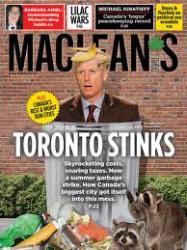
If it wasn’t about being over-taxed, it was about being under-served. Whatever prosperity and new-fangled artscape or shiny development sprung up did so downtown. Suburbanites were left on the outside looking in and, to kick more sand in their collective faces, the tab was theirs to pay.

Troublingly, when perception doesn’t meet reality, it’s the perception that often times wins out.

There’s never been any convincing evidence that the city’s suburbs subsidize downtown spending. In fact, during David Miller’s time in office, there was much attention and capital spent on the inner suburbs. A new subway was being constructed that would extend the Yonge-University-Spadina line into the city’s northwest corner on its way up to Vaughan. Transit City was a plan to bring more rapid transit to areas that had none. The 13 Priority Areas Neighbourhood Action Plan was established to combat poverty in almost exclusively places in the inner suburbs. The Tower Renewal Program.

None of it overly glamorous unless you were a policy wonk or directly affected. But it’s simply untrue to say that the suburbs weren’t an important part of the Miller Administration agenda. So how did that view gain such traction?truthreality

Here’s my working theory.

The toxic pool of political discourse created by a growing anti-Miller sentiment in the media and splashed about in by early mayoral candidates George Smitherman and Rocco Rossi was expertly marshalled by the Rob Ford campaign into a potent divisive force. Wedge politics at its finest. Candidate Ford convinced adopted and amplified voter alienation in the inner suburbs to mirror a personal alienation during his decade long term as councillor at City Hall.

Rob Ford, lone wolf, outside councillor as champion of the forgotten and abandoned tax payers of suburban Toronto.

After four years as mayor, it’s obvious nothing could be further from the truth.

As a politician Rob Ford and those closest to him have little interest in public sector investment in the public realm. They stand firmly opposed to almost all of the legacy items of the Miller Administration’s attempts at suburban renewal and engagement. wolfinsheepsclothingIt’s not about spending and engaging more in the suburbs. It’s about not spending more anywhere.

The government should not be in the business of governing.

This urban-suburban divide we find ourselves facing is a political one more than geographical or cultural. While we can blame David Miller for not being more explicit about his goals or somehow not making his intentions clearer to voters in Etobicoke, York, North York or Scarborough, the real culprits are those claiming to be looking out for the little guy when every policy they pursue proves the exact opposite.

— submitted by Cityslikr
Re-Imagining Toronto

[On Thursday, March 7th, Idil Burale and I will be hosting a discussion forum at the Academy of the Impossible called, Reimagining Toronto: Understanding the framework of urban/suburban politics. So this week at All Fired Up in the Big Smoke, we’ll be looking at some of the issues that make up the divide of such urban/suburban politics.]

*  *  *countrymousecitymouse2

Last week after wiggling off another over sight hook at the Compliance Audit Committee meeting, Mayor Ford took some time to talk to the media. The Globe and Mail’s Elizabeth Church reported an interesting little tidbit the mayor passed along. “The suburbs, Etobicoke, North York, Scarborough,” Mayor Ford said, “these people are obviously right of centre.”

It is a wholly unsurprising view coming from a right of centre politician who doesn’t do nuance. A world that can simply be broken down into two camps, right/left, suburb/downtown. letatcestmoiThe suburbs, c’est moi.

The statement is worth further scrutiny. Certainly the federal Conservatives made inroads onto Toronto’s electoral map last election, winning 8 of the city’s 22 ridings, all of them in the inner suburbs. But their counterparts at Queen’s Park were shut out both in the suburbs and downtown in the provincial election that followed less than half a year later. Twenty-two seats. Zero representation.

So I think it’s more accurate to say that ‘these people’ in the inner suburbs of the former municipalities Etobicoke, North York, Scarborough, York will vote conservative but it depends entirely on the situation. In the 2010 municipal election, they embraced Rob Ford’s conservatism. In the spring 2011 federal election, they were warm to Stephen Harper’s Conservatives. In the fall 2011 provincial election, they gave Tim Hudak’s PCs the cold shoulder.

At the municipal level, while the inner suburbs loved both Mel Lastman and Rob Ford, they weren’t vehemently opposed to David Miller. In the 2003 election, Miller won wards in York, Etobicoke and Scarborough. mayoral2006When he was re-elected in 2006, the only wards he didn’t win in the city were the two in Don Valley West.

Despite Mayor Ford’s hope masking as a claim, there are no hard and fast political divisions in drawn along party lines in the city. Tendencies? Sure. But by their very nature, tendencies tend to be fluid, fluctuating on a case by case basis.

The key to Ford’s election success in 2010 had less to do with uniting Toronto’s conservatives under his banner than it did corralling the former suburban municipalities back into the fold. Four years earlier they had all supported David Miller and the Ford campaign artfully convinced them they were the worse off for it. Out of control spending all directed to the downtown. $12,000 of tax payers’ hard earned money spent on a retirement party for some councillor from downtown. resentmentTime to stop that gravy train, folks.

It was an appeal to geographic tribalism. Suburbanites unite! Put an end to the profligacy the downtown elite have been showering upon themselves for the past seven years.

Look at two of the key members of the mayor’s administration, Deputy Mayor Doug Holyday and Speaker Frances Nunziata. Fiscal conservatives for sure but also the last mayors of their respective cities before amalgamation, Etobicoke and York. These are two politicians steeped in the history of big ticket items like transit, police and emergency services being looked after by a second, city-wide tier of local government. A time also when senior levels of government were not absent on other issues like social housing.

City government for the likes of Doug Holyday and Frances Nunziata was about keeping property taxes low and programs provided on a pay-as-you go model. There was no need for all that spending they then witnessed as amalgamated councillors. What was good for their days in Etobicoke/York/North York/Scaroborough was good enough for the megacity of Toronto.

It is the gasping of the past unwilling to come to terms with the present reality. A city of 2.7 million people does not, cannot be run like cities a fraction of that size. Economies of scale give way to a critical mass. Big city. Big numbers. metropolisandmayberryAttempting to roll those back is not some act of civic heroism but simply a dereliction of duty.

Councillors Holyday and Nunziata, along with the mayor and his brother and a few remaining hardcore loyalists remain convinced the amalgamated city of Toronto can operate in the frugal manner the former inner suburban municipalities did. Notwithstanding the glaring holes in the social fabric this approach brought about – high priority needs neighbourhoods, a lack of public transit, aging, malfunctioning infrastructure – this method of governance threatens the well-being of the entire city now. Rather than moving in a direction that brings issues of mobility and liveability up to higher service levels, the Ford administration is attempting to reduce them the barest of bones.

Conservative or not, I don’t believe that’s what voters signed up for when they backed Rob Ford in 2010. While urban-suburban differences may be many, I think on fundamental questions of fairness (no, subways are not about fairness) and good government, reasonable Torontonians, regardless of political stripe, can agree on the fact the Ford administration is delivering neither. That’s something a majority of this city should be able to unite around.

texaschainsawmassacre

— submitted by Cityslikr

The Kids Are Alright

Next time you get all hot under the collar at what you perceive to be shenanigans, childish antics or just a general sense of out-of-control behaviour by our municipal politicians, you really need to take a deep breath and a long look at André Côté’s Institute on Municipal Finance and Governance report, kidsarealrightThe Fault Lines at City Hall: Reflection on Toronto’s Local Government. Given the constraints and competing interests at work, it’s really remarkable anything gets done at all. And despite what you might be hearing around Toronto these days, quite a bit gets done, starting with ten billion dollars or so worth of operating and capital budgets just approved last week.

Could things run more smoothly? Of course they could. That’s true at both Queen’s Park and Parliament Hill as well. Probably every place of government the world over.

Two points in Mr. Côté’s report jumped out at me as legitimate causes of both the institutional as well as current struggles politicians face at City Hall. One is entirely external and, as it stands now, almost entirely out of our local politicians’ hands. The second is very specific to our present situation.

“Another factor that clouds political accountability at City Hall is the degree of provincial control over municipal affairs. The Province sets election dates and service standards, limits the use of taxes, requires approval for certain asset sales, and uses conditional funding arrangements to force compliance in important policy areas. The result is that the City’s field of action is constrained. The reliance on fiscal transfers also breaches a basic principle of public finance: accountability is blurred when the level of government making the spending decisions is different from the one that raises the revenues.” [page 5]

Everything municipal governments do in this province can be undone or undermined by their provincial overlords. We are their ‘creatures’, according to a 19th-century document written when this was an agrarian country and not properly challenged in nearly 150 years. eviloverlordUltimate accountability lies almost exclusively in the hands of politicians not necessarily elected to mind municipal level issues. In most cases, we should refer to them as absentee landlords.

Take Toronto, for example. (Please, the rest of the province chimes in.)

Against our collective will, we six municipalities, were messily forced into one by an antagonistic Queen’s Park government. ‘Efficientized’ to use Lucas Costello’s term; a lean, mean level of government meant to shed its fat and reap a certain windfall of streamlined bounty. Never mind that none of that happened because it was never intended to in the first place. It was all part of a downloading scheme almost entirely for the purpose of lightening the fiscal load on the provincial coffers.

Toronto was never given the appropriate powers commensurate with the much larger entity it had become. In fact, it was stripped of a level of governing that oversaw some of the more contentious, citywide services like policing and transit. Gone was Metro council, leaving only one politician at City Hall representing the interests of the city as a whole. The mayor.

Now figures as disparate as academic Richard Florida and councillor-brother Doug Ford have publicly mused about countering this problem by instituting a stronger mayoral system like they have in the U.S. Frankly, I find that notion to be a fucking nightmare scenario. strongmayorAll well and good if you like the policies and directions of a Mayors Bloomberg or Miller or Ford but what if you don’t?

Let me run a hypothetical by you that we can all be appalled at.

A Mayor Giorgio Mammoliti in a strong mayor system?

One might argue if we had such a thing, we’d be more careful with who we elect mayor. And if we aren’t?

My suggestion is rather than seek to beef up our municipal governance by bestowing more power upon one person, we look to increase it for the 2.6 million residents who live here. How? Well, that’s another post entirely and probably by someone with much stronger public policy credentials than I possess. (Paging John McGrath. Call me!)

This does take us the second important point brought up by Andre Côté in his report.

“Reformers should also bear in mind that, under the existing system, Mayors Rob Ford and David Miller have had notable successes in advancing their policy agendas. Both academic literature and recent history suggest that a combination of public profile, political acuity, and a willingness to use the softer skills of persuasion and consensus-building can result in successful and effective lead­ership at City Hall, even without a strong mayor system.” [page 7]

Pre-amalgamation, mayors in their respective cities had fewer councillor cats to herd and the issues were largely more specifically localized. liontaming(Many that weren’t were dealt with at the Metro level.) So they didn’t need more powers to push their agenda or items forward.

Such is not the case in post-amalgamation Toronto. Yet both Mel Lastman and David Miller managed for most of their terms in office to get `er done. Rob Ford too in his first year or so as mayor. Then he didn’t. Ultimately, he has no one else to blame but himself for that.

That’s not quite right.

We the voters are to blame as well because a plurality of us voted for a candidate who possessed few of the traits necessary to be an effective mayor in Toronto. ‘Political acuity’? As a campaigner perhaps but certainly not as mayor. ‘…a willingness to use the softer skills of persuasion and consensus-building…’. Never ever during his time at City Hall did Rob Ford display that particular trait. In fact, he revelled in being the exact opposite, the outsider, the lone wolf.

We elected him mayor despite all that and somehow seemed surprised how badly it’s all worked out.

A perfect mayor (if such a thing existed) will in no way paper over all the problematic governance realities this city faces. hogtheballIt would be foolhardy to think otherwise. But we shoot ourselves in the foot, and vote against our best interests when we throw our support behind a candidate based on a platform of sticking it to others at City Hall. Such an us-versus-them approach is destined to failure, not only for the candidate in question but the entire city as everything becomes a grind not a collaborative effort.

The city doesn’t have the power it needs but it has to stop squandering the power it does have. That starts with electing a mayor who is able to see past their own narrow focus and reach out to interests that are not their own.

— co-operatively submitted by Cityslikr