If campaign 2010 continues on its present trajectory, come around Oct. 23rd, 24th, we’ll be preparing to head to the polls believing we live somewhere like Londonerry or Belfast. Beirut or Jerusalem. Kirkuk. (Plug in the divided city of your choice).
Thirteen years into amalgamation and this election has finally blown the lid off the pressure cooker of simmering hostilities between the old downtown core and its inner suburban brethren. Us coristas have milked the `burbs dry with our bike lanes, waterfront developments and faggy artistic pursuits. In turn, the proverbial Wayne and Garths have pinched off a couple political turds named Mel Lastman and Rob Ford smack dap into our skinny café lattes.
Or so the story goes.
Last week, the Toronto Star’s Urban Affairs reporter, Robyn Doolitte, delved into the city’s schism. A dirty job but someone had to do it. What did she discover? The divisions separating us are as much imaginary as they are real.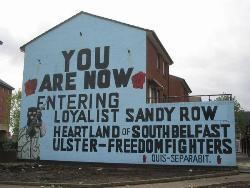 All those questions of who has and gets what is – surprise, surpise – a lot more complicated than we’re hearing in the media and on the campaign trail.
Former mayoral candidate and former York city councillor and now Toronto city councillor Giorgio Mammoliti insists the city’s inner suburbs have been getting short shrift since amalgamation. His staff analyzed the “numbers” and left him with “no doubt that the majority of spending goes downtown”. Just look at the money being splurged on Union Station, the waterfront, Bloor Street, G20 security. Imagine what the suburbs could’ve done with that billion dollars or so.
However, other “numbers” suggest that residents of the old city of Toronto receive less funding from the city on a per person basis than those dwelling in the former burgs of North York, Etobicoke and York. After the last election, Scarborough councillor Norm Kelly commissioned a study to examine allocation of city resources which came back with the not entirely rock solid conclusion that, in fact, 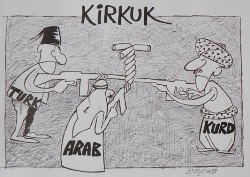 Scarberians were not being hosed on half the services that were assessed while on the other half, it was hard to tell.
From all this, we’re now in the midst of a ‘culture war’ as Ms. Doolittle suggests?
It wouldn’t be the first time that misinformation and the power of perceived persecutional exclusion drives a debate especially during a political campaign. A wedge is a much easier tool to use when digging for support. Even more so when you lack an uplifting, unifying theme. I know candidate Rob Ford immediately springs to mind but Rocco Rossi was the first to employ the method this time around with his war on cars schtick. Ford simply sniffed which way the wind was blowing and realized he could do it so much better than Rossi. And he has.
That is not to say gaps and inequalities don’t exist throughout the city. They most certainly do. But to try and suggest that they are the result of an uneven financial flow since amalgamation is playing fast and loose with the facts for the purpose of pure divisiveness. All 6 of the cities that were forced against their choice into one by the Harris government each brought their own respective pros and baggage to the table.  As many of the now 13 high priority neighbourhoods were located outside the old city of Toronto as were within its boundaries. Now money is being spent by all of us trying to deal with the disparities in those parts of the new, bigger city of Toronto.
Of course, that’s awfully murky grey and nuanced. Easier to point fingers and wax nostalgic about the good ol’ days before we had to deal with those leftist downtowners or dumbfuck suburbanites. Remember when those nice people from the city used to come and de-weed the boulevard, Betsy? I got an idea, pops. Why don’t you weed your own boulevard and we’ll spend that money building a community centre next door in the old city of York. Hey, North York. How be you try shoveling snow off your sidewalks like we do down here in the core and we’ll toss a little money your way to fix all those pipes you neglected to deal with?
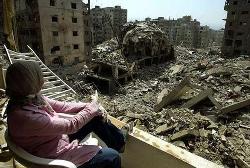 Like it or not everyone, we’re all one big, happy family now here in the megacity, and that spending spree all of you are talking about, that gravy train, may just be the price we’re paying for trying to make one size fit all. Only the willfully ignorant or blindly ideological truly believed the cost of amalgamation would be otherwise. Economies of scale don’t always apply if that was, in fact, ever actually the intention of all this at the provincial level. So, here we are, 13 years later, in an unproductive pissing match with each other.
There’s nothing territorial about this. I’d be very happy voting for a suburban candidate running for mayor. Isn’t Shelley Carroll from North York? Why won’t she run? It’s just that, instead, what keeps rising up from the inner ring are monstrosities of dumbness, intolerance and irrationality.  If you truly believe that Mayor David Miller has made a bigger mess of this city than did his predecessor, Mel Lastman, than you are simply unwilling to engage in constructive dialogue and are determined to see that this project called amalgamation fails.
And if that’s the very definition of a ‘culture war’, I guess we are in the middle of one.
— miffedly submitted by Cityslikr