A Section 37 Set-To

I hesitatingly wade into the cold and murky waters of Section 37 fees, knowing that almost immediately I will be out of my depth.

But hey! If the Toronto Sun can do it, why not me?
Much has been made recently in the pages of our little tabloid that could about… how did they put it?… ‘the wild west’, ‘shakedowns’, ‘legalized extortion’, ‘bribery’ and ‘… getting away with murder forever’!

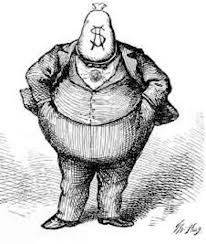
Holy cow. It sounds like Tammany fucking Hall down there. Dirty politicians with their greasy, grafty hands, reaching into developers’ pockets to pay for their personal yachts and country estates. Corrupt Ward Bosses.

Or, as many devoted Sunshiners would say: Councillor Adam Vaughan.

Make no mistake, the Toronto Sun’s new found civic activism has less to do with improving the quality of life in this city than it does on zeroing its sights on a potential 2014 rival for their beloved and beleaguered mayor. Councillor Vaughan is knee deep in section 37 funds, his ward 20 in the midst of a development and intensification boom. And of course, Mayor Ford stands vigorously opposed to Section 37 money. “I’ve never liked Section 37 (funds),” the mayor said yesterday. Except when he does. Back in 2010 as a councillor, Ford used $75,000 in Section 37 money to build change rooms at – you pretty much guessed it already – Don Bosco High School.

But look, I’m not here to exchange tits-for-tats or defend Councillor Vaughan. As written, the guidelines on the protocol of Section 37 funds – intended to mitigate the downsides of permitting taller development with higher density than bylaws allow — are both much more thorough than the Sun and critics would have you believe and more open to interpretation than some defenders might care to admit. Although, evidence of nefariousness in the use of the funds or the building of political pet projects is in scant supply in the accusations hurled at Section 37 practitioners.

Still, should the system be examined and other options explored? Sure. “It’s fair to say the process needs to become more clear and it ought to be administered by city staff,” said Toronto’s Chief Planner, Jennifer Keesmaat. “In part, because city staff are not in a conflict of interest when administering it.” (Again, I’d like to see more concrete examples of conflict of interest than simply theoretical possibilities.) Ms. Keesmaat also believes that Section 37 funds could go to city wide infrastructure needs. Not long ago, I was talking to a councillor staffer from a left-leaning, heavy development ward who suggested spreading Section 37 funds more equitably city wide might help in easing downtown-suburban tensions.

Fair enough, I say.

Let’s talk about all that.

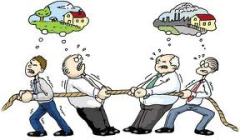
While we’re at it, however, I’d like to ask suburbanites and those representing them at City Hall what they’re prepared to give up in return. It seems to me to be all a little one-sided at the moment. Bulk up all you want, downtown wards, Willowdale, Scarborough Centre, Mimico. But share the proceeds with us. A casino would be a great source of jobs and revenue. Put it downtown where we don’t have to deal with any of the negative aspects of it.

It’s almost like, parts of Toronto adapt to being a big 21st-century city, divy up the benefits of doing so with the other parts that just want to remain as is. Give us money from your densification. Accommodate our single rider car travel. Give us subways. Don’t you dare try to impose on our single family, detached homes and cul de sac communities.
“It’s about equity and fairness,” Councillor Mike Del Grande said. (And I’m trying to stifle a derisive snort here.) “This money should improve all of Toronto.”

Absolutely, councillor. But as you might say yourself, shouldn’t improvement start at home? This tilt he’s undertaken smacks a little of the ‘widow and orphan’ syndrome he brushed aside during previous budget cycles. Demanding something for nothing.

I’m all for spreading the wealth. For this city to prosper, it has to prosper for everyone. That can only happen, however, when every part of the city contributes to its evolution from 6 bickering municipalities to a unified whole at the centre of a global metropolitan region. It’s a willingness that has been in short supply from some quarters, who seem more intent on exploiting the inequities for political reasons rather than addressing them for the greater good.

brokeringly submitted by Cityslikr

Taxes! What Are They Good For?

You know who likes paying taxes? Take it away, former mayor Mel Lastman. N-o-o-o-o-body! Except maybe Jesus who bade us to render onto Caesar what was Caesar’s and Oliver Wendell Holmes with his belief that taxes made for civilization.

Both partisan based rhetorical flourishes, if you ask me. Who takes a look at their pay stub, sees all the tax deductions and thinks, at least I’m contributing to a better society? It’s only about a grudging acceptance. Death and taxes and all that.

You know who thinks they’re over-taxed? Everybody. There’s never been just the right amount of taxation. That balanced point where you’re sure you’re getting absolute value for money. No extras. No gravy. There’s always a sense of couldn’t this be done less expensively, more efficiently.  It’s all about a grudging acceptance. Death and taxes and all that.

Only the obdurately ideological, those suckled on the teat of anti-government sentiment that has been ours for over 30 years now would senselessly argue against the notion of taxation. Oh, hello, Councillor Doug Ford.

“We’re against all taxes,” he said in March. “All taxes are evil as far as I’m concerned.”

You’re welcome, sir, for all the roads you drive on regularly, and for the protection our police constantly offer your brother to keep him safe.

Councillor Denzil Minnan-Wong jumped aboard the mindless train this week at the Executive Committee meeting during a discussion on transit funding strategies. Referring to the list of various revenue generating ideas in the City’s CFO report, the councillor said, “That’s like asking which poison would you like to drink? Would you like the hemlock? Would you like the rat poison? We should be asking them, would you like to take that poison?”

This from the mouth of our chair of the Public Works and Infrastructure Committee, folks! You know, all that stuff we need to build in order for the city to function properly? How do we undertake such massive endeavours? Taxes, that’s how.

Councillor Ford and his fellow libertarian thinkers seem to believe that all good things flow from the beneficence of the private sector. You want new subways? Just ask nicely in the form of a P3 or AFP model and you’ll get your shiny new subways. It won’t cost the taxpayers one red cent.

The councillor is either being supremely disingenuous or displaying a mind blowing ignorance of how these things actually work.

Transit is funded and operates only in two ways as far as I know. Through direct government subsidies (paid for by taxes) or the fare box. If there’s another system at work that’s slipped my notice, I’m all ears.

By its very profit making nature, the private sector doesn’t build public transit without the expectation of making, well, a profit. Somebody has to ultimately pay them. That someone? The taxpayers.

So we either do it upfront with government laying out the cash as we go (in all likelihood with the help of Councillor Ford’s much vaunted P3s and AFPs to help reduce costs) or we pay later through fares to use the service. Even at that point, it’s no certainty that a private company can recoup enough profit to maintain fares and service levels at a point that makes public transit an attractive option to riders or beneficial to the transportation needs of a region. How do you strike the proper balance between the profit motive and public good? Usually from the public purse.

Yeah, we’re back to taxes again.

And this talk of needing to sit down with other levels of government in order to work through their expected contributions? Or going cap in hand, as our mayor used to deride his predecessor. Where do you think they’re coming up with the money? Errrr, taxes.

Besides, given our pressing transit needs, I wouldn’t hold my breath waiting for either Ottawa or Queen’s Park to come riding to our rescue. The federal government just defeated a bill on a national transit strategy, something every other developed country has. So I’d put them down as a ‘Don’t Give a Fuck About Transit’.

As for the province, they like to give the appearance of giving a fuck about transit in the GTHA, with their big plans and detailed maps but so far I’d say it hasn’t exactly been a priority in practice. We’re expecting a funding plan from Metrolinx next June, five years after the Big Move was unveiled. Five years! Their involvement with Transit City in Toronto has been as much about playing politics as it has been with building anything. They’ve hardly earned a reputation as honest brokers on the transit file.

But who can blame them? We’re all operating in a sweet smelling haze of dishonesty when it comes to providing public services. We want them but we don’t want to pay for them. We hate taxes but we desire what they pay for. Nothing comes for free except everything we take for granted, it seems. Roads, police, subways that stop right out front of our single family detached house with a big front lawn and an even bigger one in the back.

No wonder we hate governments and the taxes they demand from us. They continue refusing to deliver the pots of gold at the end of the rainbows the leprechauns riding on unicorns convinced us were coming our way for no money down, no interest payments ever.

finger pointingly submitted by Cityslikr

Reassessing More Than Our Property Values

In an announcement this week of Mark Towhey becoming Mayor Ford’s new chief of staff, Kelly Grant of the Globe and Mail writes that he wants to focus on the mayor’s economic strategy, including plans for the city to “implement policies to grow its assessment base, rather than raise property taxes year after year.” An ensuing social media conversation took place, questioning if that were even possible, using a wider/higher property assessment in lieu of higher property taxes. Minds much brighter than mine struggled with questions of provincially mandated revenue neutral reassessments, averaging, etc., etc.

The short answer seems to be: raising revenue is much more difficult and complicated than simply cutting services, programs and generally just not doing anything much. Our fiscal status quo leans toward inaction. Claiming we can’t afford something is simply an admission of one of two things. You’re either ideologically opposed to the concept of taxation or you don’t understand government financing. Or maybe both.

Complicating matters for Ontario municipalities is that the provincial government keeps us on a pretty short leash in terms of revenues. We rely so heavily on property taxes as a revenue source because it’s the only one we have much control over. And as the discussion this week showed even that is watched over carefully by Queen’s Park.

How?

Well, it seems cities just can’t reassess property values and then slap on the tax rate to the new numbers. In a place like Toronto that would in, all likelihood, generate a significantly higher amount of revenue. From the city’s website (h/t to Brent Gilliard) comes a provincial commandment. The effect of reassessment, at the municipal level, is “revenue neutral” and does not generate any additional revenue for the City. With a reassessment, the City must adjust the tax rate to remain revenue neutral, so no new funding comes to the City of Toronto as a result of property valuation changes.

Reassess all you want, the province tells us, it just can’t generate any more money for you.

Of course, there’s a much larger discussion to be had on this point. Municipalities shouldn’t have to depend so heavily on property taxes to, you know, run the city. Both their calculation and implementation is complex, cumbersome and, often times, politically thorny. Of all taxes, none seem to be taken as personally as property taxes. California’s 1978 Proposition 13 that severely limited the state’s ability to adjust property taxes could be seen as the granddaddy of tax revolts. Property taxes also don’t truly reflect the economic activity going on at a municipal level at any given time.

Internationally, many cities have adopted other models of taxation for new streams of revenue. Sales tax, payroll tax, hotel tax, a motor vehicle tax… OK. So Toronto certainly didn’t help its cause by backing an administration that was hell bent on repealing one of the few taxes the province allowed it to institute, the VRT, as soon as it was sworn in. Like a petulant teenagers, tossing their allowance back into their parents’ faces. We don’t need your stinking handouts. Oh, and by the way, mom and dad. Can we have some cash for extra police officers and some transit we need to build?

Still, it is odd how stingy Queen’s Park is in terms of allowing its municipal governments to figure out ways to pay for things. What’s it to them if we decide to generate revenues through a city or regional sales tax? How will a, say, .5% sales tax going into the city’s coffers adversely affect the province’s bottom line? It’s not like they’re rushing to finance Toronto’s major infrastructure needs like transit. Before you start bellowing ‘Transit City! Transit City!’ at me, note how I used the word ‘rushing’. We’re getting transit. On the province’s dime. On the province’s time.

It’s hard to look at the recent additions to Toronto’s transit system before the Eglinton crosstown broke ground and not see a pattern of self-interest on the province’s part. Arguably, we got subway lines where we needed them least that successive government’s at Queen’s Park used to burnish their cred with a very specific segment of voters. You want subways? We gave you subways. Where we wanted.

Control of the purse strings will always translate into political control. Cities less dependent on the province means cities less willing to let the province dictate its terms. What do you call that? A more equal partnership. It doesn’t quite have the ring of ‘creatures of the province’ that must sound much better to ears at Queen’s Park.

For many provincial politicians, cities are more a political chessboard than they are economic engines. All moves must be tightly controlled and very, very limited. Unless you’re the queen, of course. In provincial-municipal matters, never ever forget who’s the queen.

pawnly submitted by Cityslikr