Change Isn’t Always Worse Than The Alternative

You know what the scariest word in English just might be? No, not anesthetist. pickawordThat’s the hardest word in English to pronounce but not the scariest. Unless, of course, you’re going in for surgery imminently.

Change.

That’s the scariest word.

People are averse – averse? adverse? averse? Again, tricky words. Not necessarily scary ones — to change. Even those most likely to benefit from a particular change are reticent.. reticent? hesitant? I’ve clearly thrown myself off here. Pick a word and run with it.

Change ain’t easy.

Our penchant is to view change warily, assuming it’s always going to be for the worse. This despite the fact that we are where we are, doing what we’re doing in relative comfort because of change and our ability to adapt to it. adaptchangeI mean, we could still be creatures flopping around in mucky goo, trying to figure how to breathe oxygen in through these things called lungs not gills.
This is not to say all change is beneficial and that we should simply embrace any new fad that comes our way. Change for change’s sake and other interior decorating maxims. I need a change, while usually indicating a desire to move in a positive direction, doesn’t automatically signal improvement. It could be a phrase uttered by a guy in a bar who’s been drinking rye-and-cokes all afternoon and he just wants to change to, I don’t know, rum-and-cokes.

It’s not about blind acceptance but the moderating measured space between that and an open hostility to any notion of change.

Speaking out against the proposed First Capital Realty development for the Humbertown strip mall on Tuesday, Mayor Ford clearly falls in the latter camp.

“Time equals change,” the mayor said in his speech at Tuesday’s Etobicoke-York Community Council meeting, “we have to move on but…” But what? Gradually? In a thoughtful manner? Earlier on in his speech the mayor stated that “we have to maintain these strip malls in Etobicoke”. So we have to move on to what?

We Have To Move On But is the trademark phrase of the bonafide, heels-dug-in intransigent. Frankly, Etobicoke seems to be populated by such types. Look at their representation at City Hall currently. driveinrestaurantFrom the Fords to councillors Doug Holyday and Gloria Lindsay Luby, part of a historical lineage of obstructionist and obdurate municipal politicians fighting tooth and nail against the slow march of time’s encroachment into their neighbourhoods and pocketbooks.

Read Jamie Bradburn’s Historicist piece last week in Torontoist about the city’s west end politicians battling the building of a subway in the late 1950s. All the way to the Supreme Court! ‘Bamboozled’ is a familiar phrase to modern ears, a kissing cousin to boondoggle, and one used in reference to subway plans. “I am afraid these taxes [to fund subway construction] will tie people up so tightly it will make them move out of here,” said Long Branch Reeve, Marie Curtis, “the same as some of us moved from the city.”

“Don’t be misled by visionaries who would lead you to believe they see things the rest of us don’t,” decried York Reeve Chris Tonks.

That’s not an unreasonable statement if you’re talking about visionaries touting contact with occupants not named Hatfield of interplanetary crafts. overmydeadbodyBut it was 1958. Subways weren’t some new fangled technology about to be foisted upon an unsuspecting population. Cities had been building them for about century by that time. It was a question of figuring out how to pay for an established mode of public transit and putting it in the right place.

Intensification runs along a similar line of thinking.

Sprawl is no longer sustainable. These kinds of strip malls Humbertown represents are relics of a past that was guided by the idea of unlimited space and cheap fuels to get us to these far flung places. As a form of land use, they no longer make sense.

Defenders of the status quo proclaim that this isn’t downtown Toronto we’re talking about, but Etobicoke. But this isn’t Etobicoke we’re talking about, not the one of 40, 50 years ago in its leafy-streeted isolation from the hustle and bustle of downtown. Now a fully functioning inner suburb, its quaint dreams of a pleasant village life located miles and miles past the outer suburbs to the west and north that push it closer to the downtown many of the residents are trying to keep at a distance.

I don’t think it a coincidence this heavy resistance to such change comes from the mayor’s own backyard. I think it’s a sentiment deeply rooted in the notion of Ford Nation. leftbehindThe city of Toronto has been undergoing demographic, cultural and economic shifts, accelerated by amalgamation. None of it particularly easy or cheap. But the face of the city is going to change with or without our participation. Probably not for the better if we simply choose to stand on the sidelines hoping it all passes us by without altering and costing us too much.
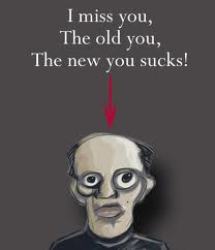
In 2010, a plurality of Torontonians, a healthy majority of those living in the inner suburbs and experiencing some of the biggest changes, decided to stand pat and with fingers crossed wait things out. Rearranging the furniture and painting the walls instead of undertaking a major renovation. Hopefully, no one gets too attached to the colour of the room.

adaptedly submitted by Cityslikr

Mayor Nimby

For three years now, ever since then-councillor Rob Ford announced his run for mayor, we’ve been clubbed over the head with the urban-suburban divide.fordnation The narrative of downtown elites hoarding all the goodness that is living in Toronto, leaving their suburban counterparts with nothing more than the crumbs and scraps. Get out of your cars so we can have bike lanes! No subways for you! Your taxes spent on us.

Rob Ford rode such resentment into office, and the continued suburban support maintains his not impossible chances for re-election next year. He is the self-proclaimed champion of the little guy in places like Scarborough, basing his entire transit policy around getting a new subway out there. Nobody rails about and profits from deriding the self-satisfied, special interest insularity of downtowners like the mayor and the rest of Team Ford.

An accusation I’ve tried to take to heart. Get out there, learn what makes these suburban types tick, their likes, dislikes, their pet peeves, their pet causes. haughtyTry and find out why they’re so mad at us and how politicians like Mayor Ford so easily tap into that vein of anger.

The latest leg of that journey outside of my south of Bloor/west of the Don Valley comfort zone took me to the Scarborough Civic Centre yesterday for their monthly Community Council meeting. Here you can see the local councillors and their constituents at work far from the spotlight of City Hall, not dwelling on the Us-versus-Them but instead focusing on pure Scarborough time (or North York or Etobicoke-York or Toronto-East York time depending on which community council meeting you’re attending). Community council concentrates on the minutiae of local governance.

As the agenda for the Scarborough meeting showed, this is the time spent adjudicating neighbours’ fence heights, debating the need for a stop sign or traffic lights, the removal of tree from private property, parking, always parking. toilIt isn’t glorious or sexy. Just the nuts and bolts of the political process at the municipal level.

Perhaps the most charged item I witnessed yesterday was over the fate of the wading pool just outside of the civic centre. Apparently it was a community hub for the forty years of the building’s existence but last summer the This Is Not A Wading Pool sign went up due to the lack of funding to pay for a lifeguard. Scarborough councillors set out to try and rectify that situation.

Most of the time, big ticket, highly contentious, city wide items don’t dominate community council meetings. A casino, tall tower complex or the island airport runway expansion rarely find their way to be debated at North York or Scarborough community councils. The majority of those end up for discussion at Toronto-East York community council.

And Etobicoke-York, apparently.

For the last two months the west-end community council has had to conduct additional meeting time to deal with the public reaction to two developments that are being proposed in their catchment area. In April, there was an evening session at the Etobicoke Civic Centre over the proposed waterfront development in Ward 6, Mimico 20/20. nonono1And yesterday for six hours, the public came out to express their unanimous opposition to First Capital Realty’s intention to convert the Humbertown shopping plaza into a mixed up residential-commercial space.

This one was a biggie. As David Hains writes in the Grid, it was held in a 3,200 seat church on the Queensway, was broadcast on TV and streamed online and brought out much of the media as well as the big gun politicians like the mayor and his councillor-brother. (As a member of the Etobicoke-York community council, it’s not unusual that Councillor Ford was in attendance although, it is worth noting that he was absent for the Mimico meeting last month, choosing instead to attend a provincial Progressive Conservative fundraiser.)

Now, I don’t know if the Humbertown development is a good one or not. Certainly the community’s concerns over the increase in traffic caught my attention. It didn’t strike me as the disaster-in-waiting almost every speaker to person claimed it would turn out to be. villagesquireThere are voices living in the area that even think it’s a positive thing for the area.

What I will tell you, however, is that I didn’t care for the tone I heard from the development’s opponents. Like many who spoke out against the Mimico 20/20 plans, we were told the Humber Valley neighbourhood was like a village wrapped inside a big city. A place for families to thrive and grow, away from big city concerns. People were born in Humber Valley. They went to school in Humber Valley. They got married in Humber Valley. They have children of their own who they want to raise in the same Humber Valley they grew up in.

After a couple hours of this, I couldn’t help but think if these people really wanted the village life, they should maybe move to an actual village. Somewhere, I don’t know, in Amish country. Or maybe on the edge of the moors in south-west England. A village village.

Not a pretend one of their imagination, situated 1500 metres from a major east-west subway line. No, what these people want is to enjoy all the amenities a big city offers while keeping the messier aspects like intensification and underground parking (really, underground parking) at bay. usversusthemThis is a wealthy enclave with the time and resources which, as my friend Paisley Rae said, should not determine the outcome of the civic process, trying to keep the 21st-century from their front door.

And the real kicker is that these are our populist mayor and brother’s people not the poor schlubs having to endure a cold winters rid on the Scarborough SRT or even those living further north in Etobicoke, up in Rexdale. This development is right in both the Fords’ backyards and the little guys they’re looking out for are those who can afford to hire their own architect to draw up alternate plans and find the concept of shopping on a second floor inconceivable. I suppose you’re going to tell me that you’ve invented a moving staircase in which to ascend us to ladies wear.

“We cannot let these developers come in and bully us,” said the mayor who’s all in pushing a waterfront casino. He vowed to fight the Humbertown development ‘tooth and nail’. “Let’s go to the board (Ontario Municipal Board),” he urged if First Capital Realty didn’t back down, presumably with money from the city he often tries to stop at council when other communities faced with unwanted development face appeals at the OMB. Everything Mayor Ford purports to be got completely turned on its head with his strident opposition to the Humbertown development.

Not in my backyard.humbertown

The fact is, Mayor Ford doesn’t really represent the aspirations or alienation of suburban Toronto. At least not those of the hard-working little guys in large portions of Scarborough or Etobicoke. It’s a very select few he will go to the mat for, the ones who essentially live in his own neighbourhood. The overwhelming majority of suburban residents are nothing more than votes to him.

nimbly submitted by Cityslikr

Re-Imagining Toronto

[On Thursday, March 7th, Idil Burale and I will be hosting a discussion forum at the Academy of the Impossible called, Reimagining Toronto: Understanding the framework of urban/suburban politics. So this week at All Fired Up in the Big Smoke, we’ll be looking at some of the issues that make up the divide of such urban/suburban politics.]

*  *  *countrymousecitymouse2

Last week after wiggling off another over sight hook at the Compliance Audit Committee meeting, Mayor Ford took some time to talk to the media. The Globe and Mail’s Elizabeth Church reported an interesting little tidbit the mayor passed along. “The suburbs, Etobicoke, North York, Scarborough,” Mayor Ford said, “these people are obviously right of centre.”

It is a wholly unsurprising view coming from a right of centre politician who doesn’t do nuance. A world that can simply be broken down into two camps, right/left, suburb/downtown. letatcestmoiThe suburbs, c’est moi.

The statement is worth further scrutiny. Certainly the federal Conservatives made inroads onto Toronto’s electoral map last election, winning 8 of the city’s 22 ridings, all of them in the inner suburbs. But their counterparts at Queen’s Park were shut out both in the suburbs and downtown in the provincial election that followed less than half a year later. Twenty-two seats. Zero representation.

So I think it’s more accurate to say that ‘these people’ in the inner suburbs of the former municipalities Etobicoke, North York, Scarborough, York will vote conservative but it depends entirely on the situation. In the 2010 municipal election, they embraced Rob Ford’s conservatism. In the spring 2011 federal election, they were warm to Stephen Harper’s Conservatives. In the fall 2011 provincial election, they gave Tim Hudak’s PCs the cold shoulder.

At the municipal level, while the inner suburbs loved both Mel Lastman and Rob Ford, they weren’t vehemently opposed to David Miller. In the 2003 election, Miller won wards in York, Etobicoke and Scarborough. mayoral2006When he was re-elected in 2006, the only wards he didn’t win in the city were the two in Don Valley West.

Despite Mayor Ford’s hope masking as a claim, there are no hard and fast political divisions in drawn along party lines in the city. Tendencies? Sure. But by their very nature, tendencies tend to be fluid, fluctuating on a case by case basis.

The key to Ford’s election success in 2010 had less to do with uniting Toronto’s conservatives under his banner than it did corralling the former suburban municipalities back into the fold. Four years earlier they had all supported David Miller and the Ford campaign artfully convinced them they were the worse off for it. Out of control spending all directed to the downtown. $12,000 of tax payers’ hard earned money spent on a retirement party for some councillor from downtown. resentmentTime to stop that gravy train, folks.

It was an appeal to geographic tribalism. Suburbanites unite! Put an end to the profligacy the downtown elite have been showering upon themselves for the past seven years.

Look at two of the key members of the mayor’s administration, Deputy Mayor Doug Holyday and Speaker Frances Nunziata. Fiscal conservatives for sure but also the last mayors of their respective cities before amalgamation, Etobicoke and York. These are two politicians steeped in the history of big ticket items like transit, police and emergency services being looked after by a second, city-wide tier of local government. A time also when senior levels of government were not absent on other issues like social housing.

City government for the likes of Doug Holyday and Frances Nunziata was about keeping property taxes low and programs provided on a pay-as-you go model. There was no need for all that spending they then witnessed as amalgamated councillors. What was good for their days in Etobicoke/York/North York/Scaroborough was good enough for the megacity of Toronto.

It is the gasping of the past unwilling to come to terms with the present reality. A city of 2.7 million people does not, cannot be run like cities a fraction of that size. Economies of scale give way to a critical mass. Big city. Big numbers. metropolisandmayberryAttempting to roll those back is not some act of civic heroism but simply a dereliction of duty.

Councillors Holyday and Nunziata, along with the mayor and his brother and a few remaining hardcore loyalists remain convinced the amalgamated city of Toronto can operate in the frugal manner the former inner suburban municipalities did. Notwithstanding the glaring holes in the social fabric this approach brought about – high priority needs neighbourhoods, a lack of public transit, aging, malfunctioning infrastructure – this method of governance threatens the well-being of the entire city now. Rather than moving in a direction that brings issues of mobility and liveability up to higher service levels, the Ford administration is attempting to reduce them the barest of bones.

Conservative or not, I don’t believe that’s what voters signed up for when they backed Rob Ford in 2010. While urban-suburban differences may be many, I think on fundamental questions of fairness (no, subways are not about fairness) and good government, reasonable Torontonians, regardless of political stripe, can agree on the fact the Ford administration is delivering neither. That’s something a majority of this city should be able to unite around.

texaschainsawmassacre

submitted by Cityslikr