A Little Opaque Is Not A Little Transparent

How’s that old saying go? You can’t be half-pregnant? Same principle applies, I think, to being half-transparent. To be half-transparent really means you’re opaque.

So it is with our Mayor of Transparency, Rob Ford. As he awaits word of his court challenge to an audit of his campaign finances word comes of questions about his office expenses for his first four months in office. As John Lorinc writes today in the Globe and Mail, there are huge gaps in how the mayor financed the running off his office. Apparently, “…receipts for basic expenses such as office supplies and cellphone subscriptions…are missing…” God knows we hear about how much time the mayor spends on his phone, listening to the public’s views, complaints and grievances. And how does the office of the mayor running the 6th largest government in the country function without office supplies?

Ahh, we’re told. Out of respect for the taxpayers, Mayor Ford dips into his own pocket for such trifling matters. Rather than treat that habit as suspicious or running contrary to established council protocol, we should look upon it as nothing more than a beneficent gesture on the part of a dedicated public servant, selflessly devoted to the city he leads. None other than our deputy mayor Doug Holyday – a noted skinflint himself when it comes to councillor expenses – assures us that there’s nothing to see here. He told the Globe that ‘…Toronto residents aren’t bothered by the fact that Mr. Ford appears to self-finance his political duties. “I’ve not had any complaints come my way about Ford’s expenses at all,” Deputy Mayor blithely said.

What kind of self-imposed bubble do these people live in? Because no one’s called them up personally to complain of irregular or missing expenses, everything is fine and dandy? Never mind that the Globe and Mail is expressing some concerns about the mayor’s spending practices. Or the city’s Compliance Audit Committee wants to do its job and make sure that then councillor Rob Ford played by the rules in financing his run for the mayor’s job. Or that Rob Ford has consistently been challenged over his office expense claims during much of his time at City Hall even by those who have now become his closest allies.

The hypocrisy at work here is nose bleed inducing. While fighting (admirably we will admit noting that the adverb and Mayor Ford seldom go together in our writings) for complete transparency over how members of city council spend the good citizens’ money, the mayor doesn’t seem to see any inconsistency in his not fully reporting how he spends his. If he forks over his own cash to run his office or uses the photocopier at Deco Label and Tags for official city business, that’s nobody’s business but his own. The important point is that he’s not wasting taxpayers’ money. End of story.
Except that it’s not. At least, it shouldn’t be.

There are rules in place so that the public can see exactly how their municipal representatives are spending the money they are given. Rules that the mayor helped spearhead (again, admirably) and ones he’s spent just as much time trying to skirt. It would be one thing if he seemed to be aware of the unhealthy double standard he’s operating under but the truly disturbing aspect is he doesn’t. Mayor Ford appears to honestly believe that he’s doing a good and noble thing using his own finances as a public servant.

I can no longer engage in a debate with those who think that wealthy individuals financing their own campaign or their time in office is no big thing. It seems so self-evidently wrong to me that it is hardly worth the discussion. Just turn and face south and the shocking state of democracy in the United States to see what can happen when you encourage the well-to-do to buy their way into public office. Unsurprisingly, you get government that is by the rich, for the rich. Unregulated campaign financing and spending tends to attract the more undesirable elements of society.

The view Mayor Ford (along with his councillor brother, Doug) espouses about open and transparent expenses and spending for others while getting all hot and bothered when questions arise over theirs strikes me as equally indefensible. At the very least, let’s stop pretending this is an administration that can boast about transparency. An unwillingness to fully disclose either who or how the piper is being paid amounts to a full on attack of the fundamental principles of our democratic process. Even notorious fence-sitting councillors like Josh Matlow should be able to admit that.As a matter of fact, Councillor Matlow, there can be no more important reason why you came to City Hall.

full disclosurely submitted by Cityslikr
Imitate The Sun

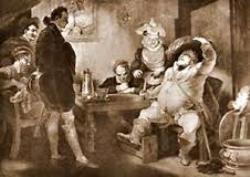
Yet herein will I imitate the sun,
Who doth permit the base contagious clouds
To smother up his beauty from the world,
That when he please again to be himself,
Being wanted, he may be more wondered at
By breaking through the foul and ugly mists
Of vapors that did seem to strangle him.

 — Henry VI, Act 1, scene 2

Yes, I used to know my Shakespeare, back when I believed such ‘fancy’ stuff like that made a lick of difference in this world. I was younger then. Bright eyed and bushy tailed. Hopelessly naïve. The real world had not yet set me on the more adult path of bitterness, despair and pitiful, pitiful acceptance of the ho-hum humdrum.

But I do remember this particular passage. Not so much the words themselves as the sentiment, the conceit. I am reminded of it often these days, watching in disbelief the antics of the low grade politicians that call themselves ‘conservatives’.

When the realization of their victory begins to sink in, whether in its inevitability running up to an election or in the hazy daze of their improbable win, we like to take comfort and soothe ourselves in the belief that, well, it won’t be so bad. They were just saying all that to get elected. Once in office, reality will set in. They’ll have to compromise. After all, we didn’t elect a king! This isn’t Russia. Is this Russia? This isn’t Russia.

It is the lowered bar of expectations. Not a question of how good they will be but how bad they won’t be. By anticipating the worst, we are, if not pleasantly surprised when that doesn’t come to pass, relieved at least that the world didn’t blow up or the institutions of governance remain functioning even at a diminished capacity. The sun still rises and the birds continue to sing.

The one big difference, however, between our modern day conservatives and the Bard’s heroic man who would be king, Hal, is that the fictional prince actually cleared the bar, spectacularly so, much to the woe of Hotspur and, ultimately, the French at Agincourt. This story shall the good man teach his son/And Crispin Crispian shall ne’er go by/From this day to the ending of the world/But we in it shall be remembered/We few, we happy few, we band of brothersAnd gentlemen in England now-a-bed/Shall think themselves accurs’d they were not here/And hold their manhoods cheap whiles any speaks/That fought with us upon Saint Crispin’s day.

By the time Prince Harry became King Henry, his sordid youth, his delinquent past, those low expectations served only as a counterweight, a compare and contrast to the glorious achievements he would attain once he stepped out from behind “…the base contagious clouds…” that did “…smother up his beauty from the world…” and broke “…through the foul and ugly mists/Of vapors that did seem to strangle him.” Hoo-rah! Long live the King!

Conservatives these days never intend to clear that bar. They simply bull through, knocking it off its posts and insist on lowering it ever so slightly, incrementally so, to make another anemic attempt to hoist themselves awkwardly over it. We can survive the occasional misadventure but a steady stream of deliberate failures weakens us little by little, bit by bit.

In this rigged set-up, only the politicians and leaders who aim higher and exhort us to believe in the possibility of positive, inclusive change are the ones that flame out spectacularly. We expected so much. They promised us the moon but failed to deliver. Sure, we might be better off than when we started. But you promised us the moon.

Our conservatives suffer under no such illusions of grandeur. We expect the worst and appreciate it when that doesn’t actually come to pass. Oh well, we shrug. It’s bad, sure. But it could’ve been a whole lot worse. We sink back into a funk and seem content when we’re informed that we no longer want politicians who offer up grand visions or designs.

From Hal to Homer we’ve traveled. Homer Simpson that is, not the Odyssey Homer. “Trying is the first step to failure.” It is the mantra of the conservative movement. Hey. We can’t do anything for you. Stop thinking we can. Elect me. So we do and the sad fact is, we are never disappointed.

epically submitted by Cityslikr

On The Road To Metropolis

Mission Accomplished.

In less than two generations, conservative “thinkers” and politicians have succeeded in their undertaking of denigrating and vilifying the notion of government as a force for good. It can’t help, only hinder. The best form of governance is less governance. As St. Ronnie intoned (and everybody say it along with me), government is not a solution to our problem, government is the problem.

So it is that we have arrived at a spot in history where the eminence grise of Canadian conservative thought, Preston Manning (which should say a lot about the sad sack state of conservative thought), is able to boast that Canadians are not looking to governments for grand visions or designs for society. “Managerial Conservatism” is now the buzzword we should all rally around. Competence replacing edifying or lofty in the expectations we now look for in our elected representatives.It’s all about lowering the bar which makes it more palatable when the likes of George W. Bush, Stephen Harper and Rob Ford assume the mantle of office. Governments can’t do anything positive for us, so why elect anyone who claims they can? It’s a virus that has fully infected non-conservative parties and politicians as well. Dumb down their rhetoric. Eliminate any thoughts of grand visions or designs they might have. We don’t want leaders. We want managers. Bad managers are even preferred to those wanting to impose their dreamy dreams upon us.

With the advent of managers business think invariably displaces political discourse. It’s all about finding efficiencies, value for dollars, bangs for you bucks. We become taxpayers rather than citizens. Customers, clients and stakeholders. In fact, it’s much worse. We’re little more than widgets to the minds of manager/politicians. (Oh, where has our veneration for warrior-poets gone?)

Witness the insidious creep of some icky, sci-fi/Scientology sounding Lean Six Sigma into our public sphere. Down in the States, it’s claiming the brains of various GOP presidential candidates. Lean Six Sigma is already in practice even closer to home in Erie County, New York where County Executive Chris Collins has credited the system with aiding him in slashing jobs. Our very own budget chief, Michael Del Grande, also seems to be brushing up on his knowledge base as he expensed two books on the subject earlier this year.

While I don’t expect our modern political leaders to be well versed in their Plato, Hobbes, Locke, Hume, Tocqueville, it distresses me that they might be filling their hearts and minds with such soulless ideas as these:

  • Six Sigma seeks to improve the quality of process outputs by identifying and removing the causes of defects (errors) and minimizing variability in manufacturing and business processes.
  • Each Six Sigma project carried out within an organization follows a defined sequence of steps and has quantified financial targets (cost reduction or profit increase).
  • The term Six Sigma originated from terminology associated with manufacturing, specifically terms associated with statistical modeling of manufacturing processes.
  • In Six Sigma, a defect is defined as any process output that does not meet customer specifications, or that could lead to creating an output that does not meet customer specifications.
  • Like its predecessors, Six Sigma doctrine asserts that:
  • Continuous efforts to achieve stable and predictable process results (i.e., reduce process variation) are of vital importance to business success.

It’s all about things and processes not people. Perfectly acceptable if you’re talking about manufacturing products but how does it align with governing society? It feels like we’re on the road to Metropolis. All of us replaceable parts, judged and viewed not by our merits or character but by our lack of defects. If our elected leaders are endeavouring to be nothing more than our managers, doesn’t that make us simply staff or the hired help?

If a country or a city no longer aspires to grand visions or designs, what’s there left to do? The answer that immediately springs to my mind is: lead lives of quiet desperation. That may be what managers want from their employees but it hardly seems like something leaders should have us aspire to. And that certainly shouldn’t be the quality we’re looking for in our leaders.

desperately submitted by Urban Sophisticat