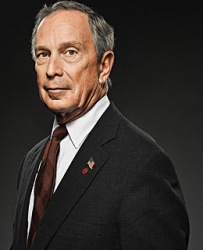
Anti-Union Thuggery

Can you smell that?

A slightly, sulphurous scent with just a hint of nutmeg, I believe. Nutmeg?  No. More like frangipane.

The unmistakable odor of anti-unionism.

Here we are, 2+ years into the biggest financial clusterfuck in nearly 8 decades, and the overwhelming conventional wisdom has it that it’s all because of those privileged, fat cat, parasitic unions. More specifically, public sector unions. All levels of government coffers have been sucked dry by the relentlessly rapacious demands of their unionized public servants. Enough is enough. It’s time that we decent, upstanding, put-upon non-unionists start pushing back. We don’t have job security. We don’t have pensions. We don’t get overtime pay. We’re not given two months off every summer… Man, wouldn’t that be sweet. Wonder how we could get us some of that? Maybe, a group of us get together, organized style. Go to our boss—No wait. Correct answer is: if I can’t have it neither can anyone else! Just like in grade school. You can chew gum in class as long as you’ve brought enough for everyone else.
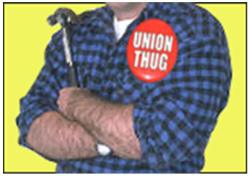
The full frontal assault is now well under way south of the border as a host of state legislatures look to enact measures ranging from massive layoffs to outright de-certification of public sector unions. It’s a battle played out in real time over the holidays in New York City after it was buried under snow between Christmas and New Years. After serious problems clearing the snow and getting the city moving again, allegations arose in the Rupert Murdoch owned New York Post from “unnamed sources” that the city’s sanitation union, smarting from cutbacks, directed members to drag their heals in doing their jobs as sort of payback. Never mind the 300-400 less bodies in the department to do the actual snow removal. Never mind the mayor’s reticence in declaring an emergency situation; itself a possible product of a hesitancy brought on by a desire to keep costs down. Never mind that surrounding municipalities not subject to the alleged union order work slowdown but under similar financial duress had trouble contending with the storm as well. It was the union’s fault which a subsequent investigation will surely reveal.

Such anti-union rumblings resonate up here, too. Despite proclaiming himself a fiscal warrior, Mayor Rob Ford led the charge last month to get a vote passed in council to ask the province to declare the TTC an essential service which would take away its workers’ right to strike. Never mind that this could cost the city more down the road in terms of mediated settlements. It’s the opening salvo in what is increasingly looking like contentious upcoming union battles the mayor is preparing himself for.

Which is just good politics if not good governance. Everyone has a story to tell about just how corrupt/inept/diabolical unions are. All those workers hanging around, perched on their shovels, filling in one pothole. Physical intimidation of the poor, trembling public at picket lines. That sleeping TTC ticket taker! Could you believe that? Yeah, the union said he was sick or some bullshit like that… What? He died!? What was the union doing, forcing a sick man to work?! It’s the union’s fault!
And if you yourself don’t have a personal anti-union anecdote to contribute to the conversation, you need not look any further than the media to provide you with one.

Witness “Dragon” Kevin O’Leary. Making out just fine on not 1 but 2 shows on the publicly funded CBC, he cannot mask his contempt for unions, calling them ‘evil’ earlier this week on his O’Leary and That Other One Report. Evil? Why? Their labour and legacy costs have been the wrack and ruin of the North American car industry and given China a distinct advantage in the automobile market. Apparently it was because the companies had to keep paying the unions more and more that they were forced to keep building bigger and bigger cars and trucks.

Or how about “There’s Not A Right Wing Shibboleth I Couldn’t Write An Incomprehensible Screed About” Sue-Ann Levy of the Toronto Sun. Her piece from last week is a check list of heads that must roll and kneecaps that must be busted for City Hall to get its fiscal house in order because, as you know, the place doesn’t have a revenue problem, it’s got a spending problem. The main culprits? Hint: unions and their ‘mob bosses’. Ms. Levy hits that note twice so that even Sun readers couldn’t possible miss the implied innuendo. Mob = mobster = gangster = criminal = should be in jail. She throws in a ‘dictatorial’ descriptor as well to suggest that unions are anti-democratic.
This is nothing less than class warfare. More sadly, it’s class civil war with the middle and lower classes at each other’s throats over an ever decreasing slice of the economic pie brought on by 30 years of upward redistribution of wealth. The public purse has been ransacked by a frenzied rush to the bottom of tax cuts and the movement of our manufacturing base overseas in the name of unfettered, under-regulated, free market globalization. With the occasional bailout of industries deemed too big to fail. Yet somehow, it’s all the unions’ and our public sectors’ fault.

Such easy scapegoating is indicative of moral cowardice on our part. We know who’s to blame for the financial straits we are currently facing but engaging the real culprits is a much bigger, nastier battle than we’re willing to be a part of. So instead, we turn on easier targets, making ourselves feel better in the process but doing absolutely nothing to solve our problems.

submitted by Cityslikr

The President’s Man Goes Local

So Rahm Emanuel resigned his post as chief of staff to the most powerful position on the planet (after, that is, the top 5 places within the Chinese government structure) to run for the mayoralty of Chicago. This is a guy who served for three terms in the House of Representatives. He’s now running to be mayor of Chicago. A power broker inside the D.C. Beltway packs it in for what looks to be a rough ride of an election in the 3rd biggest city in America.

Does that strike anyone else as a step down a rung or two of the success ladder?

I mean, aren’t mayor positions simply consolation prizes for those without the goods to make it big at state/province or federal levels of government? It certainly seems to be the case here in Toronto during this particular campaign cycle. Also-rans and not-quite-good-enoughs battle it out for ultimate supremacy of this backwater burg we call home.

Yet, here’s arguably the meanest, nastiest and most successful backroom Democrat in recent memory heading out of Washington to try his luck running for the lowly position of mayor. Obviously it’s some sort of punishment being meted out for the crime of pushing President Obama too far to the middle. Yeah, thanks for all your help, Rahm. How be you just run along now and try your hand at local politics?

Or, maybe this is a case of an extremely motivated politician realizing just which way the wind is blowing, where the action really is. Cities are where it’s at, baby. In this globalized world of increasing urbanization that we’re living in, cities are assuming control of the agenda, the engine driving innovation, sustainability, diversification. What politician with an elevated sense of self-importance (one can posses that trait in a good way) wouldn’t want to be at the forefront of all that?

Gazillionaire Michael Bloomberg, touted as a possible independent candidate to run for the presidency of the United States, takes a pass, opting instead to stay as mayor of New York City. In Los Angeles, Antonio Villaraigosa dabbled for a time in California state politics before moving into the municipal arena, first as a council member and then mayor. Portland Oregon mayor Sam Adams has burst onto the national scene as a leading advocate for building environmentally sound cities. So famous has he become that a beer has been named in his honour.

But over the course of Toronto’s dreary 9 month campaign so far, we’ve been told it’s just about filling potholes and fixing street lights. After 7 years of tentatively stepping toward the future, all we’re hearing now is what we can’t do, not what’s possible. Voters are cowering in the face of necessary and exciting change; their fears and worst instincts catered to by unimaginative candidates who seem oblivious to the shifting sands of where power is headed. We imperil our ability to adapt to what’s coming and thrive in the possibilities that will arise if we hand over the levers of power to someone incapable of seeing past nickels and dimes.

Rahm Emanuel seems to understand this. He’s angling to take the reins of a great but deeply troubled city. Much more troubled than even the worst case scenario being painted about Toronto by the hysterics contending for the mayor’s position. Chicago’s money woes are significantly worse than ours. Allegations of actual corruption and cronyism have stuck to some of the outgoing city officials. Crime is a significant problem there and not just a convenient bogeyman being shaken around in order to frighten voters.

Despite all of that, Rahm Emanuel wants to be the mayor of Chicago. There’s an element of flight, certainly, from an administration looking to take a hit in next month’s midterm elections. If it does happen, there’ll be plenty of fingers pointing at Emanuel as a prime architect of Obama’s fall from grace. But he could run toward a much more lucrative spot in the private sector, assuming such a thing exists anymore which also might explain the President’s low approval ratings.

Emanuel’s decision to follow in the footsteps of Richard M. Daley bespeaks of how important cities have become on the political landscape. Those accepting that new reality have begun to assume responsibility for proper future planning, at times defying upper levels of governments by setting more stringent environmental targets and broadening personal rights and freedoms. In the vacuum created by the divestment of powers by successive federal and provincial/state governments as a way to balance their books, forward thinking cities have assumed the responsibilities and set out on a course to not only remake themselves in a 21st-century fashion but the regions and countries that they are part of as well. Savvy politicians like Rahm Emanuel recognize that and are jumping at the chance to get involved.

It’s unfortunate Toronto has been hijacked by mayoral candidates more content to wallow in petty grievances and almost tribal hostility instead of generating ideas about how best to move into a future where cities will be at the forefront of policy decisions and societal change. If the next mayor doesn’t understand that and seize upon it, all the advantages we as a city have presently (and we have many) will be for naught. Our enviable position cannot be translated into expanded opportunity by merely filling potholes and fixing streetlights. We need to stop shying away from thinking bigger.

civically submitted by Urban Sophisticat

Meet A Mayoral Candidate XI

It’s Friday so let’s Meet A(nother) Mayoral Candidate!

This week: Michael Bloomberg.

What? Wait? Who? Michael Bloomberg?! What are you talking about? Enough already with the New York kick. Are you talking, Michael Bloomberg, that Michael Bloomberg? He’s not running here, is he? Can somebody actually be mayor of two cities at the same time?

No, no. Michael Bloomberg’s not running for mayor of Toronto but he probably could if he wanted to. I mean, who’s going to say ‘no’ to the 8th richest person in the United Stats?

We’re just taking a little break this week in the Meeting A Mayoral Candidate in order to explore a couple issues about electoral reform using the New York mayor as a jumping off point. Don’t worry. We’ll be back next week with our regular post highlighting one of the lesser known names in Toronto’s mayoral race.

When you’re talking a strong mayor system, New York City has, I think, what would be called a very strong mayor system. The position is a branch of municipal government all on its own, the executive branch to be exact, separate from the city council, much in the way that the American president is separate from Congress and governors are distinct from state legislatures. While mayors of Toronto have just recently been given modest powers to name committee chairs (and therefore the majority of members of the executive committee), in New York the mayor has a much wider reach of appointees who oversee the running of the city.

In Toronto, as a voting member of the council, the mayor can more readily steer the agenda toward the floor of council to be voted on but ultimately the position amounts to just one vote of 45 albeit the most prominent vote. Unless a mayor can muster 22 councillors to vote with them, a simple majority can override a mayor’s wishes. Not so in New York. While a mayor there doesn’t even vote with the council, they can veto any law that arrives on their desk from council and if the council then can’t muster up a 2/3s majority to override the mayor’s veto, the bill dies. So a mayor of New York can shape the debate with only 1/3 of council+ 1 behind them.

Michael Bloomberg himself brings a couple interesting things to the table. He takes no pay aside from a $1.00/year token sum. He does not live at Gracie Mansion, the traditional home of New York’s mayors. He’s taken no public money to finance any of his 3 election campaigns and reportedly spent over $70 million of his money to win the office back in 2001 and again in 2005.

To some, this makes him beholden to no one. Owing no favours, he governs with the city’s best interest at heart. A beneficent ruler, you might say, the ultimate philanthropist. Hopefully the next billionaire who decides to buy the office is as enlightened as Michael Bloomberg.

So beloved by his subjects electorate that when Bloomberg decided the two term limit was for mere mortals like Rudy Giuliani, the council extended him an additional term and the voters agreed by re-electing him in 2009. What happens in 2013 when Bloomberg comes to the conclusion that his work is not yet done as mayor of New York? Another special dispensation? Why go through the whole motion of setting term limits as a device to curtail career politicking if you’re simply going to ignore them when you have someone in office you particularly like or, at least, don’t yet loathe?

In the hyper-partisan world that is politics in the U.S., Michael Bloomberg is something of an oddity. He is a Democrat turned Republican turned Independent who seems to be working well with a city council that is heavily, heavily Democratic. Maybe that’s a sign that party affiliation at the municipal level doesn’t matter. At least, not if you’re ultra-independently wealthy like Michael Bloomberg.

So what does all this tell us about the varying types of governance at the municipal level which is something the Better Ballots folks are in the process of exploring here in Toronto? Do we really want people financing their own way into politics even if their intentions are honourable? Doesn’t that just lead us back down the path to a past where wealth and status trumped everything else including any sort of party system that might be in place? Democracy bought by few people to represent those without deep pockets.

This is especially troubling when paired with a strong mayor system. The richest person in the race gets elected and, fingers crossed, they’ve sought office for the best, most noble of reasons. And if they haven’t? Well, term limits aren’t going to spare us if they can just be ignored especially if other like minded politicians have also purchased elected power. It all seems unhealthy and a step back to a time that was not very conducive to a full and equal participatory democracy.

And yet, New Yorkers still seem quite happy with their mayor. Hardly the case here in Toronto. Maybe we’re not the big fans of democracy we like to think of ourselves as. All that we’re really looking for is a benign autocrat. A rich uncle who will know what is best for us and will act accordingly.

dutifully submitted by Cityslikr