Disrespect For Democracy

Phee-ew. That’s a relief.

It seems when Sideshow Doug started spewing forth his twisted vision of a Disneyland waterfront earlier this week, he wasn’t just flying by the seat of his pants, making shit up as fast as the words could tumble from his mouth. No. We hear tell today that, in fact, this has been in the works for months with developers and designers already chiming in with their thoughts and ideas. There has been a plan taking shape, quietly out of public view…
Wait, what?

I thought the Ford Administration was going to be all about openness and transparency. Out there on the campaign hustings last year, fresh-faced candidate Rob promised if elected that he would put an end to all those backroom, sweetheart deals that were, apparently, going on around City Hall during the Miller era. I have no idea if the waterfront plans he’s concocting will qualify as a sweetheart deal but they certainly are looking awfully backroom-ish at this point.

Where have you gone, honest Rob-io? Ford Nation turned its lonely eyes to you.

Try as you might to parse it favourably but it’s damn near impossible to see this as anything other than backroom wheeling and dealing, and another broken campaign promise to toss in pieces onto the ever growing list of broken campaign promises. During the campaign, the mayor said Toronto couldn’t afford to develop the waterfront. Now he’s looking to assume control of a portion of it from the senior levels of government so the city can develop away. But it won’t cost us a thing, of course, as everything will be left up to the magic of the private sector. So I guess that technically doesn’t count as a broken campaign promise. Just slightly altered with a pinch of wishful thinking.

How many times does this have to happen, this easy discarding of platform planks that got the mayor elected, before there’s a significant bleeding of support by those who had put their hopes in Rob Ford not being just another dishonest politician with a disregard for those who voted for him? Accountability, he pledged. Respect, la la la. Now, in a desperate bid to keep from inflicting massive services cuts that he guaranteed wouldn’t happen, Team Ford has set its greedy sights on a sellable city asset, fucking with a plan for the waterfront that’s already in place and that has the support of more than just simply left wing kooks and the downtown elite. What’s that you say, John Tory?

During this week’s hubbub over Doug Ford’s backroom vision for the waterfront, a minor set-to bubbled up when Councillor Kristyn Wong-Tam sent a letter to the mayor, decrying his kingly decree that Toronto would not express any interest in hosting the 2020 Olympic Games. Whether or not it was a good idea to pursue such a venture is entirely beside the point. It’s the manner in which the mayor decided, by ‘fiat’ the councillor wrote, that should be of concern. Hardly the open or democratic style the mayor promised his administration would be. Another thumbing of his nose at Ford Nation.

Councillor Denzil Minnan-Wong was dutifully summoned to defend Mayor Ford in the obtuse, petulant styling that is his trademark. “… if the mayor actually had said he was supporting it [an Olympic bid], she would be the first one to criticize the fact that he was moving forward with this without going to council to begin with.” Uhh, yeah councillor, she probably would. That was the point of the letter. The unilateral way the mayor’s office announced a decision on an Olympic bid from Toronto. Did you actually read it before publicly popping off?

The mayor didn’t say that he was against pursuing a bid but if council thought it was a good idea, well hey, that’s how democracy works. No. He and his brother and the deputy mayor simply stated we couldn’t afford it. End of story. But how about that ferris wheel, folks?

Isn’t that the very antithesis of the openness, transparency and accountability the mayor promised he’d institute if elected? He’s not even pretending that he’s listening to the voters at this point. Gone is the usual claim of receiving hundreds of calls from taxpayers demanding we not try for the Olympics or that we put a monorail and shopping mall in place of the waterfront plans that have been in the works for a decade now.

It would appear that the trappings of power have gone to our once humble, folksy, just one of youse guys mayor. He’s become quite comfortable regally pronouncing policy, avoiding debate and votes when he can, bullying the necessary numbers at council when he must. It’s disconcerting that so many councillors have simply accepted their role as nothing more than fawning courtiers but the real tragedy is if the once feisty and outspoken Ford Nation falls submissively in line as His Worship’s loyal subjects.
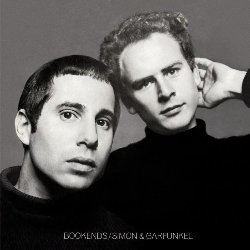
in a (Gar)funkely submitted by Cityslikr

Our Summer Farce

(Since summer is the season for repeats, a rebroadcast of our post at the Torontoist, looking at the Core Services Review of the Public Works and Infrastructure Committee. Re-enjoy.)

*  *  *

The good news emerging from yesterday’s Public Works and Infrastructure Committee meeting was that there was no last minute, duplicitous motion put forward by any of the mayor’s men to derail or erase projects in other councillors’ wards. In May, Councillor David Shiner (Ward 24, Willowdale) nixed the Fort York bridge, pulling the rug from out under Councillor Mike Layton (Ward 19, Trinity-Spadina). Last month, it was Councillor John Parker (Ward 26, Don Valley West) blindsiding Councillor Kristyn Wong-Tam (Ward 27, Toronto Centre-Rosedale) with the news that plans were afoot to remove the Jarvis bike lanes.

The bad news, however, was three-fold.

First, the KPMG core services review report was revealed to be wholly unsatisfactory in addressing our alleged budget crisis. Under questioning from committee members, councillors Layton and Gord Perks (Ward 14, Parkdale-High Park), as well as visting (i.e. non-committee member) councillors like Shelley Carroll (Ward 33, Don Valley East) and Adam Vaughan (Ward 20, Trinity-Spadina), the report and its corporate authors (along with City staff) went limp. It quickly became clear just how narrow the report actually is, offering only the broadest strokes of possible “savings opportunities” (a.k.a. cuts), with little to no examination of the impact or implications of taking such opportunities. (For instance, the health impacts—and subsequent economic burdens—of rolling back fluoridation in the water or scaling back environmental programs were not included in the report that recommended those cuts.) The validity of the report’s comparative analysis with other cities came under question too. Aside from size, why Melbourne, Australia? An entirely different beast, structurally and governmentally; where were the instructive comparisons? And why were no other municipalities in Ontario examined in the report? They suffer under the exact same provincial handcuffs as Toronto does. Wouldn’t that be more helpful?

Even worse was how the subject of waste diversion was handled. The report clearly ignored key relevant numbers—such as the amount of money the city receives from recycling, which brings down the actual cost to us of collection—in assessing the financial benefits of potential cuts. Additionally, KPMG’s suggestion that our target rates were too ambitious was questioned by a deputant who claimed, in fact, the city of Toronto lagged behind almost ever other municipality in the GTA and was still below a proposed provincial target of 60 per cent.

Such deficiencies just begin to scratch the surface of the problems with the KPMG report. After nearly eight hours of listening to presentations, deputations, questions, and answers, it was hard not to come to the conclusion that the report is little more than a big ol’ softball for the mayor to hammer for extra bases. Big, scary cuts will be dangled out at us with no intention of ever implementing them, so that other cuts will actually happen and we’ll all breathe a heavy sigh of relief, telling ourselves that, well, it could’ve been a whole lot worse.

Bringing us to problem number two. The right wing on the Public Works Committee doesn’t give a shit about any of that. To a man (and they were all men) they couldn’t have looked less interested in yesterday’s proceedings if they’d pulled out blankies and pillows and taken a nap right on their desks. At one point of time, three of them—councillors Grimes (Ward 6, Etobicoke-Lakeshore), Parker, and Shiner—left the room entirely, bringing things to a halt due to a lack of quorum. The questions they asked of staff, KPMG, and deputants were few and far between. Committee chair Denzil Minnan-Wong’s (Ward 34, Don Valley East) sole purpose, it seemed, was to run interference for staff and the KPMG representatives when the line of questioning from other councillors got a little too aggressive or demanding.

All of which leads to the third and most damning problem of the committee meeting. After all was said and done—reports given, deputations made, questions asked—the councillors on Public Works voted to punt the report to the stacked-with-mayoral-allies Executive Committee. Except for seeking further information on snow removal (a big item in places like Shiner’s North York ward), street cleaning, and water fluoridation, the Public Works and Infrastructure Committee decided to make no decisions or even recommendations on the KPMG report, leaving it entirely in the hands of Mayor Ford and his executive. It is a move that will quite likely get repeated at every committee meeting over the course of the next 10 days or so. There will be much posturing and posing, ignoring of deputations, blowing smoke and spinning narrative, sound and fury signifying nothing, only to have each and every decision handed meekly over to the mayor to deal with as he sees fit. A complete and utter abrogation of responsibility by the majority members of the City’s standing committees.

Perhaps, that’s overly harsh. Maybe it’s a gambit on some councillors’ part to try and make the mayor show his hand, to be the first to go on record saying what he wants cut. Either way, it seems that the committees are telling us that tough decisions have to be made. Just not by them.

resubmitted by Cityslikr

Vengeance is Ford’s

Upper Jarvis Street was a lovely avenue when my grandfather’s grandfather, William R. Johnston, built his mansion on it in 1875. He and his family lived there until 1916, when they were part of the exodus of Toronto’s high society north to the suburbs of Rosedale and Forest Hill. Today, neighbours call 571 Jarvis, at the corner of Isabella, The Grey Lady and it serves as office and training space for Casey House. Meanwhile, Jarvis St. became a battleground for competing visions of what Toronto can and should be.

One sides sees Jarvis as a 1950s-style “traffic corridor,” a glorified highway to zip central Toronto residents downtown and provide suburbanites an alternative to the Don Valley Parkway’s congestion. Another vision, championed by Councillor Kristyn Wong-Tam among others, would have Jarvis as a pedestrian-friendly cultural corridor. Of course, we didn’t hear much about cultural corridors at city council this week, just rage over bike lanes.

Jarvis was actually an unlikely site for such a crusade. Despite the whining of the soccer moms in Councilor Karen Stintz’s North Toronto ward, the bike lanes weren’t really that disruptive for carists. Maybe they added a couple of minutes to the commute, but the five-lane system was far from elegant and left the lanes too narrow to really be safe. As Councilor Josh Matlow noted, the bike lanes actually improved the road for drivers. Meanwhile, let’s face it, if we could install just one north-south bike lane between the one on Sherbourne and the one on St. George and Beverly, we wouldn’t put it on Jarvis—we’d want it on Bay or Yonge. Besides, bike lanes aren’t essential to a cultural corridor; in fact, they meant the sidewalks weren’t widened as originally planned.

Nevertheless, the cyclists picked my great-great-grandfather’s old street to make their stand. Inevitably, they were frustrated that the carists showed absolutely no understanding of even the most rudimentary elements of transportation planning. Mayor Rob Ford’s allies treated self-serving anecdotes as data and dismissed contrary evidence as corrupt. They also delighted in their procedural deviousness. So while the cycling community held out hope that the vote would be close, the bike brigade never had a chance.

For Ford Nation, this skirmish was about far more than bike lanes or even just a clash of competing visions—it was a triumph of vengeance over vision. Ford and his faction on the previous council felt so dismissed by the Miller administration that once they grabbed power, they were going to make damn sure to treat the council’s left wing the same way. Only worse. (This comes as no surprise to anyone who understands Ford’s essential childishness.) More than that, the mayor is determined to undo as much of Miller’s legacy as he possibly can, no matter the merit or the cost. Transit City’s four LRT lines? Now just one. The Fort York bridge? Gone. Jarvis as a cultural corridor? Nope. Instead, the five lanes will return at a cost of $500,000 to respected taxpayers.

Those of us who saw Don Cherry’s rant at Ford’s investiture as classless and inappropriately partisan missed the real message: he was signaling that Ford’s reign would be all about spite. But vengeance is not only a disastrous way to run a city, it’s a foolish political strategy.

So the bad news is: a lot of things in Toronto are going to get much worse before they have a chance to get any better. By shrinking the planned expansion of transit (and even cutting back on existing service), by making our streets more inhospitable to cyclists and by completely ignoring pedestrians, Ford ensures that our roads will become even more congested.

But the good news is: Ford’s government by vengeance ensures that voters will react by giving a strong and clear mandate to a city builder with a vision of Toronto as a place that works for everyone, not just those behind the wheel. And someday Jarvis will become a cultural corridor because those are the kinds of streets great cities nurture. I’m pretty sure that’s what William R. Johnston would want for his old ‘hood.

— submitted by Tim Falconer is the author of three books, including Drive: A Road Trip through Our Complicated Affair with the Automobile.