The Truth Is Easier

(This is an earlier version of a post first seen at Torontoist this week. It was recently discovered in a bottle found floating somewhere near Union Station.

If you tell the truth, you don’t have to remember anything.

— Mark Twain

Since the municipal campaign heated up in 2010, Toronto has been existing in a fiscal alternative reality. City Hall was a painted as a place full of tax-and-spend, corrupt politicians, held captives by unions with rivers of debt turning our streets blood red. Businesses were fleeing. Graffiti blighted the skyline as far as the eye could see.

But fear not, good citizens taxpayers. A fix would be easy. A nip here, a tuck there. A round of some good ol’ fashioned belt tightening. All done with no service cuts…guaranteed. We’d be good as new in no time.

That virtually none of that nonsense rhetoric held any water was hardly the point.

Our credit rating was just fine, thank you very much. Corporate and condo towers were rising up at a record rate. Toronto continually found itself with high rankings on international lists of liveability and business friendliness.

But one time fringe councillor Rob Ford and his small band of right wing ideologues convinced enough voters to get himself elected mayor that his version of reality was true. Stop the Gravy Train! And the assault on fact, veracity and just basic high school economics has been ongoing ever since.

One of the first signs that we’d been had came when the Ford administration filled the holes in its inaugural budget using a more than $300 million surplus left behind by the previous mayor, David Miller. Wait, what? David Miller? That profligate David Miller? A surplus? But…but…?

Not so fast, folks, Team Ford told us. It wasn’t a surplus. It was a ‘one time savings’. Those are two entirely different things.

Then we had another surplus—errr, one time savings. And another. And just this past week, another surplus—errr, one time savings was announced for the first quarter of 2012.

So, I have to ask: How many one time savings does it take to make a surplus?

In the real world of municipal government financing here in this province, cities are prohibited from running an operating budget deficit. So they tend to over-estimate their projected costs and downplay possible revenue. Surpluses are not at all unusual or one time. In fact, they are a sign of sound fiscal management.
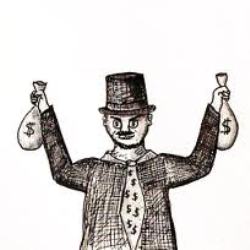
Now, it can be argued that sometimes city staff is a little too conservative with their estimations and present a more dire situation than is really the case. This prompts an over-reaction from some politicians who demand unnecessary cuts and reductions in order to meet the bottom line. It’s a problem that has been exacerbated (in this writer’s opinion) here in Toronto by council’s decision to get a budget done as close to a calendar year as possible while the actual wheels of finance and commerce operate on an April-to-April fiscal season. A time lag is created, with more uncertainty, more guesswork and more conservative estimates.

In the face of these continued occurrences of one time savings (annually, like clockwork), Mayor Ford has been forced to make some tough decisions. Like cutting services. Oops. Yeah, about that guarantee…

Well, first of all, the mayor would appreciate it if you stopped calling them cuts because they’re not cuts. They’re efficiencies, and he never guaranteed not to find efficiencies. In fact, he guaranteed he’d find efficiencies.

Besides, to the mayor’s way of thinking, you can’t have a surplus if you owe money, and while municipalities aren’t allowed to run operating budget deficits, they can rack up a whack of capital debt. Cities have to build and maintain things like roads and a public transit system and it turns out that shit is expensive. How else are you going to pay for it other than using any and all operating budget surplus—errr, one time savings? The bigger this one time savings, the more capital debt you can pay down. In order to increase a one time savings, you need to trim here and there on the operating side of things.

So, you see the dilemma Mayor Ford’s facing. The only other alternative to using operating surpluses to offset capital costs is debt financing. And as Councillor Doug Ford suggested at Tuesday’s budget committee meeting, debt is the first step toward bankruptcy as anyone who’s ever taken out a mortgage knows.

Imagine all the things we could have if we weren’t paying interest for the things we need. Our budget chief pointed out that the city saved $20 million on interest charges last year. That’s almost a third of the amount we lost by repealing the detested vehicle registration tax a couple years ago. It’s also a drop in the bucket of cash we gave away by freezing property taxes in 2011 and not making up the difference in 2012.

The trouble with debt, in the eyes of Team Ford members, is that you need to generate revenue to pay it off. Generating revenue is just another term for taxation, and a civil society cannot function properly under the burden of taxation. Government should not be in the business of generating revenue because generating revenue is the business of business.

This is the worldview we’ve allowed to permeate throughout City Hall.

No debt. No revenue. No expenditures except for in the service of those first two rules. That this is inherently contradictory and mathematically impossible seems utterly lost on the people pursuing and advocating these policies. But the one lie—errr, piece of campaign hyperbole – that this city was going to hell in a hand basket and our fiscal foundations were crumbling – served as the little piece of thread that, once pulled, unravelled the entire outfit. One invention led to another two being needed to prop the first up, and so on and so on.

The truth is much more economical. If we’d had an honest and straight-forward discussion from the beginning, that the city was facing some challenges, some very serious challenges, but was in a strong position to deal with them, we wouldn’t be wasting our time and energy, digging through the mounds of falsehoods and illogical that now makes up the debate at City Hall.  We wouldn’t be constantly reminding the mayor and his supporters that what they said then is miles away from what they’re saying now. The target we’re shooting for wouldn’t constantly be in motion.

cross my heartedly submitted by Cityslikr

Death To My Hometown

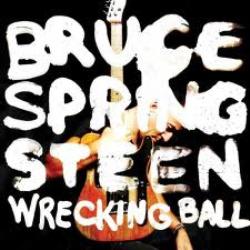
To some of us of a certain vintage (aged nicely like a bottle of wine), Bruce Springsteen holds a special place in our musical hearts. He appealed to our youthful restlessness, a passionate desire to be someplace other than where we were, someplace that had to be more exciting, more grittily rock-and-roll. Where there was an opera out on the turnpike and a ballet being fought in the alley.

Teen-aged intensity gave way to a certain level of disinterest which I blame more on our move from vinyl to CDs rather than to any decline in quality in Springsteen’s output. We became more distant, less engaged and hands-on with our music. Our attention wavered and The Boss demanded utter devotion.

Or we just got old. I’m willing to accept that distinct possibility. But at some point Born To Run became less an anthem than a song that filled the dance floor with drunken wedding guests.

I bring this up not as some sort of Saturday nostalgia trip but because I came across an excerpt of Marc Dolan’s “Bruce Springsteen and the Promise of Rock and Roll” earlier this week in Salon. Even if you aren’t a Springsteen fan or even know who he is, I highly recommend reading the article as it traces the politicization of the musician during the Reagan era and Springsteen’s own rise from cult status to full blown superstar. It is truly fascinating.

In my beer drinking days before I became a Chardonnay swilling elitist, I remember having a heated drunken barroom argument about the politics of Springsteen’s Born in the USA song. “What do you mean it’s all rah-rah America’s great!” I said indignantly. “Have you listened to the lyrics aside from the chorus?” Born down in a dead man town/The first kick I took was when I hit the ground/You end up like a dog that’s been beat too much/Till you spend half your life just covering up. “What part of that screams, Morning in America to you?”

In his book, Dolan suggests that both Reagan and Springsteen shared an overlapping ideology if not politics. A particular rugged individualism and a dream of freedom for people to pursue life on their own terms, unhindered. So much so that during the re-election campaign in 1984, the president’s handlers overtly sought to piggyback on Springsteen’s growing popularity in order to expand beyond Reagan’s traditional base. There’s a hilarious description of a buttoned-down and bow-tied George Will attending a Springsteen concert.

“In general, Will found Springsteen androgynous, noisy and surrounded by pot smokers, yet in the end he concluded that the singer was ‘a wholesome cultural portent’  As a political commentator, Will may not have cared about rock ’n’ roll’s future, but he did see Springsteen’s abundant success as an emblem of a robust American present.

The difference was, ironically, the politics of freedom and individualism espoused by the much older Reagan’s was formed by a combination of his fervid anti-communism and an adherence to the nascent neo-conservative belief in the supremacy of the free market while, according to Dolan, “…Springsteen finally moved beyond his 1960s rock ’n’ roll individualism, back to the New Deal communalism he had instinctively absorbed from his parents.” Freedom from the tyranny of the state versus being free only if we’re all free. Freedom for me versus freedom for all.

What’s all this got to do with the forum I’m currently writing in? [I was just about to ask that question. – ed.] Well, Ronald Reagan’s vision triumphed and, despite its worst excesses still afflicting the world at large, it continues a slow creep, further perverted by conservative zealots who would be unrecognizable to the man they claim as their idol. This includes an extreme form of it here in Toronto under the Ford administration.

But nowhere does this type of ideology fit worse than it does at the municipal level. It’s hardly surprising that when a society turns inward and gives primacy to individual rights above all else, the first place it’s felt is in our cities. Not for not are they called communities and by pulling more and more out of the public sphere, the impact is felt almost immediately. Roads crumble. Parks go untended longer. Pools open later and close sooner. Libraries reduce their hours. Busses appear less frequently. [Or, as a certain member of Team Ford says: Widows and orphans make do with less cupcakes. – ed.]


It simply runs contrary to the building of better cities. Cut is the opposite of build. You can’t untax your way to a better city. The numbers simply won’t add up.

In the end, what you have is a Tenth Avenue Freeze Out in the midst of a Jungleland with the bridges all fallen down and no way to get yourself over for that Meeting Across the River.

[Yeah, yeah. We got it. You know every word to every song on Born To Run. Now take your white wine and vamoose. – ed.]

bossily submitted by Urban Sophisticat

Marvelling At The Committee Of Adjustment

For City Hall watchers, it’s easy to get caught up in the big show. Our larger than life mayor (no, put down your complaint pens, people, that wasn’t a reference to Mayor Ford’s weight), the ideological schism at council and this kind of stuff. It practically writes itself.

So it’s understandable if indefensible that small but vital matters go largely unnoticed. Like, for example, the regular doings at the Committee of Adjustment meetings. Until this week, I’d never attended one and only did so because a development application in my neck of the woods. You might’ve heard about it? A proposed RioCan retail proposal incorporating the Kromer electronics store on Bathurst between College and Dundas streets.

As these things go, this one was a biggie with much community opposition to the 8 ‘minor’ variances RioCan was requesting. But many of the other 14 items before the committee in the same block where unopposed applicants wanting to build a deck or extend basement foundations. Routine matters to everyone but those involved. Yet, the very building blocks of how our city grows and evolves.

The Committee of Adjustment is made up of civilian members, and Toronto has 4 panels, representing 4 areas of the city, Etobicoke-York, North York, Toronto-East York and Scarborough. Members sit for 4 year terms and bring varying degrees of expertise to the job: a working knowledge of law, planning, architecture, government, economic development, community development, land development or citizen advocacy. In other words, a background in engaged citizenry.

A couple things struck me as I watched the proceedings on Wednesday. One was the civility in the room despite a dynamic that could pit neighbour against neighbour or corporate black heartedness against residential entitlement. There was none of the barking and sniping that occurs at council or other committee meeting. Before taking contested applications to the committee, interested parties were requested to conduct a meeting outside the room to see if their issues could be resolved. How often this works, I don’t know. The RioCan representative pointed out to committee members that none of the opponents to their plan chose to talk with them beforehand. Still, there was the sense the committee desired an amicable resolution before they were forced to arbitrate on applications.

The other interesting observation for me was just how thoroughly prepared all committee members were on every application. Those who presented items and spoke against them were frequently but gently nudged along by the committee chair, Gillian Burton, assured that the committee was well versed with the particular application and were looking for any new information. Questions from the committee were informed and concise. It didn’t strike me as some trial by fire or inquisition. Of course, I was simply observing from the audience not up pleading my case.

As for the RioCan application?

First, let me say that I wasn’t simply observing that one. I have a vested interested since I live not too far from their proposed development and took part in one of the residents’ meetings that talked strategy in opposing it. While not impacted directly by the plan, I was concerned greatly about the traffic impact of it on the surrounding neighbourhoods. What?! More cars!?! Well, that just won’t do…

The opposition was fantastically organized with just 4 people taking 5 minutes each to explain their positions but covering concerns from the Kensington Market Business Improvement and a couple of resident associations’ perspectives as well as one who questioned the very legitimacy of the development in terms of the city’s own Official Plan. Was it really adhering to the Avenues idea of proper planning? All retail including a massive box store that took little of its surroundings into consideration.

That seemed to be the Committee of Adjustment take on the matter as well. Beginning with member John Tassiopoulos’s questioning of why this application had even come before them. These weren’t ‘minor’ variances RioCan requested, he suggested, wondering if it wasn’t more a matter for zoning to deal with. The consensus was that the variances amounted to a cumulative overdevelopment of the site and the committee rejected the application outright. So adamant was the decision that committee members searched for strong enough language in their motion to bolster their judgment in case of an appeal to the OMB.

Oh yes, the OMB.

But before I go down that road, I want to express my amazement at just how transparent the Committee of Adjustment process is. They actually have to discuss their decisions in public. No hearing an application and any opponents to it and then retreating to privately arrive at a verdict. It’s right there in front of everyone in the room. Undoubtedly, each member must have inclinations going in based on the written proposals but they still have to air out their views publicly and, at times I’m sure, in the face of those who may ultimately be plenty displeased by the outcome.

If only it all ended so openly.

Looming largely over any Committee of Adjustment decision, of course, is the Ontario Municipal Board. Where the democratic process ends and money and attrition begins. That’s for another post and written by somebody much more well versed in the matter than I am. I will only say that I am concerned that our budget chief is submitting a notice of motion to council next week to study the benefits of ‘sending the City Solicitor to the Ontario Municipal Board on appeals of Committee of Adjustment decisions.’ Nothing wrong with wanting to ensure a bang for our buck but coming from where it does, I worry about nickel and diming the city’s ability to defend itself and its residents in what oftentimes turns out to be a costly process. If we signal our unwillingness to go to the mat purely for monetary reasons, why wouldn’t every applicant with deep pockets automatically appeal to the OMB?

That’s for another day, however.

For now we simply take pleasure in the fact that sometimes it’s not about successfully fighting City Hall but working with it in trying to develop Toronto in a fair and judicious manner.

happily submitted by Cityslikr