A Mayoral Catch-22

I was mulling over Edward Keenan’s piece in The Grid yesterday about, well, fringe mayoral candidates, thinkinganddrinkinglet’s call them for lack of a better heuristic when, don’t you just know it, up pops the news that former candidate Sarah Thomson is planning another run at the mayor’s office.

You know Ms. Thomson. Barely cracked double digits in the 2010 race before throwing her lightweight weight behind the eventual 2nd place finisher, George Smitherman. Then ran something of a spirited campaign for the Liberals in the 2011 provincial in the riding of Trinity-Spadina, giving the long time incumbent Rosario Marchese a bit of a scare. Sarah “Transit” Thomson who basically took her one good idea from 2010 – road tolls – and built a platform of self-promotion around it. Yeah. That Sarah Thomson.

As I write this, Thomson showed up at City Hall this morning in a horse drawn red wagon to register. Whatever. But it does provide me a nice little segue into a larger discussion about fringe candidates.

Next Wednesday CityNews will be holding the first televised mayoral debate of the 2014 campaign. cinderellaAll 5 “major” candidates have signed on to participate, according to the announcement. Olivia Chow. Rob Ford. David Soknacki. Karen Stintz. John Tory.

Will a 6th podium be added now for Sarah Thomson? If so, why? Because she ran previously? Because she organized events around regional transit problems? Because she owns a publication? Because all this combines to give her public standing?

On the other hand, if CityNews doesn’t extend an invitation to the debate to Ms. Thomson, why not? Why do they get to make that decision? Who determines which candidacy sits beyond the fringe and which one doesn’t?

Mr. Keenan seems to suggest that’s it’s kind of an organic process. “As with any job — in this case, the CEO of a $10 billion-a-year organization responsible for millions of peoples’ daily necessities,” Keenan writes, cv“the hiring criteria includes significant experience and demonstrated abilities as much as anything else.”

There’s certainly some truth to that. In Toronto, it’s been the case for pretty much forever that the only way to the mayor’s job is through city council. Mayoral hopefuls have traditionally put in time as councillors first. No outsiders need apply.

“Putting together a successful campaign is actually a pretty good proxy for many of the attributes you need to govern,” Keenan continues, “managing a staff and volunteers, inspiring people to work on your behalf, raising funds, and engaging in a public debate that convinces citizens to put their trust in you and your plan. The press will pay close attention to candidates who show they can do that on a citywide scale. And so will voters.”

Again, certainly true, but for me, really only half of the equation. “Managing a staff and volunteers…raising funds…engaging in a public debate” are essential but none of it just appears out of the blue. All that’s easier said than done. Without an established name or easy access to money to buy yourself one, outside candidates have to work doubly hard (at least) to get their name and ideas out there. backroomI am troubled by that notion.
What I see is a slate of candidates that is presented to voters on the basis of money and influence. Prominent, backroom donors, well-worn campaign strategists, political party apparatchiks, all cajoling, tempting and eventually signing on to work for candidates they deem acceptable to run for mayor. These are your candidates, Toronto. Now, vote as you see fit.

And the media, especially media outlets that wind up hosting mayoral debates and forums, are complicit in this heavy-handed winnowing of the field. Only candidates from the given slate are invited to participate. Why? Well, because these are the ones voters want to hear from? Why is that? How does the media determine that? Look at the polling numbers, we’re told. Numbers derived from polls featuring only the non-fringe candidates’ names.

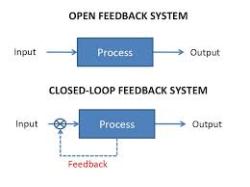
It’s a pre-determined, closed loop. An iterative process with only a handful of appointed variables, ultimately ending up with the choice from pick one of the above. closedopensystemNone of the above is never presented as a viable alternative.
Look. The 2014 campaign is about two and a half months old. Candidates have been registered since January 2nd. Yet, only after Olivia Chow — who everybody knew was running — officially entered the race last week were we informed that the official debates would begin. I’m not alone in finding the timing a little fishy, am I? It feels like the fix is in.

Instead of hashing and rehashing the will he or won’t he/when will she narrative and pursuing the HMS Destructive tour of the current incumbent, maybe a little time could’ve been devoted to listening to some of the other candidates for mayor, suss out their fitness for the job. In early February the U of T Scarborough student union held a mayoral forum that featured the mayor, David Soknacki and 3 of the fringe candidates. footinthedoorThe Toronto Star’s Daniel Dale covered it and, in his opinion, declared that one of the 3, Robb Johannes just might’ve won the debate.

So why hasn’t Mr. Johannes been invited to participate in the CityNews’ debate? Based on the observation of an experienced City Hall reporter giving his candidacy some legitimacy, what must he do to be given a shot at proving himself worthy of further consideration?

In 2010, we here at All Fired Up in the Big Smoke ran some 30 or so Meet A Mayoral Candidate posts throughout the campaign. Admittedly, most, a high percentage of them, rightfully deserved the fringe label. Remember, anybody with $200 to spare can run for mayor. It was hard to tell why many were in the race. A lark. Mere attention seeking. Misguided sense of direction.

But a handful of them were thoughtful, interesting and dedicated to giving their time and energy to the city. Hell, we ended up endorsing one for mayor when all was said and done. Not every fringe candidate should be viewed fringe simply because they don’t yet have money, resources or influence.musicalchairs

And I would argue that this time around, there are even more potentially serious fringe candidates then in 2010. The subject of Mr. Keenan’s article, Ari Goldkind, immediately strikes me as somebody worth listening to. Matt Mernagh. Jeff Billard. Richard Underhill. Morgan Baskin. The above mentioned Robb Johannes.

Are any of these credible mayoral candidates? I don’t know. But who the fuck am I to blithely brush them off before giving them a chance to hear what they have to say, deliver their plans and ideas to a wider audience?

“You don’t need the press to legitimize your candidacy,” Keenan informs the fringers. “Only your campaign can do that.”

That sentiment seems hopelessly and impossibly pollyannish or unaware on Keenan’s part; neither adjective I’d normally attach to him. Yes, we can all look to Calgary’s Naheed Nenshi as living, breathing proof that an unknown entity can come out of seemingly nowhere to score an improbable victory. ignoreOutsider candidates should look to Nenshi to see how exactly he and his team pulled that off. But to point to that very, very rare example and conclude it’s all about a little innovative DIY, and that somehow the media’s exclusionary practices to all but the few anointed candidates doesn’t play into the fringe determination of the many, that only truly viable candidates will earn a place in the spotlight, I think ignores just how a vast majority of the voting public gets their information and processes it in determining what way their support is going to go.
— disappointingly submitted by Cityslikr

Summertime By-Election Blues

By-election day today in Ontario and, let me tell you, this is one election I am content to be able to sit out. hohum1While I can’t speak to the three races outside of Toronto, what we’ve witnessed with the two campaigns in town – Scarborough-Guildwood and Etobicoke-Lakeshore – has been dismal. Dismal, dreary, discouraging. If the intent of the three major parties was to disengage the voting public beyond what any summer by-election would do naturally, well, bravo. Slow clap and let me just rinse to get the bitter taste from my mouth.

If it wasn’t apparent in the last provincial general election, this past five weeks or so has shown beyond a doubt that the Liberal government is suffering through ruling rot. Three terms in now and it’s all about desperately holding on to power by any means necessary. ribbitHopes that a leadership change might’ve sparked some sort of internal renewal have pretty much been dashed by their performance at least here in the two Toronto riding by-elections.

Prime time for the opposition parties to step up and make their case.

But like in 2011, both the Tories and the NDP have run one note campaigns: The Liberals are bad. Time for a change. OK. I agree. What kind of change are you going to bring to Queen’s Park? The Liberals are bad. Time for a change. OK. We’ve established that. So what will you do differently if elected? The Liberals are bad. Time for a change. A change to what? The Liberals are bad. Time for a change.

Can you give me any sort of specific change you propose?

pander

SUBWAYS!!

But the Liberals are for subways too.

The Liberals are bad. Time for a change.

Throughout the last 3 rancorous, chaotic years at City Hall, there’s been a quiet conversation happening about perhaps the need for the discipline of party politics at the municipal level. partydisciplineToo many wildcards, acting in their own parochial best interests, making decisions in a willy-nilly fashion. Time to bring in the whip. Time to restore order.

Nothing about party politics at the provincial level currently would make me think this is a good idea. These by-election campaigns have revealed the system to be one of rigid thinking and unquestioning loyalty to a banner not the people. It warps otherwise seemingly well-intentioned candidates into talking point spewing automatons. How else to explain the former chair of the TTC and champion of the LRT-driven Transit City now referring to the technology as 2nd-class? His Liberal opponent, past CEO of the CivicAction Alliance, a group well-regarded as sensible contributors to the region’s transit debate, has thrown all that from the bus to embrace a sudden Scarborough subway zeal. brandloyaltyThe city’s Deputy Mayor who has spent some 30 years in municipal politics not building subways wants voters in his riding now to think he’ll deliver one to them as their MPP.

If as a voter in today’s two Toronto by-elections you can bring yourself to cast a ballot for any of the three major parties, you’re just pledging blind, partisan allegiance to empty party politics. You are part of the problem not the solution.

From my perspective, I’d like to see Doug Holyday win in Etobicoke-Lakeshore for no other reason than to have him take his cranky old man act the fuck out of City Hall and up to Queen’s Park. A side benefit might be that Peter Milczyn and the other nominal Liberals on council will realize that Mayor Ford is not their friend and that their relationship with him goes entirely in one-direction. protestvoteMaybe they’ll stop rolling over, hoping for a friendly rub of their bellies.

In Scarborough-Guildwood, it strikes me as the perfect time to go Green. The party’s candidate, Nick Leeson, has sounded the most reasonable, positive and not beholden the interests of Big Subway. I voted Green for the first time last provincial election and the world did not end. My candidate lost but, at the very least, I let it be known to the Liberals, PCs and NDP that none should take my vote for granted and that what they were delivering up as reasons to vote for them were no longer palatable options.

Today’s vote shouldn’t be seen as just a referendum on the sitting government. It needs to be an indictment of the entire system at Queen’s Park and the putrefying, self-serving culture it’s become.

— protestly submitted by Cityslikr

Things They Are A-Changing Back

During yesterday’s council session, while debating the mayor’s first key item, Traffic Congestion Management and Traffic Signal Coordination ghosttown(aka Cars Go Fast!), both councillors Gord Perks and Adam Vaughan talked about the positive aspects of a congested city. “I don’t want to live in a ghost town,” Perks said. “I want to live in a vibrant exciting place where I’m meeting people on the street and saying hi.”

Naturally this brought howls of derision from the likes of the Ford Bros. and Councillor Giorgio Mammoliti. “Congestion is not good,” Mammoliti declared, “and if you suggest that it is, blow your nose because it isn’t. Clear yourself.”

The councillor then went on to introduce a mocking item that would revert everywhere south of Davenport back to the 19th-century, complete with dirt roads and period customs. Funny, for sure. Giorgio can be a funny guy at times. carcommercialBut it also revealed a couple other telling aspects about him and the car-centric crowd on council he runs with.

They cannot envision a city that doesn’t prioritize the use of the private automobile. It’s completely alien to them. Without our cars, without giving them easy and unobstructed access to go wherever they want, whenever they want, as quickly as possible with the least amount of hassle, we might as well be living in the pioneer days. Before cars, there were only horses.

Their reaction to the congestion statements by councillors Perks and Vaughan also displayed a fundamental incuriosity to what is a fairly counterintuitive idea. Instead of standing to ask for some sort of clarification – Congestion is good?! What the hell do you mean by that, councillor? How could congestion be good? – they just rolled their eyes and laughed in disbelief. crazytalkCouncillor Mammoliti even suggested that statement would come back to haunt Councillor Perks.

Congestion is good? How stupid is that?

But stop to think about it for a moment.

Councillor Vaughan brought up the image of downtown Detroit. No congestion there, apparently. Drive from one side of the city to the other, free of bumper-to-bumper traffic. The wind in your hair. The wide open road.

Perfect for quickly getting from point A to point B but you wouldn’t want to really live or visit where there’s nobody or nothing going on, right? A ghost town versus human congestion, let’s call it.

Think Manhattan, for example. There’s congestion caused by intense activity of all kinds. Pedestrians, cars, bikes, buses. Working, shopping, playing. Bustling, in other words.

That’s far different than the spectre of congestion Councillor Mammoliti is trying to evoke. busystreetNo one believes the gridlock that has bogged down commuters and the movement of goods throughout the GTAs as something that’s good. To pretend that’s what councillors Perks and Vaughan were suggesting is either deliberately obtuse or pure political calculation.

Or it’s just status quo hugging laziness.

Like Mayor Ford’s reaction yesterday to council giving the go ahead to ask the province to allow permanent residents to vote in municipal elections. “I think we have a good system,” the mayor responded. “It doesn’t make sense. How can someone that’s not a Canadian citizen vote?”

How can someone that’s not a Canadian citizen vote? How can congestion be good? How can anything that isn’t exactly how it is now or is exactly how I think it should be good or an improvement or in any way a positive sort of change?

The mayor, his brother, the likes of councillors Mammoliti, Minnan-Wong, Del Grande, Holyday et al notlistening2cannot understand anything that deviates from their point of view, anything that challenges their perception of how the world works and how it might be made to work better. It’s rigid, ideologically hidebound and fundamentally incapable of arriving at any sort of compromise.

Unsurprising then that this gaggle of reactionaries finds itself occupying a smaller and smaller circle at city council. The backward brotherhood, united in a dislike of and disbelief in anything that smacks of them having to lead their lives in any way different than they always have.

— bob robertsly submitted by Cityslikr