A Sheepish Admission

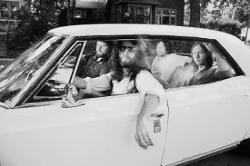
Standing outside the tent on Saturday night, listening to The Sheepdogs rip through their 2nd set of the day (the first being an acoustic one in the blazing sunshine) at Hillside, my thoughts turned to the 70s. How could they not? Here was a band channeling the spirit of Southern Fried Rock in both sound and look with a touch of The Black Crows and My Morning Jacket thrown in for good measure to a capacity crowd that consisted largely of folks who weren’t even born when this sound first emerged.

Kids these days, with all their rap and bleep-blop electronic music, enthusiastically embracing the more countrified roots rock sound of their parents. Nothing wrong with that although, for me, if I want to listen to the Allman Brothers (an impulse which occurs almost never – my musical taste tends more to the bands that bracketed The Sheepdogs, Hooded Fang and Hollerado) I’ll listen to the Allman Brothers. But certainly, there are worse things to adopt from the recent past as I await the re-arrival of wide, wide ties with some trepidation.
I have mixed emotions about the decade I came of age in. While many of us benefited from the social and political freedoms that opened up as a result of the upheavals of the 1960s, we also wound up stunting them, stopped the march of progress far short of its goals, twisting and bending the ideals into an almost unrecognizable shape that called itself the Reagan (Neo-Conservative) Revolution. In 1969, America put a man on the moon. By 1980, we’d convinced ourselves that government was a problem not the solution. The 1970s just don’t hold up well in that light.

I was still mightily in my pre-teens during the tumultuous year of 1968 but I do remember that mixed sense of fear and, if not hope, a curious anticipation of what might be right around the corner. Protestors derailed a presidential re-election bid in a fight against an illegal, immoral war. Cities exploded in riots, set alight by inequality and racial oppression. Assassinations. First, Martin Luther King. Then, Bobby Kennedy. More riots.
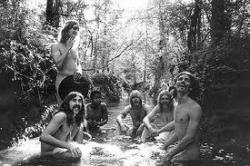
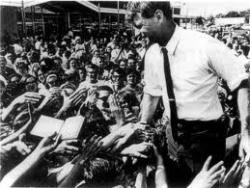
It was Kennedy’s death that we can now see as something of a turning point for progressivism. Not that it was any more important or devastating than the slaying of King but RFK’s journey from his privileged, elite upbringing and early rabid anti-communism to the moral conscience of a country as presidential candidate signaled that the old order was rotten to the core. A fundamental change of course was needed and underway.

And then he was dead.

The politics of spite and tribalism filled the void and prospered. Even the downfall of the petty tyrant of vindictiveness, Richard Nixon, in 1974 only served to temporarily delay the triumphant of reactionism. It emerged in its full blown hideousness with the ascent to power of Margaret Thatcher in 1979, Ronald Reagan in 1980 and so on and so forth.
So by the time those younger Sheepdogs fans began sitting up and noticing the wider world around them, radical conservatism had become the entrenched orthodoxy. We who had benefited from progressive ideas in action – livable wages and working conditions, accessible and affordable health care and education, reasonable expectations of fair pensions and a well earned retirement, all that solid middle class claptrap – had decided that enough was enough. No longer would or should we extend such luxuries. They only served to sap our work ethic and encourage lolly-gagging and freeloading. Nose to the grindstone, pull yourself up by your boot-straps and all that.

The flagrant hypocrisy of such I-Got-Mine-Jackism manifested itself to me last week when I came across a video of Paul Ainslie’s maiden speech at Toronto city council (h/t Jonathan Goldsbie) after he was appointed councillor in 2006. Ignoring for the moment his vow never, ever to run for council in ‘Ward 41 or any other ward in this city’ after his interim time was up (he did run both in the 2006 and 2010 election, successfully unfortunately), what really got my goat was Ainslie’s citing of a Bobby Kennedy quote as a source of his political and public service inspiration.

The task of leadership, the first task of concerned people, is not to condemn or castigate or deplore; it is to search out the reason for disillusionment and alienation, the rationale of protest and dissent — perhaps, indeed, to learn from it.

Councillor Ainslie is a nose-pick of a politician who is a certified member of Mayor Ford’s wrecking crew, intent on dismantling much of what makes this city work so well. Rather than searching out and learning from ‘the reason for disillusionment and alienation’ as Robert Kennedy implored, Councillor Ainslie, the mayor and his other enablers only seek to exploit the disillusionment and alienation in order to reduce government to impotency. The exact opposite of what RFK was seeking to do.

That a politician of Ainslie’s low caliber was able to co-opt the words of Robert Kennedy goes a long way to explaining our modern political dynamic. The Reactionary as Revolutionary. I’m a neo-conservative politician and Robert Kennedy would endorse these words I’m about to speak.

It takes me to the words of another icon of the 60s, Hunter S. Thompson. The best known passage from his best known book, and perhaps the best analysis of the end of what we now think of as the end of the 60s and the birth of a generation of swine.

And that, I think, was the handle—that sense of inevitable victory over the forces of Old and Evil. Not in any mean or military sense; we didn’t need that. Our energy would simply prevail. There was no point in fighting—on our side or theirs. We had all the momentum; we were riding the crest of a high and beautiful wave. . . .

So now, less than five years later, you can go up on a steep hill in Las Vegas and look West, and with the right kind of eyes you can almost see the high-water mark—that place where the wave finally broke and rolled back.

And it’s been rolling back now for over 40 years, slowly and surely drowning much of the progress that had come before it. Just when you think it’s crested, unbelievably you’re hit with another surge. Stephen Harper. Rob Ford. This has to peak too, doesn’t it? That’s the way waves work. Where is the neoconservative ‘high-water mark’? Have we just not seen it yet? Are we lacking the ‘right kind of eyes’?

So kids, follow in our musical steps all you want. Remake it. Remix it. Rejig it. It’s all harmless, nostalgic fun. But stop listening to our politics. We’re sell-outs and con artists. We’ve shirked our duties and responsibilities, leaving us all worse for wear. Our taste in music far exceeded our sense of citizenship, and the sooner you learn that the better.

guiltily submitted by Urban Sophisticat

Our Summer Farce

(Since summer is the season for repeats, a rebroadcast of our post at the Torontoist, looking at the Core Services Review of the Public Works and Infrastructure Committee. Re-enjoy.)

*  *  *

The good news emerging from yesterday’s Public Works and Infrastructure Committee meeting was that there was no last minute, duplicitous motion put forward by any of the mayor’s men to derail or erase projects in other councillors’ wards. In May, Councillor David Shiner (Ward 24, Willowdale) nixed the Fort York bridge, pulling the rug from out under Councillor Mike Layton (Ward 19, Trinity-Spadina). Last month, it was Councillor John Parker (Ward 26, Don Valley West) blindsiding Councillor Kristyn Wong-Tam (Ward 27, Toronto Centre-Rosedale) with the news that plans were afoot to remove the Jarvis bike lanes.

The bad news, however, was three-fold.

First, the KPMG core services review report was revealed to be wholly unsatisfactory in addressing our alleged budget crisis. Under questioning from committee members, councillors Layton and Gord Perks (Ward 14, Parkdale-High Park), as well as visting (i.e. non-committee member) councillors like Shelley Carroll (Ward 33, Don Valley East) and Adam Vaughan (Ward 20, Trinity-Spadina), the report and its corporate authors (along with City staff) went limp. It quickly became clear just how narrow the report actually is, offering only the broadest strokes of possible “savings opportunities” (a.k.a. cuts), with little to no examination of the impact or implications of taking such opportunities. (For instance, the health impacts—and subsequent economic burdens—of rolling back fluoridation in the water or scaling back environmental programs were not included in the report that recommended those cuts.) The validity of the report’s comparative analysis with other cities came under question too. Aside from size, why Melbourne, Australia? An entirely different beast, structurally and governmentally; where were the instructive comparisons? And why were no other municipalities in Ontario examined in the report? They suffer under the exact same provincial handcuffs as Toronto does. Wouldn’t that be more helpful?

Even worse was how the subject of waste diversion was handled. The report clearly ignored key relevant numbers—such as the amount of money the city receives from recycling, which brings down the actual cost to us of collection—in assessing the financial benefits of potential cuts. Additionally, KPMG’s suggestion that our target rates were too ambitious was questioned by a deputant who claimed, in fact, the city of Toronto lagged behind almost ever other municipality in the GTA and was still below a proposed provincial target of 60 per cent.

Such deficiencies just begin to scratch the surface of the problems with the KPMG report. After nearly eight hours of listening to presentations, deputations, questions, and answers, it was hard not to come to the conclusion that the report is little more than a big ol’ softball for the mayor to hammer for extra bases. Big, scary cuts will be dangled out at us with no intention of ever implementing them, so that other cuts will actually happen and we’ll all breathe a heavy sigh of relief, telling ourselves that, well, it could’ve been a whole lot worse.

Bringing us to problem number two. The right wing on the Public Works Committee doesn’t give a shit about any of that. To a man (and they were all men) they couldn’t have looked less interested in yesterday’s proceedings if they’d pulled out blankies and pillows and taken a nap right on their desks. At one point of time, three of them—councillors Grimes (Ward 6, Etobicoke-Lakeshore), Parker, and Shiner—left the room entirely, bringing things to a halt due to a lack of quorum. The questions they asked of staff, KPMG, and deputants were few and far between. Committee chair Denzil Minnan-Wong’s (Ward 34, Don Valley East) sole purpose, it seemed, was to run interference for staff and the KPMG representatives when the line of questioning from other councillors got a little too aggressive or demanding.

All of which leads to the third and most damning problem of the committee meeting. After all was said and done—reports given, deputations made, questions asked—the councillors on Public Works voted to punt the report to the stacked-with-mayoral-allies Executive Committee. Except for seeking further information on snow removal (a big item in places like Shiner’s North York ward), street cleaning, and water fluoridation, the Public Works and Infrastructure Committee decided to make no decisions or even recommendations on the KPMG report, leaving it entirely in the hands of Mayor Ford and his executive. It is a move that will quite likely get repeated at every committee meeting over the course of the next 10 days or so. There will be much posturing and posing, ignoring of deputations, blowing smoke and spinning narrative, sound and fury signifying nothing, only to have each and every decision handed meekly over to the mayor to deal with as he sees fit. A complete and utter abrogation of responsibility by the majority members of the City’s standing committees.

Perhaps, that’s overly harsh. Maybe it’s a gambit on some councillors’ part to try and make the mayor show his hand, to be the first to go on record saying what he wants cut. Either way, it seems that the committees are telling us that tough decisions have to be made. Just not by them.

resubmitted by Cityslikr

Swimming With Sharks

“Swimming is only a life-saving skill if you go near the water.” – KPMG guy.

(h/t John McGrath)

Where do you go to learn how to say such things while keeping a straight face? It’s a statement I wish I’dve come up with, figuring out how to saturate it with loathing for the kind of people who had the balls to utter that kind of drivel out loud. There must be a special class you take while earning your MBA.

A week into the pretend, inverse show trial that is the KPMG Core Services Review report to standing committees, we already know the company wasn’t hired to find efficiencies at City Hall. It’s all about cuts and only cuts. No examination of the social implications of the suggested cuts. Not our purview. Here’s what you can cut and here’s the savings you could achieve enacting said cuts. That is all. We accept credit cards, cash and cashier cheques as forms of payment for our services.

The thing is, why spend the money for any of that information? If it was all about what services we could cut and the money saved doing it, almost anyone with relatively strong literacy and numeracy skills could’ve delivered a similar document, locked away for a weekend at the low, low cost of an internet provider, 2, maybe 3 cases of beer and a freezer full of pizza pockets. Of course, we could get out of the day care business, privatize libraries and TTC routes, sell off or outsource everything not nailed down. The questions we need answered is, should we? And what would the fallout be in doing so?

Our reaction to the KPMG should be nothing more than, well d’uh.

More to the point, why does anyone listen to anything that comes with a KPMG seal of approval? They were the organization that told us amalgamation would save the city money, weren’t they? Didn’t they also assure the world that Iceland’s economy was hunky dory just before it Thelma and Louised over the cliff?

Google ‘KPMG scandal’ and behold the laundry list of questionable practices it has found itself involved in not the least of which is the Bernie Madoff scandal. Tax shelter fraud. Bribery.

While KPMG has avoided the fate of fellow auditing giant Arthur Anderson, it has primarily done so through quick settlements that prevent its numerous cases of fraud from ever reaching court. Though most of the focus of the financial crisis of 2008 has been placed upon the nation’s big financial institutions such as Goldman Sachs, J.P. Morgan and Citibank, more evidence is arising over the role of auditing firms throughout the subprime loan disaster. KPMG was the first “big-four” firm to be hit with a lawsuit, accused in 2009 of “grossly negligent audits” of home loan provider New Century Financial Corp.

I mean, wow. Why would we be basing the future wellbeing of this city on the advice given to us from an organization with that kind of sketchy history? Never mind that they already steered us wrong once by giving cover to the pro-amalgamation forces led by Mike Harris with their questionable analysis of the cost benefits to the move.

Are there no adverse consequences to being wrong in their line of work? It seems that not only should we take KPMG’s report on our core services with a grain of salt, we should assume the opposite of what they’re telling us to be true. How many times do we have to suffer from the results of bad advice before finally saying, you know what? Maybe I’ll ask someone else.

Of course, bad advice, like beauty, is in the eye of the beholder. Looking at the KPMG bigger picture, an argument could be made that their job is to deliver the news those paying for their services want to hear. We think amalgamating Toronto is good idea. Would you agree with that? We don’t want anyone to think our banking system is about to collapse. Would you tell them that’s true?

I am sick and tired of my hard earned tax dollars going to give those who can’t afford it swimming lessons. Could you make that happen? Thus, “Swimming is only a life-saving skill if you go near the water.” “Prevention of contacting a communicable disease is only a life-saving skill if you’re having sex with the wrong kind of people.” “Reading is only a life skill if you go to a library.” “3-1-1 is only life saving if you mistakenly dial 9-1-1.”

We got a million of them, folks.

The only thing we should take from the KPMG Core Services Review report is the fact that it reveals the Ford Administration’s real intent. It was never about finding efficiencies or gravy. It was never about respect for the taxpayers. It always has been about cutting the government down to proper, libertarian size. Hacking, slashing, burning.

They just needed to give their dark impulse a shiny sheen of researched respectability. We have just the people for the job! I know why the likes of Mayor Ford believe that. But why does anyone else?

swimmingly submitted by Cityslikr