Mr. Fantino Goes To Ottawa

On the plus side, Toronto, at least we won’t have to worry about incoming mayor Rob Ford bringing back Julian Fantino as police chief.

Besides, by-elections are meaningless, right? We shouldn’t use them to take an accurate political pulse of the nation especially with less than 1 in 3 eligible voters bothering to cast a ballot. Let’s just view this as an entertaining, engaging and diversionary blip on the radar until the real deal comes around.

Otherwise, Julian Fantino’s election victory as Conservative M.P. for the federal riding of Vaughan is grim, grim electoral news. Like we need anymore of that in these parts right now.

Because if we were to read too much into it, it would suggest that the scaly, life-draining tentacles of the Stephen Harper led Conservative government are slowly gaining traction in areas of this country that’ve been, up to now, unyielding to their oily clutches. By running a successful peek-a-boo campaign that has largely kept their candidate from a wider public view shielding both him and the party itself from any significant scrutiny, they’ve set the stage for a policy-free, personality first general election. Issues? What issues? “Give me an issue, I’ll give you a tissue, you can wipe my ass with it.”  (h/t Lou Reed, Take No Prisoners.)

How could the voters of Vaughan, or at least the 16% or so of them that voted for Julian Fantino… and boy, if that number doesn’t send shivers down your spine, 16% of voters sending an M.P. to Ottawa, even in a by-election, then the notion of democracy is truly dead to you… not have been offended by the treatment they received during in this campaign? Fantino sat out almost every candidates’ debate. His campaign videos were shockingly hackneyed, devoid of substance and lifelessly delivered as if the man had never been in front of a camera before. He was a “star” candidate who seemed almost put out that he actually had to publicly campaign for the position. Shouldn’t I just be appointed? That’s how things are usually done in the circles I run.

The fact that someone like Julian Fantino could actually be considered a “star” candidate is the other bitter morning after pill to swallow. Being a “star” should involve something other than name recognition. Possessing political views and opinions that rise above bumper sticker sloganeering is too much to ask? ‘Law And Order’ and ‘Tough On Crime’ make great TV series titles but spouted mindlessly by a “star” candidate suggests a thin veneer painted over a warm body that masks a total lack of understanding about what’s going on out there in the wider world. But, I guess, in this day and reality age that may be expecting a bit much from our politicians and says more about my complete and utter incomprehension of how the world actually works.

A quick look at Fantino’s resumé shows a man who has gracelessly bulldozed his way up the food chain and into being a “star” political candidate. For almost 20 years now, the man has been dogged by controversy as he trampled over civil rights and fuzzy lines of legality at almost every post he served throughout his career. There was the illegal wiretapping of Susan Eng, then chair of the TPSB in 1991. As police chief in London in the mid-90s, he arrested and charged a couple dozen gay men as part of a child pornography ring that turned out to be non-existent. His tenure as Toronto’s chief of police was pockmarked by more ill-advised confrontations with the gay community and corruption scandals within the force itself that Fantino was accused of not rooting out vigorously enough. Then, as OPP commissioner there came further accusations of unauthorized wiretapping, more dubious child pornography rings busted, along with a charge of ‘attempting to influence an elected official’ thrown in that was subsequently dismissed by the Crown due to the always reassuring ‘no reasonable prospect of conviction’ grounds. His involvement in this past summer’s G20 fiasco, both on the ground and the money spent has yet to be fully disclosed but early signs suggest another less than stellar performance review.

All it takes, it seems, to be a “star” candidate is a high profile regardless of how that came to be. “There’s no such thing as bad publicity,” Brendan Behan said, “except your own obituary.”

Essentially Julian Fantino is an admirable, “star” candidate only to those who pine for the days of hard-nosed cops in B-movies (take a bow, Don Cherry), many of whom apparently occupy senior positions in our political establishment. Rumour has it, Fantino was hotly pursued by both federal and provincial Liberals before he anointed the Conservatives in Ottawa as his party of choice, revealing the paucity of ideas and absence of democratic ideals in our two leading parties. What was promised him in exchange for his fidelity – Fantino does know that’s there’s no King position in a parliamentary system, I hope — time will tell but in the cold, dark morning reality, just a few hours after his win, I do feel a certain bit of relief mixed in with the disbelief, bewilderment and dollop of despair. At least, off in Ottawa and as an M.P. in the 905 region, he will be that much more removed from us here, ever so slightly out of our hair, buried deep in the smothering anonymity of the Conservative caucus, never to be heard from again. (Fingers crossed!) I mean, the man couldn’t possibly bluster and blunder his way into any further, more influential positions of power, could he?

curiously submitted by Cityslikr

Running On Empty

Sitting alone (again, naturally) on a Saturday morning in the office, my 2nd cup of tea still refusing to warm me up. I will not turn on the electric baseboard heating and give our landlord the satisfaction or the cash. I will not!

I am pondering the rightward tilt the race for mayor seems bound and determined to follow and for the life of me, I cannot figure out why. OK, so people are angry. I get it. The recession lingers on like the first autumn cold that will not quit regardless of what you throw at it. (My suggestion? Plenty of booze and cigarettes. Take it out for an all-night bender. Show it just how unwelcome a host you really can be.) We’re told that we’ve weathered the blow but that the turnaround is going to be painfully slow and drawn out. There’s still some bloodletting to be done in order to get us back to fighting weight.

We’re looking for somebody to blame for this mess and who better than government? There is an orderly process in place for us to make our displeasure known: voting. The alternative is dicier and slightly more involved as it would mean gathering together in groups and tearing some shit up. But, judging by the reaction to things in June during the G8 meeting here, such recourse is frowned upon in official circles.

For us in Ontario, the first crack we’re getting at expressing ourselves at the ballot box is at the municipal level, by-elections aside and who really counts those? The thing that’s baffling me about how it’s all playing out, at least in Toronto, is why are people reacting so, well, reactionarily? We’ve been down this road before, people. Remember?

That hapless and spendthrift Bob Rae government at Queen’s Park in the mid-90s? We ushered in the fiscally austere and oh-so competent Mike Harris Conservatives to clean up the mess. They didn’t. Or how about the corrupt and profligate Jean Chretien/Paul Martin team up there in Ottawa, blowing through all our hard earned dollars on pet projects like… what was it called again? Shawinigate? Time to bring in the restrained and prudent sensibilities of the conservative Harperites to restore order. Except, ooops, they didn’t.

Modern day conservatives never solve problems. They only exacerbate them, deepen them and create ones where none existed. It is a bankrupt ideological movement that successfully achieves two objectives, and two objectives only. One, to roll back any and all social and economic gains made over the last 80 years or so. Two, to dismantle the mechanisms of government in order to render it inoperable for society as a whole so they can turn around and parrot the empty words of their patron saint, Ronald Reagan. “Government is not a solution to our problem, government is the problem.”

After that? They’ve got nothing but a dog whistle to call forth the furies of outrage and resentment lurking just below the surface.

Rather than spend time and space today running down the shortcomings, lies and delusions of the anti brigade vying to retake City Hall for us here come October 25th, let’s take a glance south of the border to our American neighbours who are taking neoconservative/libertarian thinking to its illogical extreme.

Watching the last couple episodes of Real Time with Bill Maher, we encountered 3 cases in point. There was P.J. O’Rourke, the satirical lion of Reagan era libertarianism now simply looking old and tired, stating emphatically that ‘governments don’t create jobs’. When questioned by co-panelist Andrew Ross Sorkin, author of Too Big To Fail, an account of the economic meltdown of 2008, that if by choosing to build, say, a bridge, wasn’t government creating jobs? O’Rourke’s response? Don’t get him started on bridge safety. He was all for bridge safety. Aren’t we all, P.J.? Now, would you please answer Mr. Sorkin’s question.

Next up on the same show was one S.E. Cupp, a shiny-faced conservative pundit star on the internet. In the midst of a discussion about America’s need to start investing more fully in developing alternative sources of energy, she declared that alternative energy solutions were a rich country’s concerns. Again, somewhat flummoxed, Sorkin pointed out that China had surpassed America in pursuing alternative energy solutions which only seemed to prove Cupp’s point. For her, China is now a rich country because it owns a big chunk of U.S. debt and it was the U.S. that was broke. So no alternative energy for America. By reducing a complex economic system to one single factor, this conservative mind believed China was rich and the United States poor. O’Rourke then piped in with the view that we couldn’t do anything about climate change anyway because everyone in China ‘wanted a Buick’. Seriously, kids. He used to be funny.

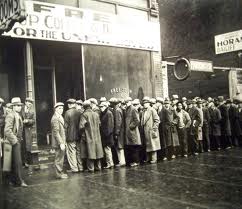
Last night’s episode featured another conservative internet star, radio show host and proud member of the Tea Party party, Dana Loesch, “… the sweet Midwestern goth version of Laura Ingraham.” Railing against the bailouts and stimulus spending as un-American, she was unimpressed by the notion that the move probably helped staunch the bleeding and ward off another Great Depression. “Why does the government get to decide who succeeds and who doesn’t?” she responded. Uhhh… well, I guess since the private sector was collapsing in on itself, somebody had to step up and try to avoid long breadlines and overcrowded soup kitchens. When Dan Neil, a Wall Street Journal writer, corrected her earlier assertion that more money was spent on the bailout and stimulus then on the war in Iraq, she countered that ‘there are a lot of figures out there that dispute that’.

Ah, yes. Those mystical, magical ‘figures out there’ used to dispute whatever needs disputing in order to keep the belief system going. Or what rational people call, clutching at straws. Because that’s all modern conservatism is capable of anymore. Clutching at straws.

And yet, we keep turning back to it attempting to solve our problems. Our delusion seems to be mutual.

consternatedly submitted by Cityslikr

Drive, He Read

To avoid any appearances of a conflict of interest or accusations of log rolling, I have been tapped to write this post today. I am not a reviewer of books. My métier of TV and movies is more passively pleasing to me. But since both Acaphlegmic and Cityslikr are, if not friends, than certainly amiable drinking companions of Tim Falconer, it was felt that perhaps we needed a more objective take on his 2008 book, Drive. My lone encounter with Mr. Falconer was just after he’d had a pedicure and kept demanding to see my feet which didn’t make me partial to liking his book.

Although of all of us who toil away here under the All Fired Up yoke, there’s little question that my voice is loudest when it comes to making anti-car noises. So Drive is really up my gasoline alley, as it were. It’s almost as if Mr. Falconer wrote the book with me in mind. Quite a feat since we had never met during the course of the writing.

But the author and I do share a similar non-car background. He didn’t get his full on, non-learners driver’s licence until his late-30s. I got mine when most red-blooded males did back in the day. At the age of 18 when you needed it as picture ID to get into bars and buy booze in the stores. I’ve not had much use for it since, living as I do, along with Mr. Falconer, in downtown Toronto and its wide range of transportation options. (Note to ed.: I don’t live with Mr. Falconer but rather we both live in downtown Toronto. In completely separate abodes.)

Unfortunately, a few years back Falconer broke down and sold out, buying a 1991 Nissan Maxima despite considering himself first and foremost a pedestrian. In it, he headed off on a 9-and-a-half week, nearly 15,000 K road trip from Toronto to the heart of car culture, Los Angeles, and back again; a journey that is the narrative basis for Drive. Like any good road trip (and I would never claim that there can’t be good road trips), the tale Falconer spins is a meandering affair, never doggedly adhering to a rigid map route. Along the way, we get a thorough history of the automobile and its immense impact on the development of society especially after World War II.

The subtitlely thingie of Drive is “A Road Trip Through Our Complicated Affair With The Automobile” and truer words have never been written after a book’s title. What was most startling to me while reading this book was, for every sane person who either hates cars or doesn’t put much thought at all into their existence, there seems to be a dozen who absolutely love them. I mean, really, really loves them. These self-proclaimed car nuts never outgrow their adolescent fascination with their toys.

If there’s one complaint I had with Drive, it’s that too much time is given over to these car freaks which, to my deaf ear on the subject, began to sound all the same. After yet another outing Falconer takes with the Rocky Mountain Mustangers or Gateway Camaro Club, I found myself growing increasingly irate and finally snapping. I KNOW HOW MUCH YOUR CARS MEAN TO YOU, PEOPLE! BUT THEY’RE JUST THAT! CARS! I COULDN’T GET ENOUGH OF CRACK COCAINE EITHER. I JUST HAD TO STOP DOING IT FOR THE SAKE OF EVERYONE AROUND ME!! YOU SHOULD TOO!!!

The beauty of Drive is that it seems to anticipate that reaction in many readers and delights in turning the tables on them… er, me. It’s not surprising that I reacted so violently negative to yet another pot-bellied, middle-aged car jockey waxing nostalgic about his Ford Falcon because early on in the book, Falconer provides data that shows Canadians are more prone to see their cars as little more than appliances to be used in getting to where they need to go. Americans revere their cars and treat them accordingly as potent symbols of freedom and mobility. So naturally, I’m going to see them as completely out of touch with reality and vile, brainless materialists. Thus, Falconer deftly manages to shine a glaring light on my prejudices.

That makes the real heroes of the book the ones Falconer meets who have a much more rational approach to the car conundrum than I do. Hell, some of them even like driving but have concluded that urban planning around the needs of cars is the surest way to inflict the greatest amount of damage on cities.  There’s James Kushner, a teacher at Southwestern Law School in Los Angeles and perhaps the only Angelino who does not own a car. His two books, The Post-Automobile City and Healthy Cities are in the mail as I write, destined to the growing pile of books I need to get to in order to truly start understanding urban dynamics. Donald Shoup, ‘America’s Parking Guru’ (and who we featured here back in March. You may recognize my colleague’s dining and discussing partner) is a joy to listen talk so academically about the problems of parking and how to fix it. (Heads-up: we aren’t paying nearly enough for it.) His book, The High Cost of Free Parking is already on my book shelf.

But the nucleus of the post-automobile future city truly emerges in the last 8 pages of Chapter 16 (San Francisco, Man versus the Internal Combustion Engine). Mr. Falconer talks with two members of the Sierra Club. John Holtzclaw chairs the organization’s Transportation Committee and Tim Frank is the chair of the group’s Challenge to Sprawl Campaign Committee. Together they put together an urban environment where private vehicles will slowly and naturally be squeezed out or, at the very least, be severely reduced in importance. How will this come about? Our growing urbanization and need for higher density. (A ‘variety of densities’, according to Holtzman.)

Presently, density is a hot button issue but those resisting it appear to be on the wrong side. Frank argues that density could, ironically, wind up uniting right and left. He sees density appealing to the left because of its tendency toward social justice if things like mixed income housing are part of the plan. The right will take to it as denser communities make various government services less expensive to deliver and need fewer people to deliver them. Increased density equals smaller, more efficient government.

More exciting still for those of my political stripe, John Holtzclaw believes that increased density creates a more tolerant, liberal-minded society. “People who live closer together and are less dependent on the automobile develop a different attitude toward citizenship and activism,” concludes Falconer. So take heart, all you who grow dismayed in the face of Rob Ford’s spike in popularity and Stephen Harper’s relentless push to neo-con Canada, for they are fighting a losing battle. The slow march of history is on our side.

How cool is that? A political manifesto rising up from a book about cars. That’s quite something to pull off but is exactly what Tim Falconer does in Drive. So run, don’t walk (and certainly don’t drive although cycling is encouraged) and pick up your copy. The revolution (or – a-ha, a-ha — the rpms) has begun.

car-freely submitted by Urban Sophisticat