A Section 37 Set-To

I hesitatingly wade into the cold and murky waters of Section 37 fees, knowing that almost immediately I will be out of my depth.

But hey! If the Toronto Sun can do it, why not me?
Much has been made recently in the pages of our little tabloid that could about… how did they put it?… ‘the wild west’, ‘shakedowns’, ‘legalized extortion’, ‘bribery’ and ‘… getting away with murder forever’!

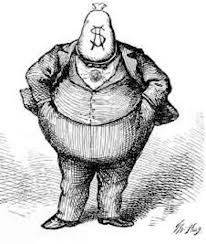
Holy cow. It sounds like Tammany fucking Hall down there. Dirty politicians with their greasy, grafty hands, reaching into developers’ pockets to pay for their personal yachts and country estates. Corrupt Ward Bosses.

Or, as many devoted Sunshiners would say: Councillor Adam Vaughan.

Make no mistake, the Toronto Sun’s new found civic activism has less to do with improving the quality of life in this city than it does on zeroing its sights on a potential 2014 rival for their beloved and beleaguered mayor. Councillor Vaughan is knee deep in section 37 funds, his ward 20 in the midst of a development and intensification boom. And of course, Mayor Ford stands vigorously opposed to Section 37 money. “I’ve never liked Section 37 (funds),” the mayor said yesterday. Except when he does. Back in 2010 as a councillor, Ford used $75,000 in Section 37 money to build change rooms at – you pretty much guessed it already – Don Bosco High School.

But look, I’m not here to exchange tits-for-tats or defend Councillor Vaughan. As written, the guidelines on the protocol of Section 37 funds – intended to mitigate the downsides of permitting taller development with higher density than bylaws allow — are both much more thorough than the Sun and critics would have you believe and more open to interpretation than some defenders might care to admit. Although, evidence of nefariousness in the use of the funds or the building of political pet projects is in scant supply in the accusations hurled at Section 37 practitioners.

Still, should the system be examined and other options explored? Sure. “It’s fair to say the process needs to become more clear and it ought to be administered by city staff,” said Toronto’s Chief Planner, Jennifer Keesmaat. “In part, because city staff are not in a conflict of interest when administering it.” (Again, I’d like to see more concrete examples of conflict of interest than simply theoretical possibilities.) Ms. Keesmaat also believes that Section 37 funds could go to city wide infrastructure needs. Not long ago, I was talking to a councillor staffer from a left-leaning, heavy development ward who suggested spreading Section 37 funds more equitably city wide might help in easing downtown-suburban tensions.

Fair enough, I say.

Let’s talk about all that.

While we’re at it, however, I’d like to ask suburbanites and those representing them at City Hall what they’re prepared to give up in return. It seems to me to be all a little one-sided at the moment. Bulk up all you want, downtown wards, Willowdale, Scarborough Centre, Mimico. But share the proceeds with us. A casino would be a great source of jobs and revenue. Put it downtown where we don’t have to deal with any of the negative aspects of it.

It’s almost like, parts of Toronto adapt to being a big 21st-century city, divy up the benefits of doing so with the other parts that just want to remain as is. Give us money from your densification. Accommodate our single rider car travel. Give us subways. Don’t you dare try to impose on our single family, detached homes and cul de sac communities.

“It’s about equity and fairness,” Councillor Mike Del Grande said. (And I’m trying to stifle a derisive snort here.) “This money should improve all of Toronto.”

Absolutely, councillor. But as you might say yourself, shouldn’t improvement start at home? This tilt he’s undertaken smacks a little of the ‘widow and orphan’ syndrome he brushed aside during previous budget cycles. Demanding something for nothing.

I’m all for spreading the wealth. For this city to prosper, it has to prosper for everyone. That can only happen, however, when every part of the city contributes to its evolution from 6 bickering municipalities to a unified whole at the centre of a global metropolitan region. It’s a willingness that has been in short supply from some quarters, who seem more intent on exploiting the inequities for political reasons rather than addressing them for the greater good.

brokeringly submitted by Cityslikr

On Casinos And Safe Injection Sites

Everyone say it along with me:

Casinos good. Safe injection sites bad. Casinos good. They help pay for our kids’ education and to tend to our sick. Safe injection sites bad. They’re full of sick people. Sick, sick people who have no sense of self-control and just want to get high all day long on the taxpayers’ dime. Safe injections sites bad. Casinos good.

The glaring hypocrisy of this is stunning.

Hey! Hey! Just hold on a second there, you left wing pinko nut. Gambling is legal. Illicit drugs like heroin aren’t. Therefore, casinos are perfectly legitimate, helping people take illegal drugs isn’t. So, up yours, screaming about hypocrisy.

A quick history lesson. Until about the late 1960s, gambling was viewed as a vice, punishable by law just like the taking of non-prescription drugs. Over the course of the last 40+ years, there’s been a gradual if grudging acceptance of the activity. A kind of, if you can’t beat it, join it, control it, profit from it change of attitude.

Safe injection sites are a step in that direction, tiny, tiny, tiny steps, mind you. Despite what you hear from Sun media appointed experts in the field like, say, Toronto’s Deputy Mayor Doug Holyday, safe injection sites don’t throw open the doors to rampant drug use, extending an invitation to all those people who have thought they might like to dabble in intravenous drugs but needed an official sanction to proceed.

“[Deputy Mayor] Holyday warns like in Field of Dreams, if you build this crazy party centre, you just know they will come.

“And from everywhere,” he said. “We give them free food, shelter and now free drugs? It may be a lifestyle people across the country would take to take us up on.”

Welcome to the Big Syringe!  A ‘crazy party centre’?! Free drugs?? If you write and say things like that about safe injection sites, it’s just a frank admission that you know absolutely nothing about drug use and addiction, and you should just shut up, sit back and listen to what people who’ve studied the matter have to say. You know, the actual experts.

“We are always prepared to listen to good advice, and we make our decisions based on evidence,” Ontario Health Minister Deb Matthews said. “[But] experts continue to be divided on the value of the sites.”

Wait, what? No. No they aren’t, Minister. Actual experts in the field aren’t divided on the issue. That’s just you not wanting to take a bold step, make a positive move, and summoning the groundless argument that not everyone agrees and more studies are needed. The very same argument climate change sceptics make. This province’s Minister of Health is a safe injection site sceptic.

Compare her response to that of Ontario’s Finance Minister when it comes to pimping extolling the virtues of building a casino in Toronto. “It [Toronto casino] will likely be unparalleled in the country,” Dwight Duncan said. “These places have some of the finest shopping, restaurants, convention facilities, park spaces, open spaces — imagine an anchor that could create a golden mile on Toronto’s waterfront and that’s quite possible.” You know, like all those other casinos in Ontario that have magically transformed their surroundings into veritable Disneylands of wonder and awe, enchanting destinations that draw in thrill seeking pilgrims the world over.

Evidence based decision making, indeed.

I get the ‘politics’ of it. In these days of austerity where governments are scrambling to find every penny, casinos are an easy sell. Cash pretty much straight into the coffers. Set up a video terminal somewhere. Print off a stack of scratch and sniff ticket. Ka-ching! You’re off to the (horse) races.

All the costs, and there are costs to widespread and easily accessible gambling, are mostly back end, hidden. A bankruptcy here, a nervous breakdown there. A child going to school hungry because dad’s blown a paycheque on the slots. Those numbers can be buried, swept under the rug, left for someone else to clean up.

It’s the exact opposite with safe injection sites. The money’s upfront, establishing a clinic, staffing it. Savings come later with cleaner needles, safer drug use, people weaned from their addiction and, fingers crossed, becoming more productive citizens. Indirect savings that are long term which, these days, is anathema to our politicians.

Besides, there’s the morality of it. We don’t approve of drug use. Safe injection sites condone that kind of behaviour. As if there’s any morality in leaving people to get sick or die of their own devices, to deny prevention of an accidental overdose or transmission of a communicable disease because it offends our sensibilities.

‘We’re not in the business of being drug pushers,’ Dewayne L. from Casinoville, ON writes to his local MPP.

Yeah, we’d love to help here, do the right thing but it won’t go over well with our rural and small town voters. The government shouldn’t be in the business of pushing drugs. A gambling addiction? We’re just fine with that.

To govern is to lead, to make the best decisions possible using the best evidence available. Otherwise, you’re just pandering; playing to inherent and ill-informed preconceptions and illogical bias. That’s the exact opposite of good and responsible governance.

In a perfect world full of imperfect human behaviour, responsible governments would be wary of involvement with the gambling business. There’s no slam dunk evidence showing the pros of it outweigh the cons. Not so, safe injection sites. That one’s a no-brainer.

Unfortunately, our governments seem more concerned with making risk free decisions rather than the right ones.

indignantly submitted by Cityslikr

Letting Them Off The Hook

I’ve got no particular axe to grind with the Globe and Mail’s columnist Marcus Gee. His columns seldom either infuriate or excite me. He’s not the worst journalist covering the City Hall, not by any stretch of the imagination. At least, not until Sue-Ann Levy stops her doodled rants on the pages of the Toronto Sun. And takes Joe Warmington with her when she goes. Mr. Gee is much more palatable writing about this city than he was international affairs all those many years ago.

But he still doesn’t get it. Or, if he does, he adamantly refuses to accept the facts as they are. His stubbornness in viewing municipalities as mere after thoughts on the governance scale, last on the bus, last to exit, does us no favours. In fact, he may help entrench the view of cities as wayward children, naïve to the ways in which the world works.

“Whatever party had won [the provincial election] on Thursday night,” Gee wrote last Friday, “and whatever governing arrangement emerges now, the prospects of wringing a wealth of benefits for Toronto out of the provincial government are dim. With a projected $15-billion budget deficit, and the threat of a global economic crisis, Queen’s Park is in no position to help another level of government with its money problems in any substantial way.”

The Toronto-Queen’s Park relationship shouldn’t be about leverage and looking to cash in on enforced, political largesse. Any problems the provincial government has with its books must include obligations it has to the municipalities it oversees. Ditto the federal government. The rising deficits cities face, both from a fiscal and infrastructure stand point, originate with the debt the two upper levels of government owe them.

Even that phrasing – upper or senior levels of government – denotes a degree of priority which is long past a best before date. Municipalities in this country are groaning under the weight of negligence inflicted upon them by Ottawa and the provincial legislatures. They’ve washed their hands of responsibility and left cities to make the impossible decisions of what to cut and how deep. We are living in an era of absentee landlords, deadbeat dads if you will.

We are told by Mr. Gee that as premier Dalton McGuinty has done alright by us. He’s re-upped some of the downloads imposed by his predecessor, Mike Harris. He’s made strides on the transit portfolio, albeit in half measures. What more do we want? “Even under NDP pressure,” Gee opines, “he [McGuinty] seems unlikely to reverse himself completely and disinter Transit City. A provincial commitment to 50-50 sharing of transit costs seems just as far-fetched, given the great cost and the awful state of the provincial accounts.”

Why, Mr. Gee, should we not expect the premier to live up to his promise, now almost a decade old, to resume the provincial share of the TTC annual operating budget that was in place until the previous government at Queen’s Park reneged on the deal? How is it any different than a citizen of Toronto deciding he could no longer afford to pay the full amount of the property tax bill and cutting the city a cheque for 50% of the amount? Walking away from your responsibility is still walking away from your responsibility regardless of the state of your finances.

Besides, allowing municipalities to sink in a sea of red ink and to collapse under the weight of neglected infrastructure and a second-rate transit system does no one’s bottom line any good. That shit’s got to be paid by someone sometime or everyone suffers irreparably. This isn’t about doing something out of the goodness of your heart or because it’s politically expedient. It’s about good governance. Withholding on your responsibilities is anything but.

Marcus Gee enables such deplorable behaviour from our senior levels of government. He gives them an escape clause. We’d really love to help you out but we’re a little bit strapped at the moment. Maybe after that whole economic meltdown plays itself out, we can talk about what it is you need to get yourself back up on your feet again. Until then, you’re on your own. There’s really nothing we can do.

That’s a cop out, plain and simple. We’re paying the price for someone else’s shirking of duty. And Marcus Gee blithely let’s them off the hook scot-free.

dutifully submitted by Cityslikr