
Well, you have to hand it to him.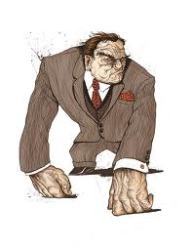
No ifs ands or buts about it, Mayor Ford had his best day at city council yesterday in a long, long time. Not since the honeymoon period of his administration, when he was able to obliterate anything he didn’t like, has the mayor’s limited and dim view of government so thoroughly triumphed. Small wonder he proclaimed it the greatest day in the history of Toronto or some similar variation on the usual Fordian hyperbole.
He stood firm by his principles of not burdening the voters with taxation, and the majority of city council went along with him, outright rejecting almost all of the ‘revenue tools’ city staff had recommended as a way of funding Metrolinx’s Big Move. The mayor threatened all who dared to defy him with certain electoral defeat in next year’s campaign.  Some 30 long months into that heavy-handed schtick and with little evidence he’s ever carried that kind of clout, enough of his council colleagues tucked their tails between their legs and rolled over for him.
None more so than Councillor Glenn De Baeremaeker who put his political self-interest right out there front and centre. On Wednesday, the councillor boldly stated on council floor that he would only support any revenue tools recommendations if, in return, the proposed Scarborough LRT extension was reverted to a subway. In effect, another demand, yet again, to alter the terms of the master agreement between the city and Metrolinx that’s in place for what is the first wave of the Big Move which includes the Eglinton crosstown LRT that is already under construction.
To bolster support in his Scarborough ward, Councillor De Baeremaeker argued that any other form of rapid transit aside from a subway was inferior, and that his residents and all of the residents of Scarborough were tired of living with inferior rapid transit (long a tactical political argument pushed by Mayor Ford).  Fellow Scarborough councillor Michelle Berardinetti, bringing along some weird internecine provincial Liberal party baggage, helped prop up the argument with slides and talking points that must’ve brought tears to the eyes of the mayor. I’ve taught them so well. Fly, fly my children.
Of course, such cynical pandering was merely a prelude to the heaping helping of it that was to come. If there’s a more calculating member of city council, someone so utterly devoid of principle whose name isn’t Peter Milczyn, it has to be Josh Colle. His motion which was kinda-sorta an amendment to Councillor Milczyn’s, laid out the proposed revenue tools the city would not be supporting which was almost all of them. Let’s call it a negative motion because it put forward nothing, was big on nots with scant mention of anything positive.
When Councillor Matlow stood to ask Colle what exactly he was seeking to do with an amendment which sought to delete a segment of an earlier motion of Matlow’s supporting a proposed sales tax, fuel tax, parking levy and development charges, Councillor Colle said he was seeking to provide the province with an answer to their questions about revenue tools.  Not answering would be impolite, I guess. But delivering an across the board no and a couple lukewarm shrugs of indifference represents the height of active engagement.
After more than a year of having her way on the transit file while stoking talk of a mayoral run along the way, TTC Chair Karen Stintz has taken her first serious stumble on this. By supporting a motion that essentially throws no support behind any revenue tools to build transit and by openly siding with misguided parochial pro-Scarborough subway councillors, Councillor Stintz positions herself with very little daylight showing between her views and those of Mayor Ford. The only difference, and it’s a very big difference, is that the mayor is upfront expressing his opinions. Councillor Stintz is simply pretending to express her opinions.
That’s a distinction voters pick up on and usual gravitate toward the one that feels more genuine.
One of the discouraging aspects of the outcome of all this is the pure abdication of responsibility shown by a majority of our city councillors. Not only did this overarching decision to avoid getting behind any of the transit building revenue tools simply dismiss the work done by the city manager and staff — that’s not an unusual occurrence — but it disregards the contribution made by thousands of residents who took time out to participate in the town halls and public sessions put on by the likes of Feelingcongested.ca and others.  Sure, we appreciate your opinion, folks. *patpat* Now let us get on with the business of governing.
And by governing, of course, council displayed its preference to not govern. In deciding to sidestep the revenue tools discussion, they left the heavy lifting of persuading a public wary of new taxes that new taxes were necessary up to the provincial government. There is some merit to that since taxation is largely under the control of Queen’s Park. But to so thoroughly disavow any involvement in the funding discussion, to throw up your hands and say, hey, not me, all the while upping your ask for the transit you want built in your part of the city?
It just emphasizes the junior aspect in the junior level of government.
If you don’t want to make any of the difficult decisions in how something as important as transit gets built (all the while demanding your fair share of it), the next logical step is to cede control of the operations of it, isn’t it?  Why should one level of government do all the politically risky work of getting the money together to fund public transit up and not make sure it is properly run and delivered? I don’t think it’s unreasonable for Metrolinx to do one of two things in the wake of Toronto city council’s decisions yesterday: walk away and say, have fun wallowing in your congestion or, thanks for all the help, guys. If you don’t mind stepping aside, we’ll take it from here.
And city council basically turns its attention to the more mundane matters of collecting our garbage, keeping our streets clean and our toilets properly flushed. Exactly the stuff Rob Ford tells us local politicians should be doing. By deciding to remain defiantly on the sidelines in the transit funding debate, city council embraced Rob Ford’s political philosophy of do little, tax little and always keep your cell phones on.
Which is fine if that’s all residents want from their councillors. But you can’t expect that and demand things like fully functioning public transit as well. There’s an additional cost that comes with it. One Mayor Ford and every councillor rejecting the idea of new transit taxes and fees refuses to acknowledge.
Near the end of the debate yesterday, the mayor touted his Subway Plan, and how council had previously rejected his Subway Plan.  The mayor has no subway plan. He rejected the revenue tools the Chong Report pushed that he cites as the backbone of his Subway Plan. He cannot point to the efficiencies he will find to fund his Subway Plan. The private sector has remained strangely silent on his Subway Plan.
There are no subways without the kinds of revenue tools Mayor Ford and city council refused to get behind. The mayor seems completely comfortable believing that’s not true. As long as we continue to throw our support behind politicians who believe that, we join in on that magical thinking and absolve ourselves of any responsibility for building a better city. We just want our garbage picked up, our street clean of debris and our toilets to flush without incident.
— dispiritedly submitted by Cityslikr


