I have come to terms with the fact that our 4 dailies, most of the mainstream media actually, take a dimmer view of government than I do.  For I continue to believe that our elected representatives act only as badly, goodly, cravenly, bravely, miserly or magnanimously as we allow them. Their faults are our faults. Their successes ours. At the end of the (election) day, governments remain accountable to the people and to the people only.
Yeah. I do actually believe that.
So most political coverage from our newspapers that comes across my desk I read with a mixture of anger, dismay, incredulity, angrier, disbelief, confusion, angrierer. (But not you, Christopher Hume.) It’s not that I simply disagree with much of what’s written. That’s a given. I just find it discouraging to think of the influence the discourse has on our political atmosphere. A disheartened atmosphere of No Can Do-ism and diminished expectations. Ask not what your government can do for you because it can do diddly squat.
So it was as I read Chris Selley’s piece in the National Post a couple days back, Let’s get diesel trains to airport on track Mr. Selley may have a tepid point with his analysis of the diesel vs. electric debate. Let’s take whatever we can to get a rail link between downtown and Pearson. Finally. It’s long, long, very long overdue.  But isn’t it this grudging acceptance, this settling for something less, this sense of diminished expectations that has got us into our current transit mess in the first place?
Had the newly minted Harris government not experienced a failure of nerve or a failure to take the long view or just been less… oh, I’m so tempted to drop the c-bomb and add an ‘ish’ here but I’ll restrain myself… back in 1995, we’d already have a subway running along Eglinton Avenue. Fast forward 13 years, Premier McGuinty wavering in the face of a recession induced deficit and scaling back plans on funding Transit City, itself something of a We-Don’t-Have-The-Density/Money-To-Build-Subways compromise. The result? More delays and opening the door wide to the new mayor’s ridiculously under-thought out Sheppard subway plan that, whatever the outcome, only means even further delays for Toronto.
What happened to the time when our politicians marshalled an uncertain public to embrace the great unknown for the greater good? Like JFK sending Americans to the moon.  I’m sure a very solid dollars and cents case was made why that wouldn’t be a good idea. Or (and I hesitate to go here, fearing that I may just be invoking Godwin’s Law which I only recently learned about from @jm_mcrath) back in 1939, imagine western governments worrying about the costs, both human and financial, of going to war with the Nazis? You know, the timing’s really bad. Winter’s coming. We’re still a little behind the 8 ball with this Great Depression-y thing…
Oh, right. We now have leaders marshalling an uncertain public to embrace bad causes for the lesser good. Like say going to war in Iraq. Deregulation. The debasement of government itself.
The strange thing is, we watch as the private sector nose dives into a near death spiral through mismanagement, criminality and irrational swings in triumphant certainty to baseless fear, only to be picked up, dusted off and sent back along their way with billions of dollars of government cash, yet still we lionize these titans of industry for their daring-do, spirit of adventure and risk taking in the face of daunting odds.  Our politicians? Not so much. Just deliver the services we demand, don’t take too much money from us and try and keep quiet over there.
While no transit expert, I think the case for electrifying the rail link from downtown to Pearson is a slam dunk. Yes, the upfront costs are more but the general feeling is we will recoup that money through lower operational costs down the line. Electrification would allow more flexibility in terms of the numbers of stops along the way. There’s that whole concept of weaning ourselves off of fossil fuels. I know some of our electricity is coal generated but it is more flexible to future energy innovations (although there’s another front where our politicians are easily swayed away from green energy by dubious arguments). Diesel is diesel and electric trains simply make public transit a joy.
Mr. Selley does his argument a great disservice by blithely pointing out that the diesel trains Metrolinx has contracted to buy are convertible to electric as if it’ll be as easy as that. Slap up some wires, attach a couple of those rod thingies to the trains and we’ll be good to go. It’ll be a little more burdensome than that and, if history can be used as an example, the cost will be much higher in the long run than if we just electrified it now. (And while we’re in critical mode with this. Please, Chris. “If I worked downtown and was flying to London, I’d much sooner change in Montreal, or even Newark, than brave Pearson.” 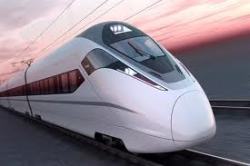 Seriously? A connecting flight rather than making your way to Pearson for a direct one? A little over the top, wouldn’t you say?)
But that seems to be what we do these days, make questionable claims to back up our demand for less bold measures from our governments. Bold measures are inherently risky, unpredictable and oftentimes don’t immediately pay off. It takes some courage to step up and see them through. If our politicians aren’t capable of such conviction, maybe it’s because we aren’t either.
— boldly submitted by Cityslikr