Let’s Make Local Democracy Actually Democratic

We’ve all heard the defense of ‘traditional marriage’ – that between a man and a woman –made during an argument against same sex marriage. hughhefnerThe one about how the latter will ‘undermine’, ‘diminish’, ‘make mockery of’ the former. As if up until recently, traditional marriage had been some rock solid institution, a sacred bond that those who entered into it never undermined or diminished. Only serious practitioners of the heterosexual persuasion like Hugh Hefner could uphold its honour.

A similar line of reasoning seems to be at work in the debate over extending the right to vote in municipal elections to permanent residents. (Steve Paikin runs it up the flagpole in an excellent 2010 session with Desmond Cole on the subject.) Somehow allowing non-citizens to vote at the local level will cheapen the act for the slim majority who exercise their franchise at the best of times during a municipal campaign. castaballotChoosing not to vote should be the privileged right of citizens and citizens only.

While no one would argue that the right to vote is the bedrock of any democracy, to maintain that it should be the sole entitlement for those holding citizenship suggests that it is the only determinant to a democracy. As if democracy is synonymous with voting. If someone wants to be a part of our democracy, they only can do so upon getting their citizenship.

But democracy is so much more than that or, at least, it should be. Voting is a small albeit vital component of the process, something that happens, more or less, every four years. Democracy is a larger, daily commitment.

And the flipside of that would be citizenship is more than simply the ability to vote in elections. So to argue that somehow conferring the right to vote on permanent residents diminishes citizenship rings hollow for me. Citizenship, like marriage, is an institutional designation and what you do under its banner will determine the quality of it, won’t it? If voting is contingent on being a citizen, does deciding not to vote when that right has been bestowed upon you call into question your citizenship?

I’ll grudgingly accept the assertion that only citizens should be allowed to vote at the federal level although I’m not entirely convinced as to why. But at both other levels of government, I can’t think of a reason why that should be the case. engageenableenpowerIf someone has chosen to live in a particular locality that is, ultimately, overseen by a provincial government, the argument escapes me that they should be allowed to vote for their representation only after they’ve become citizens.

Let’s not forget that we’re talking about a group of people who’ve already indicated their keenness to be part of the community by becoming permanent residents. So pick a standard. A six month residency requirement? A year? During which time, a permanent resident is paying taxes, using amenities supported by those tax dollars, sending their children to schools or going to school themselves. Once they meet the time line, why not allow them to have a say in who’s making the decisions that affect their lives? How does allowing them to do so in any way diminish the notion of a wider citizenship?

I’d like to think of voting as something of a citizenship starter kit. An introduction to how shit works here. Your opinions and views matter as much as your tax dollars to the proper running of this place. kinggeorgeOne stake, a very important stake, in a functioning democracy.

It’s also possible that extending the vote to permanent residents might make politicians more aware, let’s call it, of the pressing issues newcomers face. If there are areas of a city, say, with high concentrations of permanent residents unable to cast a ballot, just how much attention will their local representatives pay to them. Taxation without representation and all that.

Back in 2006, then mayor David Miller attempted to put this debate on the front burner. The Community Development and Recreation Committee revived it again last week with a request for a staff report on the idea. Perhaps if it were as simple as a council vote on the matter, we wouldn’t be still talking and doing nothing about it. Unfortunately, it’s just another example of how we as a city don’t control our destiny. It’s a matter that Queen’s Park must decided and they will only do so if we show that’s there’s enough support for the idea.

If only those who had the most to gain actually had a vote in the matter.

invitingly submitted by Cityslikr
Our Provincial Endorsement

With the importance provincial governments play in municipal life, I’m somewhat bewildered by my lack of engagement with the 2011 election. I should be on top of this, combing through party platforms, tracking down candidate debates or otherwise just staying on top of things. But no. I dithered. I procrastinated. I couldn’t beat back this feeling of caring less.

In trying to avoid the burden of responsibility, I lay the blame squarely on the respective campaigns’ shoulders. It all seemed to be about what we don’t need. We don’t need another 4 years of Dalton McGuinty. We don’t need another neo-conservative at the levers of power, desperately trying to steer the ship of state away from the future. No time for change. Exactly the time for change.

Well, if that’s the case, do I really need to be paying attention?

Snap out of it. Of course you do. Must muster interest. Do your duty as a citizen. Engage! Engage!

So I sat through Rogers’ Trinity-Spadina candidates’ debate minus the incumbent MPP. I went through campaign literature. I scoured party websites. And here’s what I came up with.

Surprise! I won’t be voting Conservative. The last thing we need is another anti-urban leader ignoring the interests of municipalities. Ignoring would be generous to Tim Hudak. It’s more like looking at cities as dumping grounds for the disastrous results of their backward policies. Remember Mike Harris?

As for the government of Dalton McGuinty? Ambivalence is mostly what wells up within me. For every strong initiative it’s made in areas like education or the environment, there’s been two steps back in the face of strong, largely misguided opposition. You don’t like wind turbines in toss-up ridings? They’re gone. Catholic school boards got problems with progressive approaches to sex education in the classrooms? Ignore it and carry on with your discriminatory, pre-Second Vatican Council ways.

Oh yeah. And let’s not forget the trampling of our civil rights, police state approving fiasco that was the G20.

The Liberal Government’s dealing with cities has been wishy-washy. Yes, it’s redone a lot of the damage inflicted by the Harris gang. Uploading many of the services dropped into our laps in the late-90s. They passed the City of Toronto Act which gave more powers and flexibility to the city to deal with its particular issues. There’s been the more than half-hearted Big Move and nod to the importance of public transit in the GTA. We got some of the gas tax. Promises have been made since 2003 of restarting provincial contribution to the annual operating budget of the TTC. Transit City was a signature piece of the transit puzzle here in Toronto. Until it wasn’t.

One might hope that, if given a 3rd majority, McGuinty would become more resolute and less afraid of his own shadow. He has stood firm in the formidable face of opposition to the HST. If Ford Nation fails to dislodge him, the premier might start standing up to the more ridiculous whims of our mayor. Moreover, Premier McGuinty might gracefully approach retirement and the Liberal party could entertain the notion of reclaiming its more liberal leanings.

But what about the Liberal candidate in our riding? One Sarah Thomson. We got a healthy dose of her when she ran for mayor of the city last year before she ran out of gas late in the proceedings. Underwhelming initially, she never really caught fire but she did evolve over the course of the race, the first of the candidates to begin backing away from the city’s-going-to-hell-in-a-handbasket narrative and did seem to be listening to the actual problems we were facing. She adapted an extensive bike lane plan and was the first one to float the idea of road tolls, getting laughed out of the place by her opponents.

Yet, she still has a tendency to talk in sound bites. There’s the air of the high school valedictorian about her. I get the feeling she’s running here because there was no riding closer to home. She may be an ideal McGuinty Liberal which I hold against her. On the other hand, she’s not Rocco Rossi.

Normally, I don’t have to go through such a process of elimination about where I’ll be placing my X on the ballot. Trinity-Spadina is an NDP stronghold. I tend to lean that way most of the time. It should be a no-brainer.

However, maybe it’s the fallout of the lacklustre campaign but I’m just not feeling Andrea Horwath’s vibe. Rather than pick up where the federal NDP left off and run unabashedly with a left of centre platform, I’m feeling nickel and dimed by all the talk of capping gas prices, removing the HST from home heating fuels. On the other hand, they have promised to restart contributing to the TTC operating budget and other transit initiatives. But that feels almost ad hoc, not part of a bigger plan for cities.

Where’s the tapping into the Occupy Wall Street movement? It’s a shitstorm out there, people! Governments should not be retreating in the face scary economic news. We need to be talking Keynesian not deficit reduction. Hope is better than fear. Optimism is better than despair.

And then there’s our incumbent, Rosario Marchese. He may be a very nice man and a crackerjack constituent MPP. But how would I know? I never hear much from or about him until election time. Maybe it’s living in the shadow of MP Olivia Chow who keeps me apprised of everything she’s doing.  (What’s that you say, Olivia? A private member’s bill calling for a national transit strategy?) Marchese pales in comparion. But when he missed most of the Rogers’ candidates’ debate, it just struck me that he’s merely doing time.

Leaving me with the Green Party. Now, truth be told, I’ve never really known what to make of the Green Party. I get the environmental thrust but there’s also been the fiscal conservatism they’ve often touted. Some of the pledges in their platform come with the ‘when the budget’s balanced’ caveat. I’m sorry but with all the grim predictions making the rounds out there about an almost certain double-dip recession, budget balancing should be the last thing we’re talking about now.

That said, the Green Party candidate in Trinity-Spadina, Tim Grant, has caught my fancy. A former teacher who has been involved in the environmental movement since the days when most of us were asking, what’s that? He was a member of the Harbord Village Residents Association. His platform stresses biking and walking as much as public transit. Mr. Grant advocates a Junk Food Tax and a carbon tax. During both the Rogers’ candidates debate and on The Agenda’s Confronting Poverty, he came across as not only knowledgeable but collegial with his opponents.

On top of all that, he’s pictured riding a bicycle on his campaign signs!

I realize that in voting for Tim Grant, I’m doing little more than lodging a protest. There’s no hope in hell he’ll be elected. But I’m alright with that. Let it be known that I’m protesting the Liberal government and it’s too tentative embrace of a green economy in general and a strong, unapologetic public transit strategy. I’m sending out a protest to the provincial NDP. Don’t take my vote for granted. Out with the deadwood and in with new blood.

For all those reasons, tomorrow I will be voting for Tim Grant in the riding of Trinity-Spadina and The Green Party of Ontario.

humbly submitted by Cityslikr

Trash Talk

Let’s talk some trash. Trash collection, that is. And that’ll be the last recycled pun (except for that one) we’ll use on the issue.As we hurdle toward the westward-ho garbage privatization debate set for city council next week, wouldn’t it be nice to have some solid facts and figures on the table in order for those who will ultimately make the decision to do so logically and with well grounded reasons for proceeding. Councillor Josh Matlow attempted to accomplish such a task on Tuesday night hosting a town hall meeting moderated by the ever moderate Steve Paikin of TVO fame. On one side was pro-privatization advocate and Public Works and Infrastructure Committee Chair Denzil Minnan-Wong. Hugh MacKenzie, economist and research associate at the Canadian Centre for Policy Alternatives, represented the anti-side of the equation.

Reading through accounts of the evening, it’s clear that no real consensus emerged. “Last night’s trash talk offered no clear answer on the garbage privatization debate, but one very popular moderator,” Carly Conway of the Torontoist tweeted yesterday. Hey. Maybe if we contract out trash collection to Steve Paikin, everyone might be happy! “It answered some questions for me and, frankly, left me with more questions than I came in here with,” Councillor Matlow told the Torontoist after the town hall.

It seems inconceivable to me that such an important issue that deals with not only a lot of money but peoples’ livelihoods couldn’t be a little more clear cut. Evidence must exist out there from towns and cities that have unloaded trash collection onto the private sector. Case studies, analysis, comparisons of before (privatization) and after, of places that have maintained public service. Metaviews, I guess, is what I’m thinking.

If I were an actual journalist or one of those people who aggregate and research such things, perhaps it might all become obvious which way to go. I’m not but I’m perfectly willing to read the work of someone who has done it. So far, however, such documents are few and far between, lost in a sea of studies all that can be easily shrugged off by opponents as tainted by self-interest or ideology. Unions will weigh in against privatization but they’re just looking after their own jobs, right? Try reading this instead from the National Solid Wastes Management Association, a ‘trade association that represents the private sector solid waste and recycling industry.’ Yeah, so they have no dog in this particular hunt, do they.

The field is awash in solid anecdotal evidence, frankly. For every Etobicoke that loves its privatized trash collection, there’s an Ottawa that has brought at least some of it back in-house after a brief private dalliance. (Interestingly, if I understand correctly, Ottawa re-publicked collection in the older downtown area of the city which is more analogous to the core of Toronto than Etobicoke is.) Like Tuesday’s townhall, neither side is able to deliver the knock-out blow that will sway a crowd to fully embracing its position.

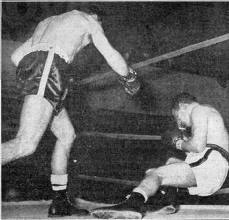
Running with that boxing analogy, shouldn’t the advocates for garbage privatization have to win decisively like any challenger seeking to dislodge the established champion? If we’re going to take a leap of change purely for the possibility of saving money and improved service, the case for it needs to be nearly irrefutable. Yes, we’re going to save this much money. Yes, you’re going to be happier with the service. Guaranteed, to use the mayor’s TV pitchmen promise.

As the privatization pointman, Councillor Minnan-Wong has done nothing of the sort. His constant referencing to Etobicoke as an example for why the rest of the city should privatize is both unconvincing and, possibly, inapplicable. He assured the audience at Tuesday’s town hall that Etobicoke receives no more complaints about trash collection than the unprivatized parts of Toronto. No more complaints, Councillor? Shouldn’t we be aiming for fewer? He was unable to answer some important questions from the audience including gender equity hiring by private firms. When all else failed, the councillor claimed his job was not about social engineering.

Moreover, the savings he (and the rest of the pro-privatization crowd) talks about Etobicoke receiving may not work out in the rest of the city that is laid out in a far less orderly pattern. As we’ve discovered over and over again here in post-amalgamated Toronto, what’s good for Etobicoke may not be good for East York. Money saved in one former city may not be possible in another.

And the ever changing amount of savings should also serve as a yellow flag of caution. All throughout last year’s municipal campaign, pro-privatization candidates trumpeted the $49 million Toronto would save going private with their garbage collection as reported by the C.D. Howe Institute. Under closer scrutiny, that report’s methodology was called into question. Now we’re hearing $8 million/year west of Yonge. Or maybe $6 million. $2 million isn’t being ruled out. What’s next? Well actually, we’re not going to save any money doing this…

And frankly, if the likes of Councillor Doug Ford can blow off $7.8 million or the city pays to police officers for paid duty overseeing construction sites and the like (“Keep in mind [paid-duty costs represent] one-half of 1 per cent of the construction projects that we have to pay for,” the councillor said), where’s the reasoning for undertaking such a massive change of operation in collecting our garbage? What will his response be at next week’s council meeting when a fellow councillor points out that an $8 million saved privatizing garbage collection amounts to about 1% of the near $800 million shortfall the city’s facing? Blustery dismissiveness, I’m guessing.

With no firm or substantive savings to tout and the only improved customer service to point to is the assurance that privatization will mean no more garbage strikes like we saw in the summer of 2009, it’s hard to see this as anything but ideological. According to the Toronto Star’s David Rider, at Tuesday’s town hall meeting “Minnan-Wong said the contract would have ‘continuation of service’ provisions to ensure that, even if the contractors’ workers went on strike, the trash would get picked up in the privatized district.” In other words, in contracting out garbage collection, the city would insist that the winning bid include a provision that would bring in scabs to cross a picket line in the case of a strike, thereby rendering the power of collective bargaining null and void.

Huzzah! Questions linger about what if any savings taxpayers will see. We can’t say for sure if they’ll notice any difference in how their trash is collected. As continued innovation in recycling? Like Councillor Minnan-Wong has said, social engineering isn’t really our job. But we do know one thing. Privatization is going to stick it to the union. Guaranteed.Spite based policy making. In tough times, is there anything more satisfying?

stinkily submitted by Cityslikr