Hey Rain Man!

“Once the government gets involved, 9 times out of 10 it’s a disaster.”

mess

This from Mayor Ford at yesterday’s Executive Committee meeting during a debate over recommended increases in development charges. Development charges are fees the city receives for development that increases demand on necessary infrastructure like roads, public transit, sewage and water delivery. Fees this city charges are significantly less than many in the surrounding regions and as anybody who tries to get from point A to point B or who’s had their basement flooded knows, our infrastructure needs have not really kept up to all the new growth.

Councillor Paul Ainslie put forward a motion asking for a staff report on “… mechanisms for development charge discounts along main avenues in our Strong Neighbourhoods, and adjacent neighbourhoods.” A Scarborough councillor, Ainslie pointed out that with development charges the same throughout the city, developers tended to go where they would get the biggest and quickest return on their investment which is almost always downtown. bullhornAs with most things planning related, the city is constrained by provincial law in its ability to manipulate development charges in order to spur growth in areas needing growth. The councillor was just looking for possible ways to work within such restrictions.

But the mayor was having none of it.

“I’m a huge believer in the market determines the cost.”

“We shouldn’t be dictating what these people pay, let the market dictate.”

“This will turn into a complete mess.”

Have conservatives always been this dumb? Are those of us of a certain vintage deluded when we talk about the halcyon days of the red Tory – Joe Clarke, Hugh Segal, Bill Davis, David Crombie – when conservatism was entirely reasonable?

Development charges, by their very nature, are the government getting involved. It takes money from the private sector in order to help offset the costs of growth which, in turn, makes the development more attractive, therefore increases the value of the development. notlistening2Higher value, higher tax base. A win-win for all involved.

In voting in favour of the staff’s report to phase in development charge increases over the next couple years, Mayor Ford voted in favour of government involvement.  But somehow, in an effort to figure out ways to encourage growth in areas of the city in need of it, that was just too much meddling for the mayor’s taste. It would surely precipitate a complete disaster.

The irony (and I believe I’m using the word correctly) is that this anti-government outburst from the mayor came a day after he declared victory in securing federal funding and sealing the deal for a Scarborough subway. An infrastructure project exclusively funded by the government which, in the mayor’s very own words, would stimulate growth and development in Scarborough.

But when Councillor Ainslie and another Scarborough councillor, Gary Crawford, request a report to propose ways to help stimulate growth and development along Kingston Road in their neck of the Scarborough woods? No way. People shouldn’t be dictating. Let the market decide!

It’s like this iteration of conservatism has taken all the easy, self-serving, short term aspects from the ideology while jettisoning its more complicated features. multiplicityThey’re like the third clone in Michael Keaton’s Multiplicity, the ones who eat toothpaste. Pale shadows of their forbearers who can’t or conveniently don’t remember the fuller version of their political philosophy.

There’s no pattern or logic. It’s just partisan addled sloganeering outbursts at words or ideas that don’t sit well with them. Like single-celled organisms reacting to the light. Single-minded entities reacting to things they don’t understand. No thought. Just visceral, opportunistic grandstanding.

Modern conservatism is nothing more than an empty brand masking its one true operating principle: blind, anti-government reactionism. Openly adopting such a stance, however, doesn’t play well with the voting public. So you try and smooth out the rough electoral edges by maintaining a soothing name that reeks of tradition.

A tradition that I now call into question if Mayor Ford and his ilk represent its legacy.

sins-of-the-fatherly submitted by Cityslikr

On Activism And The World We Live In

The great thing about doing the thing I do, and yes, this is me doing something, aside from getting to trade barbs with former Harris government knobs, goodnewseveryoneis all the smart, engaged people I meet along the way.

Two of the smartest, most engaged people I’ve had the opportunity to meet are Desmond Cole and Dave Meslin. On Tuesday, the two helped roll the rock of voting reform a little bit further up the hill as the Government Management Committee’s Proposed Electoral Reform item made its way through city council, relatively unscathed. Now the questions of permanent resident eligibility to vote municipally, ranked ballots, internet voting and a review of municipal election finance rules are on their way to Queen’s Park to secure the provincial approval needed for any of these initiatives to go forward.

It’s just another step, for sure, with more than a few obstacles still to clear but, pick your own hoary cliché here, a long march is only completed step-by-step.rollingrock

Being an activist can’t be easy.

There are assholes like me, just popping up on the scene, who start yelling and think that’ll make an immediate difference. True, effective activism doesn’t work like that. It’s a slog. A long, tough slog.

Meslin has been stirring up the pot here in Toronto since the last century it seems. Oh. I’m sorry. What? 1998 is the last century. Well then. Meslin has been stirring up the pot here in Toronto since the last century.

Reclaim the Streets. Toronto Public Space Committee. City Idol. Toronto Cyclists Union. RaBIT. He was part of all those movements.

For his part, Desmond Cole’s been around the activist block a time or two himself. A Project Coordinator for I Vote Toronto, he’s been at ground zero for the push to open municipal voting to permanent residents. busyHe was a winning candidate for City Idol back in 2006, running in Ward 20 against Adam Vaughan. As a writer-activist, Cole has also been front and centre covering relations between the Toronto Police Services and the city’s visible minority communities.

The status quo is firmly entrenched. Budging it even just a little takes a lot of time and effort. You’re labeled a special interest or a usual suspect by those who like the status quo just fine, thank you very much, or who can’t see anything past it.

Even those fighting the same fight can turn unfriendly and unhelpful. I’ve witnessed firsthand the internal warfare going on between the camps trying to change our first-past-the-post voting system. Allies fighting for a better way to elect our representatives arrive at loggerheads over the exact method to do it.

Activism is not for the faint of heart. I think that’s especially true in these days of deep cynicism and disconnect to our political system. getbusyMuch easier to throw up your hands and say, well, they’re all corrupt, they all lie, a pox on all their houses than it is to roll up your sleeves, get into the trenches, firm in your conviction of changing this motherfucker up.

So I tip my hat to the likes of Dave Meslin and Desmond Cole, and say thank you. Not only are they fighting the good fight, they do so in such an infectious, enthusiastic way as to make it almost seem like fun. And why not? Civic participation is fun, despite opinions to the contrary.

And it would be remiss of me not to send out a big thumbs-up to Councillor Paul Ainslie as well. As chair of the Government Management Committee, he grabbed hold of the electoral reform issue and saw it through some very choppy waters especially at times due to his own unfriendly committee. His determination to see this through was as dogged and tireless as that of the likes of Meslin and Cole.

We here at All Fired Up in the Big Smoke spend much of our time expressing disappointment in the conduct of our local representatives at City Hall. So it behooves us then to take a moment and acknowledge when they exhibit exemplary behaviour. (Frankly, they do so at a much higher rate than they are ever given credit for.)

At the outset, Paul Ainslie never struck me as a particularly outstanding councillor. Early on in this term, he seemed to be just another right wing lap dog for Mayor Ford, obediently doing the mayor’s bidding and voting along party lines. thumbsup1That started to change for me when he stood up, outraged as the TPL board chair, to respond to then budget chief Mike Del Grande’s dim view of all the non-English language books and videos in the library’s catalogue.

His drift toward independence has continued and, while still too right leaning for my particular tastes, he has come to represent a moderate voice on council. Maybe he always was and it got lost in the ideological thunder that rolled over City Hall in the fall of 2010. He deserves a lot of credit for rising above the partisan tumult and delivering on what could be a real game-changer in terms of local politics.

Not immediately. But soonish. That’s the reality for activists and the politicians responsive to them. We owe both a huge hug of gratitude.

thankfully submitted by Cityslikr

Electoral Reform Gets All Tied Up at Government Management Committee

In the end, Government Management Committee item 22.15, Proposed Electoral Reforms, limped forward without recommendation for wider city council consideration deadlocked in a 3-3 tie. alltiedupThose voting against reforming the way we go about casting our ballots municipally? Team Ford. Councillors Vincent Cristanti, Doug Ford and Giorgio Mammoliti, stood firmly in opposition to any change in the status quo, even going as far as putting up a motion to defer the item indefinitely. That salvo was fended off by the rest of the committee, consisting of Chair Paul Ainslie and councillors Mary Fragedakis and Pam McConnell.

At issue was a staff report that proposed four reforms of how we can and who can vote municipally. Any possible changes that might be enacted wouldn’t occur until the 2018 campaign at the mayoral level, 2022 council wide. Nothing too radical or too quickly. Plenty of time to ruminate and consider, and all for a good cause. The promotion of wider civic participation and engagement.

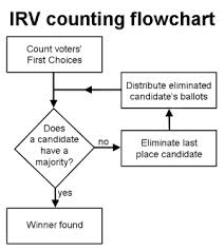
Much of the conversation and most of the deputations revolved around only one of the measures, to rank ballots or not. An alternate way to vote by ranking candidates in order of preference to ensure that the winning candidate gets at least 50%+1 of all votes cast. rankedballotIt’s a pitched battle that has been going on for some time now, not only pitting those in favour of keeping our current First Past the Post system against those proposing the basic 1-2-3 alternate ballot but reformers at odds with each other, arguing the merits of the ranked ballot versus pure proportional representation. That fight is for another post altogether.

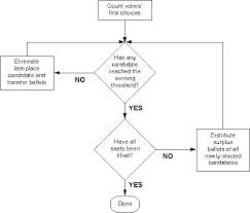
But I will say that those speaking under the banner (if not official endorsement) of Fair Vote Canada – the side of proportional representation and against ranked ballots – did themselves no favours. It’s one thing to speak out against a proposal and another thing entirely to positively offer up something in its place. They told the committee members a ranked ballot was not truly proportional and wouldn’t affect the election results all that much. What they didn’t tell us was how their Single Transferable Vote would work at the municipal level.

None seemed really all that familiar with the structure and workings of the local government in fact, intent to graft on an approach to voting much more conducive to a situation with a party system in place and multi-member representation. Not to say that PR and STV couldn’t work in Toronto. singletransferablevoteWe just needed to be shown how.

We weren’t and in reality, the PR deputations seemed to scare off potential committee support from the likes of Councillor Ford to the idea of any sort of electoral reform whatsoever. Which, unfortunately, also threatened other equally important ideas in the item for ways to increase not only voter turnout but civic engagement overall. How our ballots were counted was only part of the solution put forward.

City staff proposed holding elections on one of the weekend days in order to free voters from having to sneak away from work to vote. Staff also suggested extending the right to vote over the internet for those with disabilities. Thirdly (and most importantly to my way of thinking) the report put forward the idea of allowing permanent residents living in Toronto the right to vote in municipal elections.

The chair of the Government Management Committee, Councillor Paul Ainslie, who has been indefatigable in his support of electoral reform, talked about how when he campaigns a solid majority of the residents in single-family dwellings are eligible to vote. The opposite is true when he knocks on doors in apartment buildings. outsidelookinginYou want better election day turnout and more civic engagement? There’s no better place to start than extending the municipal franchise to those living in Toronto, paying taxes and using the city’s services.

As someone native born to this country, and with my Canadianness dating back a whole two generations now, I don’t feel particularly possessive of my right to vote here. It’s one aspect of citizenship, the cornerstone of it even. But I believe the exclusivity to it decreases as we move down the levels of government, from federal to provincial to municipal.

What I find especially egregious in the anti-permanent resident vote at the local level is that it’s perfectly fine for citizens to vote municipally in Toronto even if they don’t live here as long as they own or rent a property in the city. velevetropeI get the reasoning. If you have some pecuniary interest in city business, you should have a say in how the city is run.

Why give that right to just citizens? All permanent residents have financial as well as social interests in Toronto. Giving them the right to vote acknowledges their contributions to this city, the sacrifices they make to live here and the benefits they receive for doing so. It’s like a democracy starter kit. A welcome mat to anyone wanting to put down stakes in Toronto.

Fortunately, all this will be debated again at council despite Team Ford’s best efforts to smother it at committee. Like the representatives of the proportional representation camp, councillors Cristanti, Ford and Mammoliti were content to emphasize the negative without making any sort of positive contribution. Councillor Mammoliti bemoaned how much harder voting is in the suburbs than it is downtown without offering up any motions to address that claim. He chose instead to try and stop any talk of reforms in its tracks. Councillor Ford was all for strengthening the office of the mayor – putting forth a motion to ask the City Manager what kind of legislative amendments were necessary to do so — while merely providing lip-service to giving more power to community councils.

Trying to bolster our democratic process and extend its reach to promote wider and deeper engagement shouldn’t be a partisan issue. nonpartisanOn a lot of fronts, it isn’t. The proportional representation-ranked ballot dust up is largely being fought between the left. City council’s champion of electoral reform is Councillor Paul Ainslie who usually sits centre-right. At Government Management Committee he was backed by two of the more left of centre councillors.

But we heard loud and clear yesterday from those wanting nothing to do with electoral reform. The self-described Looking-Out-For-The-Little-Guys guys. The hardest of the hardcore supporters of Mayor Ford. They came down firmly against change without really saying why. The mark of true reactionaries.

frustratingly submitted by Cityslikr