Demand A Creed Not A Slogan

Of the many adjectives you might attach to Toronto’s last municipal campaign in 2010, ‘aspirational’ would not be one of them. texaschainsawmassacreIn fact, it was pretty much the exact opposite. Petty. Mean-spirited. Divisive. Exclusive.

The anti-JFK, paraphrased.

Ask what your city can do for you, ask not what you can do for your city.

It was nearly a year long orgy of lowering expectations while raising the bar of outrage. City Hall successfully portrayed as this lumbering, predatory beast, only interested in picking the pockets of hard working families and delivering nothing back in return. Respect For Taxpayers! became the winning battle cry/catch-phrase.

As has been noted by many people in many debates during the ensuing three years, being a taxpayer is not particularly inspiring or aspirational. It just sort of comes with the territory, living in any type of organized social grouping. It’s simply transactional. tightwadTaxpayer. Customer. Two dimensional. I pay. I receive.

It’s all so blasé an approach to democracy. There’s no responsibility attached to it. You pays your money. You gets your services. End stop.

This time around I want candidates coming to my door striving for more than that, demanding more from me as a voter citizen resident. Hitting on another nub of the problem that has also been much discussed. How exactly do you refer to someone who endeavours to be more than just a taxpayer? Voter lacks a similarly multifaceted aspect. Citizen excludes too many people who contribute everything to the welfare of the place they call home except voting.

Resident is soft, so passive. I don’t even live here. I reside here.

The absence of a proper word to offset the persuasive power of taxpayer is unsettling as we head into the 2014 campaign. happycityIn his book Happy City, Charles Montgomery quotes National University of Colombia urbanist, Ricardo Montezuma: … Because in a big way a city is really just the sum of what people think about it. The city is a subjective thing. For those of us who rankle at the bumper sticker notion of being only taxpayers, what is the word that defines us? What is our subjective interpretation of the city we live in?

Over the last few weeks, I’ve been mulling over the notion of a 10 point campaign manifesto. Why 10 points? I don’t know. It’s the metric in me, I guess. I’d be happy with 5. Anything less seems flimsy. 7 or 8 would also work. 6 or 9 are out. I find them to be slippery numbers. More than 10, while ambitious, may be too unwieldy.

And while we’re at it, let’s call it something other than a manifesto. That smacks of you know what, and is easily dismissed by the more literal minded. How about a creed. A 10 point campaign creed for non-taxpayers. No, no. Strike that. A 10 point campaign creed for taxpaying non-Taxpayers [working title].martinluther1

Point 1.

We are more than taxpayers.

Don’t tell us how much money you’re going to save us. Tell us what you’re going to do with the money you spend. How you’re going to use it to build a better city. A better city? Yes. A more equitable city that offers more opportunity for more people. Opportunity? Yes. Opportunity to live safely and securely. Opportunity to prosper. Opportunity to move freely around the city in whatever mode you want that benefits the greatest number of people. Opportunity to truly believe that there is a healthy, sustainable, thriving future for you and your children and your grandchildren.

None of that is possible with a sole emphasis on keeping taxes low. We know this from the previous 3 years experience. corevaluesRespect For Taxpayers has translated into neglect of the city and everyone who lives, works, plays in it.

You see, there’s no one word for that.

We are more than taxpayers. Those seeking office in 2014 need to address the broader issues that encompass the governance of a city that is home to over 2.5 million inhabitants. Anything less. Why are you even bothering?

apolloly submitted by Cityslikr
The Trouble With People

1. Don’t assume that people know what they want.

2. Don’t assume people will tell the truth about their wants and dislikes even if they know them.

3. Don’t assume people can be trusted to behave in a rational way.

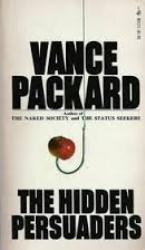
— The Trouble with People, chapter 2 of The Hidden Persuaders

If anything, the following half century plus since the publication of Vance Packard’s examination of America’s consumers and the advertising industry that spurred them on to increasingly dizzying heights have proven the above 3 insights not far off the mark. thehiddenpersuadersDespite our increased sophistication and awareness of the ways we are being manipulated into consumer habits, it is still fanciful to imagine ourselves as any sort of rational actors, logically calculating our best self-interest in the economic realm. I point to the current attachment we bear toward our electronic gadgetry especially cell phones as an example where brand loyalty seems to be appears to trump basic common sense.

It’s just a telephone, folks; a mode of interpersonal communication not a magical device that will confer eternal happiness upon us. But that may also just be the sad digression of a sore loser Blackberry user.

Later on in his book, Packard talks about the course of action taken to deal with such irrationality. “If people couldn’t discriminate reasonably,” he writes, “they should be assisted in discriminating unreasonably in an easy, warm emotional way.” One manner of doing so, advertisers happycity(and by extension those depending on advertising’s dark arts) needed to become ‘merchants of discontent’. Stir up feelings of dissatisfaction, restlessness and frustration with what is essentially the status quo and then deliver up the latest new and improved gizmo as the singular agent of change for a better, fresher feeling future.

Unfortunately, we may have been designed for susceptibility to such a line of negative attack. As Charles Montgomery writes in Happy City, as descendants of hunter-gatherers “…who compulsively looked ahead in order to kill more game or collect more berries than they did yesterday…We have been hardwired for active dissatisfaction.” Born to be disgruntled.

Of course, such irrationality and a tendency toward seeing the glass half empty may also play a part in the political realm. It confounds logic, coming almost as it does straight from the gut. Going negative, as they say in the campaign game, seems almost natural. Get under people’s skin, get them bristling and fussy. You don’t even have to provide any reasons why everybody’s nose should be out of joint. Just pick a sore spot and poke it. discontentedRepeatedly.

Sound familiar?

In a discouraging way, it does help to explain how, when a political movement goes bad, and by bad I mean negative, stressing anger and irritation, it’s very, very difficult to counteract it. Once the mood of the electorate turns foul, they’re not looking for sunshine. It’s retribution they want, somebody’s head on a platter.

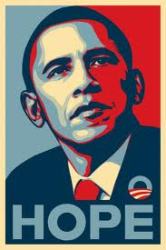
I wish there was an easy, one sentence answer to the question of how you counterpunch that tactic. Certainly Barack Obama’s Hope/Change victory in 2008 served as a good example of the power of delivering an upbeat message. It resonated enough to get him re-elected despite some of the luster coming off at least in part because he didn’t deliver enough of the promised hope and change.

The NDP breakthrough here at the federal level in 2011 could also be characterized as a triumph of our better angels although that has to be dampened slightly by the fact that the forces of darkness attained majority government status in that election. hopeGood news/ bad news. What do you want to hear first?

I’d like to believe that there’s some sort of correlation between negative campaigns and low voter turnout but I’m just not sure how robust the evidence is to back that claim up. Toronto’s 2010 municipal campaign certainly felt like a negative one. Team Ford proved to be masterful merchants of discontent. Turnout spiked. Anger and resentment can deliver voters to the ballot box.

It hasn’t done a lick of good, though, when it comes to governance. HULK MAYOR SMASH CITY!! The natural impulse to such a situation is to try and summon a new anger, an anger at the wanton disregard of how responsible politicians should ably function in the proper running of the city.

I’m Not Him. Anybody But Ford. Sound the alarms! Mount the ramparts!

Like most anger, it’s not very inspiring. Voting against something or someone instead of voting for something or someone rarely excites the electorate. It simply plays into our natural inclination toward dissatisfaction. Hold your nose and vote. Ho-hum!

We can’t just be angry. We have to know what we’re angry about. imagineArticulate what it is we’re fighting for not what we’re fighting against. We have to know exactly what it is we want because, as Vance Packard wrote over 50 years ago, people don’t necessarily know what they want and might not tell you even if they did.

We have to be merchants, not of discontent, but encouragement. Of boisterous, positive encouragement about this place we live and how everyone who chooses to be here is offered the opportunity to live here to their fullest potential.

It’s a tall order, for sure, but the alternative is just more divisive nastiness of which we’ve had too much of over the last 3 years. Let’s start demanding more, offering more. Let’s be merchants of aspiration.

hopefully submitted by Cityslikr

Everybody Get Happy

Early on in Charles Montgomery’s Happy City (page 6 to be exact), happycitythe author quotes former Bogotá mayor Enrique Peñalosa, speaking at the 2006 World Urban Forum:

“If we defined our success just in terms of income per capita, we would have to accept ourselves as second or third-rate societies – as a bunch of losers,” he said. No, the city needed a new goal. Peñalosa promised neither a car in every garage nor a socialist revolution. His promise was simple. He was going to make Bogotans happier.

“And what are our needs for happiness?” he asked. “We need to walk, just as birds need to fly. We need to be around other people. We need beauty. We need contact with nature. And most of all, we need not to be excluded. We need to feel some sort of equality.”

Over the past 3+ years, there has been plenty of head-scratching and analysis over and of this thing that has been labelled Ford Nation. Much of it has been very good (most recently from Naheed Mustafa in The Atlantic – h/t @GerardDiTrolio for the link and Marco Chown Oved in The Toronto Star – h/t @CTBNFG for that link).

But if I may be so bold, allow me to put it all under one big umbrella, using Enrique Peñalosa’s words. fordnation“We need not to be excluded. We need to feel some sort of equality.”

Being part of Ford Nation, from a political standpoint, could be viewed as an exercise in inclusion. For the first time in at least seven years, if not since amalgamation, hundreds of thousands of residents, mainly in the surrounding former suburban municipalities of Toronto, felt there was somewhere they had a voice, exerted some power. Rob Ford was their mayor. David Miller was our mayor. It was their turn now. Equality.

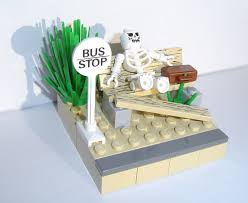
Never mind, for the moment, that many of the policies Team Ford would pursue once in power ran contrary to some of the issues that exacerbated the sense of isolation and exclusion, i.e. cutbacks in programs and services, reductions in public transit. Pocketbook politics are strong. For over 3 decades now, conservatives have sold us a bill of goods that more money in our pockets was all we needed to make our lives better. longwaitforabus1It’s a tough rhetorical nut to crack. To paraphrase a wise politico, sometimes that elderly lady has to start wondering why her bus taking her to church on a Sunday morning now comes every half hour when it used to be only 15 minutes before you can convince her that freezing property taxes does have an effect aside from simply saving a bit of pocket change.

Ford Nation is the face of people wanting in, wanting to be heard if not wanting to directly participate in the civic life of the city where they live.

It’s not enough to simply tsk, tsk, tsk, rant in an alleyway and slap our foreheads in wonder at how these people can support a guy who’s clearly not acting in their best interests. Ford Nation is a vehicle for both a collective frustration and, I hope and think, a demand for inclusion in the decision making of this city. scoldForget the reckless driver who’s behind the wheel. That’s ultimately unimportant. It’s the vehicle we need to take notice of.

If we’re truly concerned about the direction our city’s going, of the well-being of all its residents, we have to recognize what the members of Ford Nation saw back in 2010. The status quo is not working. We need to figure out why that is and how to go about trying to address it.

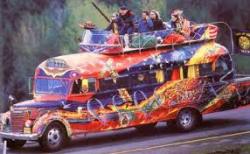
That calls for a positive reassessment not finger-wagging, blame-naming and nay-saying. We need a bus load of ideas, big and small, with a wide open door policy where anybody who wants to, contributes. Point the thing in the direction we want to go, along the surest route we think will get us there, aware that there’s always going to be detours ahead, and invite everybody who’s interested aboard.

It’s time we started talking about what we want from the city we live in not with everything we don’t like about it. Can’t, won’t, no no no, is the language of division and exclusion. Here’s what I’d like to see. magicbusHow about you? is the way we talk when we’re seeking other opinions, when we want to be inclusive, when we actually care what other people think, even those we think we know better than.

Toronto won’t work unless it works for everybody. There’s no easy fix for that. Consensus building is the only way forward to that goal. True consensus can only happen when everyone’s voice is heard and treated equally. That’s where solutions start.

happily submitted by Cityslikr