Thoughts From A One Time SUV Driver

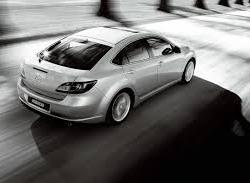
For reasons I cannot divulge, I found myself behind the wheel of a mini-SUV this weekend. Mini-SUV. Jumbo shrimp.actnatural Rolling stop. Act naturally.

So, a couple observations from the driver’s seat. Which could warm your ass with the push of a button. Why would you ever not drive everywhere when it’s even the slightest bit chilly outside?

Early on in the trip, I was surprised by a pothole in the road ahead of me. I could’ve avoided it with a fairly safe swerve but not knowing the vehicle very well yet and how it might handle a swerve, I chose to take on the pothole directly. I mean, it wasn’t my truck mini-SUV. Any damage wouldn’t be on me or my credit card.

I didn’t feel a thing.

Are you kidding me? I hadn’t navigated a sinkhole but, holy shit, it was like a tank traversing a World War I era trench except smoother. So, in fact, nothing like that at all, a terrible analogy especially since I’ve never driven a tank over or around or into a World War I era trench. tankAn awful comparison. I should absolutely edit it but… That ride! So smooth and effortless. Who cares really?

I wondered exactly how big an object a mini-SUV could run over before a driver noticed. A squirrel? A cat? A dog? A toddler in a wagon? A cyclist? How about an actual, full on SUV? Would it crush a Smartcar under its wheels, drag it along for kilometres without so much a smattering of recognition by anyone pleasantly ensconced in the truck’s comfy, oblivious confines?

It’s not distracted driving, exactly. It’s driving unawares. Unaware of anything outside the bubble.

OK. Yeah, that’s distracted driving. But a designed distracted driving, encouraged by the ease of the vehicle you’re driving, designed so you don’t notice any of the unpleasantness of driving.dashboardgadgets

Compare that with sitting on the bus, if you manage to get a seat, feeling every bump and divet in the road under you. Or on your bike where avoiding that street crater means avoiding serious injury. Or just on your feet, walking, where danger lurks around every corner or up any alley. Stay vigilant to stay alive.

Drivers, on the other hand, all efforts are made to disconnect them with all other road users.

Bringing me to my second point.

Enabling such a sense of entitlement in drivers to disregard fellow travellers, also emboldens them, encourages aggressiveness. As a matter of fact, I do own the road. Just watch me.

I truly surprised myself with a couple of the manoeuvres I attempted while driving this mini-SUV. Sitting high up in my seat, looking down on much of the traffic, I nosed out pushily into lanes, seizing space that opened up for me – For Me! – while, probably, inconveniencing other drivers who had to slow down to allow me to ‘sneak’ in ahead of them. I say, ‘probably’ because I didn’t hear any squealing of brakes or angry honking of horns. luxuriousrideOf course, my windows were rolled up, the radio on, my buns warm, a toasty complacency upon me, so I might’ve missed any sort of negative feedback that was flashed my way. I know I would’ve been pissed if non-mini-SUV driving me had encountered mini-SUV driving me acting like such an asshole. Especially after having aggressively inserted myself into the left lane and immediately throwing on the left turn signal, blocking traffic even further. Hey! I signalled, didn’t I?

That’s the thing, right? By endeavouring to make driving easier, more pleasant, a veritable ass-heated stroll in the park, if you will, we’ve tapped into and egged on our inner asshole. “Why would he do that?” non-drivers often find themselves asking when subject to yet another asshole move by some asshole driver. Because they can. Because there are very few repercussions to their actions, aside from increased insurance premiums and occasional temper tantrums they engender.

Sure. Some motorists die but fewer than used to die. There’s the collateral damage, as well, the pedestrians and cyclists, yet rarely do drivers pay the true cost for their fault in causing the fatalities, for actually killing or injuring anybody. deathrace2000Unfortunate and unavoidable “accidents”, when all is said and done. They didn’t see that guy riding the bicycle there. The pedestrian unexpectedly stepped into the intersection as I was attempting to get through that stale yellow light. The kid was riding on the sidewalk.

The more we put drivers at ease, the more we put everyone else out on the street at risk. In a car, at the wheel, you don’t have to be looking at your phone to be distracted. As long as you feel insulated from everybody else around you on the road, that’s already more than enough lethal level of distraction.

driving-the-point-homely submitted by Cityslikr

Misrepresenting Congestion

I’ve been trying to get my head around our continued, if not love affair with, our prioritization of, car travel. We know our auto dependency skews and hobbles entire transportation networks. We know that. thinking1We know the least efficient, most expensive way to move the greatest number of people around a heavily populated region is with single-occupant vehicles. We know the high environmental and social costs of driving, and driving, and driving.

But in our hearts, the car commercials promise us freedom behind the wheel. Wide open roads. Wind in our hair. Where are the open roads?

A status quo bias also figures into this. It’s always more difficult to dethrone the king. You have to knockout the champ to earn the title not win on points. Imagining a future that’s different from the past takes work, especially if it’s a past we lionize in golden hues, a past we need to return to get out from under our present woes.

And did I mention the car ads? Their relentless assault on our faculties of reasoning. Zoom, zoom. I want my zoom, zoom.

But there could be something else at work here, helping to keep our entrenched views entrenched. How we measure congestion, commuting and mobility may tilt decision-making in favour of auto use. A heavy thumb on the scale, the question is always framed: zoomzoomHow can we make car travel faster?

Or call it, ‘roadway delay’. Over the past week or so, the Transportation 4 America blog has been writing about it, anticipating the release of the U.S. Department of Transportation’s rules regulating use for federal funds for road and bridges upkeep, congestion, emissions, etc., etc., the whole transportation shebang. Reading through it, a couple huge ideas jumped out at me. In no particular order:

Because there’s a direct connection between how we decide to measure congestion and the resulting strategies for addressing it.

The report’s touchstone metric is a blunt measure of peak-hour speeds compared to an empty road in the middle of the night.

The report focuses only on drivers — not commuters as a whole.

Let me go back a bit. The report being referred to here is the annual publication, Travel Time Index, issued by an entity called the Texas Transportation Institute. It’s nothing official but gets a lot of press coverage and appears to unduly influence how certain jurisdictions apportion their transportation dollars.

Continuing:

TTI completely ignores the actual time and distance of commutes. If you have a 20-minute commute home but move at a lower speed, your commute scores worse than the person driving 80 minutes at a higher speed.

[Roadway] Delay is also blind to how many people a corridor is actually moving — it only looks at the number of vehicles.

So to recap, an influential report on congestion 1) uses a traffic measurement for driving essentially on an empty freeway as a baseline; 2) judges those driving shorter distances at slower speeds as having ‘worse’ commutes than those travelling greater distances at higher speeds; 3) counts vehicles’ movements not people’s movements; sleightofhand4) tabulates data on driving and driving only.

To re-recap: influential report on congestion makes like we only travel around cities individually in our cars, the longer time spent driving the better, and we should demand absolute car commercial ease while behind the wheel, not another soul on the road, zoom zoom.

Is it any wonder we think car travel is, realistically, the only viable way to get around, and believe that anything that gets in their way, threatens a smooth ride from point A to point B, must be dealt with expeditiously and decisively? No money spared to keep the wheels a-rolling, no cost too steep to ensure unhampered  mobility. Who’s to blame for this slowdown? Beep beep. I’ve got places to go. Why are you all using my road now?

Imagine determining public transit congestion in a similar fashion. The baseline being a subway stop in your basement that is just waiting for you whenever you want to ride it. It doesn’t stop until you get to where you’re going, always travelling at top speed. doesnotaddupThe longer you ride it, the further and faster you go, is considered a more desirable commute than if you were stuck going a fraction of the distance and speed. Anything other than those optimal conditions would be considered congestion and some sort of expensive fix would be called for.

That’s ridiculous, you’d say. Completely unrealistic. And you’d be right, too, but it seems such ludicrously automobile-friendly studies carry actual weight with decision-makers and dictate how public money and resources, lots and lots of money and resources, get spent on transportation. Slanted and skewed out of any sensible proportion. Zoom zoom.

Besides, public transit congestion studies? What’re you on about? Just be thankful there’s public transit to not study.

In responding to criticism that the Texas Transportation Institute is too focused on the driver piece of the congestion puzzle, the author of the 2015 report, Tim Lomax responded.

We have backed away from trying to make estimates of what is happening on the transit side because we don’t have very good transit data. We don’t have good data about how people are walking. So we concentrated on where we have the data.

We concentrate on where we have data. Where there’s no data, existence is questionable. Yeah, I think I might’ve seen one or two people on foot out there through my windshield. Yield to a bus? Come on. There’s no such thing.

We study it (regardless of how flawed the methodology), therefore it is.

I don’t know if the Texas Transportation Institute’s Urban Mobility Reports are extreme cases of unbalanced bias adversely affecting public infrastructure choices, something of an outlier. sweepundertherugHere in Toronto, headline grabbing discussion papers, like this one from the Board of Trade in 2013, talk of commute times in terms of a mix of drivers and public transit users but, I’ll be damned if I can find the exact ratios. 70% of commutes in the GTHA are made by car, 5% by rail (GO and the subway), leaving a substantial 25% unexplained gap. Bus riders? Cyclists? Walkers? No data. Of no consequence.

We learn that commute times throughout the GTHA had risen to 66 minutes each way. Nowhere could I find, however, how that time was arrived at. Were drivers spending less time getting to work and back than those using public transit? Probably, because outside of parts of the downtown core of Toronto (maybe), it’s always faster to take a car than it is public transit.

What we do discover is that Toronto drivers spend 40 days of every year driving and:

Most emblematic of congestion in the Toronto Region is the 401 highway, declared “officially the busiest stretch of freeway anywhere in North America” by none other than the US Department of Transportation.

Really? The most emblematic? Not that person, stuck out in some transit desert (part of the missing 25%), unable to drive, praying for the bus to come soon, so they don’t miss their connection to the next bus?

To be fair to the Board of Trade, they’ve been consistently beating the drum for massive investment in public transit, paid for, largely, by drivers. openroad1Yet, when your emphasis and highlights focus on the plight of drivers, it’s a tough sell to then ask them to cough up more cash for something they’re not in the habit of using. What’s in it for me?

Unsurprisingly, 3 years on, a couple election campaigns later, no new transit funding is in place, grand plans remain very much theoretical. Money has been found, though, to widen one highway, speed up repairs on a second and keep another portion elevated to save minutes for an infinitesimally small percentage of drivers. Why? Because there’s ample data to support such decision, if you’re used to looking at it a certain way. Because that’s just how it’s been forever or, at least, the past 70 years or so. Because zoom zoom.

wonderingly submitted by Cityslikr

Constant Motion

Admittedly, while living in Los Angeles, John McPhee’s 1993 book, Assembling California, may not be the most restful bedtime reading. assemblingcaliforniaIt’s all about tectonic plate theory, earthquakes and volcanoes, and fault lines running hundreds of miles long. Things that go bump in the night. Or when you’re sitting at a red light under a freeway overpass at 2:17 in the afternoon. Or taking in a World Series game in the early October evening.

The very definition of bad timing is standing in a door frame, waiting out the 45 seconds of a toss around earthquake, your existence here on the planet not even blink of the hundreds of billions of years that geology operates on. Really? Now?!

Even taking into consideration a 250-350 year schedule that some of the more active faults tend to follow before needing to pop and grind and drop significantly enough to cause serious problems, living in California seems to be a reasonable risk management assessment. Yes, there’s going to be a significant earthquake. While you’re still alive, though, and sizeable to rearrange your furniture?

Don’t be surprised when an earthquake happens. But, inevitably, you will be because… Really? Now?!

Besides, earthquake prediction is a mug’s game, albeit one that’s become more sophisticated with the advance of technology. earthquakeGone are the days when we had to rely on the dog acting all weird-like to tell us the ground was about to shake. We can practically see the earth move now. Still, it’s all about X% chance of a magnitude Y earthquake happening by the year 20ZZ.

23 years ago, when McPhee wrote Assembling California, it was said there was about a 50% chance of a major earthquake happening along the San Andreas by 2020. Within a year, Los Angeles did have a major earthquake, but it wasn’t the San Andreas. It was a fault nobody knew even existed at the time!

So it goes. Keep your emergency kit stocked and a flashlight handy. You probably won’t need either (fingers crossed!) but if you do…

People look upon the natural world as if all motions of the past had set the stage for us and were now frozen. They look out on a scene like this and think, It was all made for us – even if the San Andreas Fault is at their feet. To imagine that turmoil is in the past and somehow we are now in a more stable time seems to be a psychological need. Leonardo Seeber…referred to it as the principle of least astonishment. As we have seen this fall, the time we’re in is just as active as the past. The time between events is long only with respect to a human lifetime.

This is a passage from Eldridge Moores, the geologist-tectonicist McPhee travelled around with for parts of 15 years before writing his book. I love this idea of a principle of least astonishment even if I haven’t fully got my head around it. sanandreasIn a non-programming sense, it’s akin to whistling past the graveyard, isn’t it? A land of mental make-believe we construct in order to cope with the nasties life throws at us, the sad and sometimes terrifying realities of it all.

But if you really don’t want to experience a pants-peeing type of earthquake, move to where the possibility is less likely to happen. Toronto, for example. Or Phoenix, god forbid. Places more geologically stable.

On the other hand, if you’re destined to find yourself in the midst of a temblor – the most benign sounding term for an earthquake ever!! – if that is what the fates have in store for you, where better than Los Angeles? Regulatory codes have endeavoured to make it as safe as you could reasonably expect in the face of a catastrophic movement of the earth. I like my chances of living through the Big One there more than I would in, say, a remote area of China or Iran.

And if California slides into the ocean
Like the mystics and statistics say it will
I predict this motel will be standing until I pay my bill

The concept of terra firma is strong one for us, a solid foundation, if you will. And for good reason. warrenzevonThe vast majority of humanity, to the point of a mere rounding error, really, past, present and future, will not be swallowed up by a giant crack in the earth’s surface or swept away by a tsunami or be crushed under the weight of collapsing building. The earth acts as a stable stage for us to live our lives upon.

I think it worth contemplating, however occasional or philosophical, on the fact that the ground beneath our feet is in constant motion. Imperceptible as it may be to us, as divorced from the timeline of our reality as it is, the plates we stand on are moving. Grinding, crashing into each other, pushed deep back down into the molten core to be entirely transformed. Given enough time, ocean floors become mountain tops. subductionzonePermanence is an illuuuusion, Michael, a trick of our fleeting grasp of time. Impermanence and change are the norm. Rocks crack and become gravel.

If even the earth is subject to perpetual instability, why should we be immune from it? Inerrancy is neither possible nor desirable. It enshrines bad ideas and disallows good ones from ever becoming better. Continents shift. We should more readily humble ourselves to follow along with them, to follow the fault lines and see where it takes us.

tectonically submitted by Cityslikr