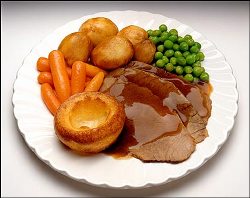
The doorbell rings, interrupting our weekly All Fired Up in the Big Smoke’s Sunday story meeting over roast beef and Yorkshire pudding. (The meat, it’s slightly overdone. The Yorkipud? Perfection.)
At the door stands an all decked out and bee-jouxed Nancy, ready for Oscar Party 2K10©®™. Our surprise at it being Oscar night is matched by her surprise at our surprise. “How could all 3 of you not remember?” Nancy asked. “What the hell have you been doing?” Cityslikr remains unconvinced, absolutely positive that the Oscars happen in April and on Monday nights. “Yeah well, it ain’t the 20th-century anymore, grandpa,” Nancy points out. “Johnny Carson and Bob Hope are dead. Time’s have changed.”
A flurry of activity gets us in front of the TV, ballots filled out with time to spare to even catch the last of the red carpet ceremonies. There is much talk of dresses and hairdos. Cityslikr is already livid at the sheer vapidity on parade. This happens every year but it seems much earlier than usual.
 Before the actual show starts, Nancy explains to us that the Oscars are looking to draw in a younger viewing crowd who have long since tuned out, not really seeing it as a Must See event. So it’s all going to be very fast paced and hip with no big dud musical numbers and briefcase toting accountants from Price Waterhouse. “It’s all about the zazz factor tonight, boys!” Nancy promises. We have no idea what that means but don’t really care enough to ask for clarification.
For most of us in the room, the only movie we’ve seen all year is Avatar. Some of us have seen it many, many times. “How many times is too many?” I ask Nancy who seems almost antagonistic to my devotion to the film. She provides no satisfactory answer.
Urban Sophisticat claims to have also taken in many foreign language films including 4 or the 5 Oscar nominated films. “It’s a travesty Broken Embraces was overlooked,” he opines but his authority is seriously undermined after a lengthy explanation about why the Israeli film, Ajami, will win the foreign language category only to see El Secreto de Sus Ojos from Argentina scoop up the award. Apparently it’s the one foreign language film he didn’t see. I guessed it correctly with a simple eenie-meenie-minie-moe choice.
While we find the opening of the show fairly amusing, Cityslikr wonders how co-host Steve Martin brings in the youngsters. Martin seems to concur, joking how the young presenters don’t even know who he is. “Not only is he old,” Cityslikr figures, “but the guy hasn’t made a decent movie since…” No one can figure out the last Steve Martin film they saw which seems to prove Cityslikr’s point.
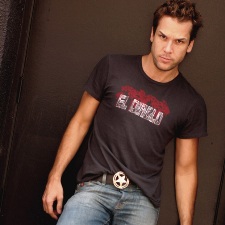
“They want the young kids, Dane Cook should be hosting this crap.” After explaining to everyone who Dane Cook was (“A hugely unfunny standup comic who mystifyingly fills up Madison Square Gardens for HBO specials.”), Cityslikr thinks that it would be a train wreck he would gleefully sit through.
Urban Sophisticat notices that the shaded Jack Nicholson is not in his usual place front row centre. “Maybe they gave his seat to Robert Pattinson.” Nancy suggests. She then has to explain to everyone present who Robert Pattinson is and all about the Twilight phenomenon.
Zzzzzzzzzzzzzzzzz…
Half of the room is now asleep. Nancy is desperately texting to find out if there’s another Oscar party in the vicinity. I am sensing an Avatar backlash amidst a groundswell for The Hurt Locker. This is why everyone hates the Academy Awards. They punish success.
Eyes are opened and interest rises when Jeff Bridges wins for Best Actor. It’s pointed out that while he acts like his character in the Big Lebowski, he is looking more and more like Sam Elliott’s The Stranger in the movie. There’s a letdown in the room when he doesn’t end his acceptance speech with “The Dude abides.” Everyone in the room except Cityslikr agrees that the Coen Brothers haven’t made another truly great film since The Big Lebowski. He loves No Country For Old Men. I don’t see it, frankly.
Urban Sophisticat goes on a long, Courvoisier fueled rant about the problems with the Oscars these days. “We already know too much about the movie stars. They’re ubiquitous with all the infotainment shows and channels on TV, supermarket check out aisle magazines. Back in the day,” he (actually) says, “the Oscars were one of the few times we got to see these legends of the silver screen with the guards down, out of their roles. There’s no magic or mystery in the pictures anymore. It all started to go down hill when People magazine came into existence.” No one’s really listening at this point.
Sandra Bullock’s acceptance speech for Best Actress elicits much chatter about plastic surgery and growing old in Hollywood. “She’s 45!” screams Cityslikr. “When did that become old?” Nancy shakes her head, amazed at his ignorance about the real world.
Show concludes. The Hurt Locker is the big winner. I guess I’ll have to see it when it comes out on DVD. “It’s already out on DVD,” Nancy informs me as I walk her to the door. Cityslikr and Urban Sophisticat are curled up together on the couch. We pause for a moment, enjoying the silence. Sensing her general disappointment in the evening, I suggest that Nancy find some other, more movie friendly types to watch the show with next year. She shrugs. “There’s no surprises anymore,” she tells me. “Everybody won who was predicted to win. That’s just the way it goes these days. It’s stage managed to death.”
With that, Nancy wanders off into the night. Once more Hollywood has disappointed her. But how couldn’t it? She didn’t even like Avatar. In this reporter’s humble opinion, if you didn’t like Avatar, you don’t like movies. The childlike magic has gone inside you. As Ally Sheedy’s Allison Reynolds said in John Hughes’s The Breakfast Club: When you grow up, your heart dies.
— wistfully submitted by Acaphlegmic

 So I ducked out from my studies for a late lunch last week, squeezing the last hint of surprising warmth from the day’s winter sunshine on a downtown restaurant patio. With me is a scholarly friend of mine, employed at a much more august institution of higher learning than I am presently but I don’t hold it against him. We talked city politics over pitchers of beer and stodgy Italian food.
 While both occasional drivers, we share a preference for other modes of transport to get around the city. “An evil necessity,” I said in terms of our car usage. “How about a largely unnecessary indulgence?” my drinking-and-dining companion countered.
 Other prospective parkers are then forced to spend inordinate amounts of time, circling, looking for an open spot or they throw out the anchors and illegally double park, adding further to life draining congestion.
 But if we’re truly want to usher Toronto into a prosperous, life affirming 21st-century, the debate really needs to be reframed as The Car’s War on Livability.